1
Part 1: Background & Key Concepts
Climate change interactions with non-climate stressors
Numerous models about climate change
impacts on different geographical regions
have been run in many countries. However, in
most cases, climate change is impacting on
heavily altered and degraded ecosystems,
rather than natural healthy ones. Hence, in
terms of biodiversity, climate change is yet
another stressor, interacting with and
deepening existing problems (Lindenmayer, et
al., 2010).
maladaptive policies will outweigh the
negative impacts of climate change in the
medium term. Kingsford (2011) shares this
view, stating that the effects of river
regulation remain the greatest threat to
freshwater ecosystems in the foreseeable
future. It is thus clear that climate change
adaptation must take account of non-climate
change related stresses in order to avoid
maladaptation.
In the case of the southern Murray-Darling
Basin, the interactions between existing
stressors and climate change are explained by
McAlpine et al. (2009) who noted that
extensive clearing of native vegetation is likely
to have contributed to a hotter and drier
climate and exacerbated the El Niño effect in
south-east Australia, which then put pressure
on governments to allocate diminishing water
resources
between
consumptive
and
environmental uses. Pittock, Hansen and Abell
(2008) argue that the existing non-climate
change related stresses and impacts from
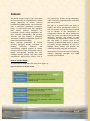
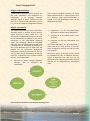
The CAF was developed to consider ‘low-risk’
actions that provided the most benefit to
climate change adaptation by: a) either
directly addressing or at least not increasing
existing stresses, b) implementing ‘no regrets’
measures,
and c) intervening with
complementary measures that have different
risks and so spread the overall risk. ‘Noregrets’ measurements are those where
implementation will result in ecosystem
benefit regardless of future climate change
(Hallegatte, 2009).
Ecosystem-Based Adaptation
Ecosystem-based adaptation (EBA) aims for
the maintenance of healthy, resilient
ecosystems, that can adapt to climatic
changes. Preserving and enhancing ecosystems enables society to better adapt to the
unknown impacts of climate change and
provides multiple co-benefits for climate
change mitigation, protection of livelihoods
and poverty alleviation (Munang, et al., 2013).
In EBA, strategies to deal with climate change
impacts include the maintenance and
restoration of natural ecosystems, protection
of vital ecosystem services, reduction of land
and water degradation by controlling invasive,
alien species and the management of habitats
to ensure plant genetic diversity (The World
Bank, 2009). In 2008, the IUCN proposed
protected areas as one of the solutions to
climate change (Dudley et al., 2010) and the
World Bank (2009) stressed that natural
systems not only provide goods and
ecosystem services but also are a proven and
cost‐effective protection against climate
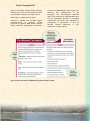
change impacts. EBA is the underlying
philosophy behind the CAF, which highlights
the benefits of climate change adaptation and
ecological resilience of NRM actions.
Page 10