1
User Guide Version 2.48 I-button
•
•
•
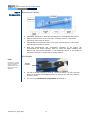
Software: Resides on flash memory and drives all man-machine interface
functions, runs algorithms for test measurements (according to WHO 4TH
guidelines), and operates visual and automated screens. System can be
upgraded from a PC CD-ROM.
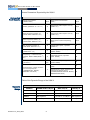
Motility channel input signal: Analog, up to 5V.
Spectrophotometer channel input signal: Modulated (1 kHz) analog, up to
5V.
Printer
•
•
Built-in, Dot Matrix with ribbon cassette (Citizen)
Non-thermostatic narrow paper with 20 characters per line (Citizen)
Rear Panel
•
•
•
Power connector with fuse-holder (fuse 250V, 1A)
Video connector
RS232 cable outlet
Visualization Compartment
•
•
•
•
•
•
White LED illumination system
CCD, 330 TV lines
Objective: Standard, x20
Signal Output: PAL standard
Zoom system for smooth magnification transition between x300 and x500
Focus regulator
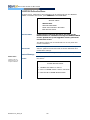
Requirements Maintenance Schedule
•
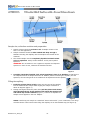
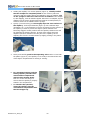
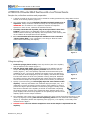
Daily: Clean measurement compartment daily when running samples and
after every 10-15 tests and/or for ANY spillage. Follow manufacturer’s cleaning
instructions using manufacturer cleaning kit. (Refer to the appendix section
“Cleaning the Capillary/Slide Compartments” in this User Guide) ONLY use
the Manufacturers cleaning kit and cleaning brush or damage will
occur to the SQA-V film and the system will not operate!
Manufacturer Recommendations
•
•
•
•
•
Revision 13_AUG_07
Operate the SQA-V away from devices that may cause electronic noise (cell
phones) or other devices causing vibrations such as centrifuges.
Turn system OFF at the rear-panel when not in use for extended period of
time.
When running Postvasectomy tests do not interrupt test cycle nor interfere
with system or testing capillary in any way – this test is highly sensitive to any
motion and requires complete stability of the system during the 5 minute
testing cycle.
Variations in ambient temperature can affect semen samples. It is essential
that semen samples are not heated when testing. The SQA-V is calibrated to
conduct tests at room temperature: 22-26ºC (68-79ºF).
Semen is considered a biologically hazardous material and is subject to
individual laboratory protocols for handling such materials.
5