1
4.3. FURTHER SECURITY PROPERTIES
43
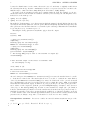
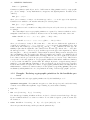
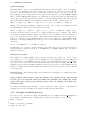
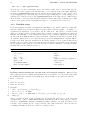
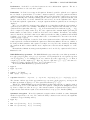
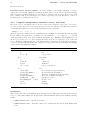
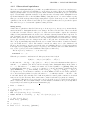
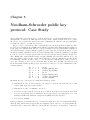
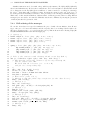
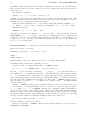
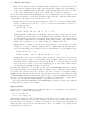
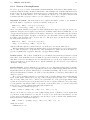
Example: Decisional Diffie-Hellman assumption The decisional Diffie-Hellman (DDH) assumption states that, given a cyclic group G of prime order q with generator g, (g a , g b , g ab ) is computationally
indistinguishable from (g a , g b , g c ), where a, b, c are random elements from Z∗q . A formal counterpart of
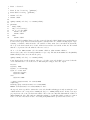
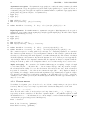
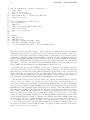
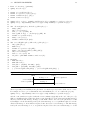
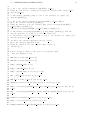
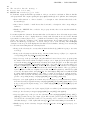
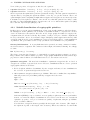
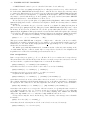
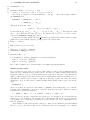
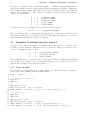
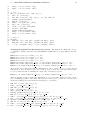
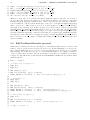
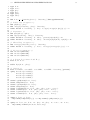
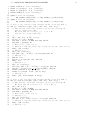
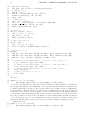
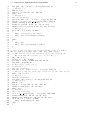
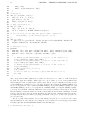
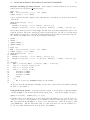
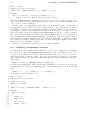
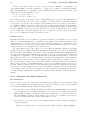
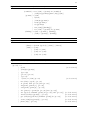
this property can be expressed as an equivalence using the ProVerif script below (file docs/dh-fs.pv).
1
2
3
4
5
6
7
8
9
10
11
12
13
free d : channel .
type G.
type exponent .
const g : G [ data ] .
fun exp (G, exponent ) : G.
equation f o r a l l x : exponent , y : exponent ; exp ( exp ( g , x ) , y ) = exp ( exp ( g , y ) , x ) .
process
new a : exponent ; new b : exponent ; new c : exponent ;
out ( d , ( exp ( g , a ) , exp ( g , b ) , choice [ exp ( exp ( g , a ) , b ) , exp ( g , c ) ] ) )
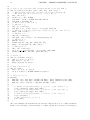
ProVerif succeeds in proving this equivalence. Intuitively, this result shows that our model of the DiffieHellman key agreement is stronger than the Decisional Diffie-Hellman assumption.
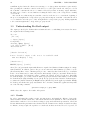
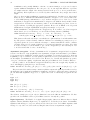
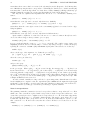
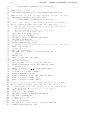
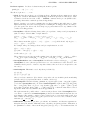
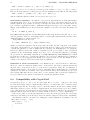
Observe that the biprocess out(d,(exp(g,a),exp(g,b),choice[exp(exp(g,a),b),exp(g,c )])) is equivalent
to
out ( choice [ d , d ] , ( choice [ exp ( g , a ) , exp ( g , a ) ] , choice [ exp ( g , b ) , exp ( g , b ) ] ,
choice [ exp ( exp ( g , a ) , b ) , exp ( g , c ) ] ) ) .
That is, choice[M,M] may be abbreviated as M; it follows immediately that the choice operator is only
needed to model the terms that are different in the pair of processes.
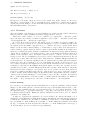
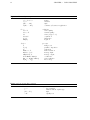
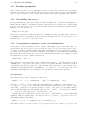
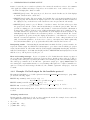
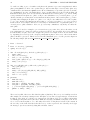
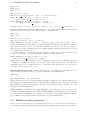
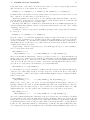
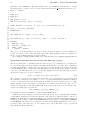
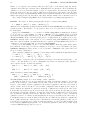
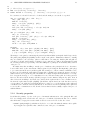
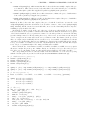
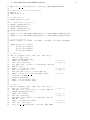
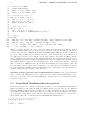
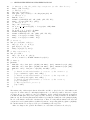
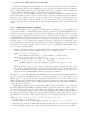
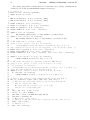
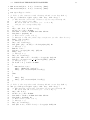
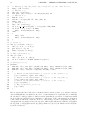
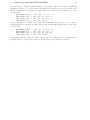
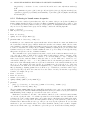
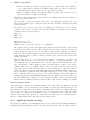
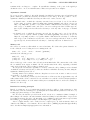
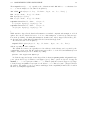
Real-or-random secrecy In the computational model, one generally expresses the secrecy of a value
x by saying that x is indistinguishable from a fresh random value. One can express a similar idea in
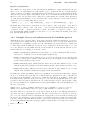
the formal model using observational equivalence. For instance, this notion can be used for proving
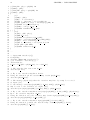
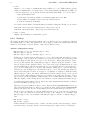
secrecy of a session key k, as in the following variant of the fixed handshake protocol of Chapter 3 (file
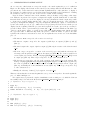
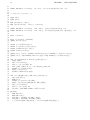
docs/ex handshake RoR.pv).
1
2
3
4
5
6
7
8
9
10
11
12
13
14
15
16
17
18
19
20
21
free c : channel .
l e t c l i e n t A (pkA : pkey , skA : skey , pkB : spkey ) =
out ( c , pkA ) ;
in ( c , x : b i t s t r i n g ) ;
l e t y = adec ( x , skA ) in
l e t (=pkA,=pkB , k : key ) = c h e c k s i g n ( y , pkB ) in
new random : key ;
out ( c , choice [ k , random ] ) .
l e t s e r v e r B ( pkB : spkey , skB : s s k e y , pkA : pkey ) =
in ( c , pkX : pkey ) ;
new k : key ;
out ( c , aenc ( s i g n ( ( pkX , pkB , k ) , skB ) , pkX ) ) .
process
new skA : s k e y ;
new skB : s s k e y ;
l e t pkA = pk ( skA ) in out ( c , pkA ) ;
l e t pkB = spk ( skB ) in out ( c , pkB ) ;
( ( ! c l i e n t A (pkA , skA , pkB ) ) | ( ! s e r v e r B ( pkB , skB , pkA ) ) )