1
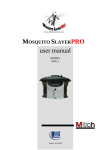
MOSQUITO
MANAGEMENT
SYSTEM
Please read the instructions in this manual carefully
so that you can install and operate your Mosquito
Management System safely and effectively. A number
of factors, including best placement of the trap, regular
topping-up of the collection tray with Lactic solution,
exchanging spent Octenol cartridges and keeping up
the supply of Carbon Dioxide (CO2) will affect catch
results. The instructions in this manual will help you get
the best results from your Bantix Worldwide Mosquito
Management System.
Information in this document is subject to change without notice.
Intended use
The
Trap is designed to impact the mosquito breeding cycle and reduce local populations
by trapping and drowning a variety of mosquitoes and midges. Bantix Worldwide Pty Ltd does not
claim that use of this product will result in complete removal of these insects from a certain locality.
Factors, including prevailing environmental conditions and proper maintenance, will affect results.
Copyright
Copyright (c) 2004 by Bantix Worldwide Pty Ltd. All rights reserved. No part of this document
may be reproduced or transmitted in any form or by any means, electronic or mechanical, for any
purpose, without the express permission of Bantix Worldwide Pty Ltd.
Patent
Bantix Worldwide Pty Ltd,
39 Taree Street,
Burleigh Heads,
Queensland 4220.
ACN 101 163 571
Tel: 61 7 5593 5188
Fax: 61 7 5593 5587
Email:
[email protected]
Web:
www.mosquito-slayer.com
The
Trap technology has protection under US Patent No. 6,199,316 and foreign
counterparts.
Trademark
This trademark is owned by Bantix Worldwide Pty Ltd.
Compliance
C-Tick CE FCC UL N19324 Octenol cartridge: EPA Est.No.34473-MA-1
Note to USA users: This equipment has been tested and found to comply with the limits for a
Class B digital device, pursuant to part 15 of the FCC Rules. These limits are designed to provide
reasonable protection against harmful interference in a residential installation. This equipment
generates, uses and can radiate radio frequency energy and, if not installed and used in accordance
with the instructions, may cause harmful interference to radio communications. However, there
is no guarantee that interference will not occur in a particular installation. If this equipment does
cause harmful interference to radio or television reception, which can be determined by turning the
equipment off and on, the user is encouraged to try to correct the interference by one or more of the
following measures:
• Reorient or relocate the receiving antenna.
• Increase the separation between the equipment and receiver.
• Connect the equipment into an outlet on a circuit different from that to which the receiver is
connected.
• Consult the dealer or an experienced radio/TV technician for help.
Modifications not expressly approved by the manufacturer could void the user’s authority to operate
the equipment under FCC rules.
English Language Version, Printed in Australia 3-230904
2