1
4
Input
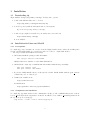
An alg input file has extension .th and it describes an a first-order theory. The syntax vaguely follows the
syntax of the Coq proof assistant. A typical input file might look like this:
Theory Group .
Constant 1.
Unary inv .
Binary *.
Axiom unit_left : 1 * x = x .
Axiom unit_right : x * 1 = x .
Axiom inverse_left : x * inv ( x ) = 1.
Axiom inverse_right : inv ( x ) * x = 1.
Axiom associativity : ( x * y ) * z = x * ( y * z ).
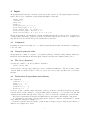
The file starts with an optional Theory declaration which names the theory, then we have declarations of
constants, unary and binary operations, predicates and binary relations (none in the above example), and
after that there are the axioms. The precise syntax rules are as follows.
4.1
Comments
Comments are written as in Python, i.e., a comment begins with the # symbol and includes everything up
to the end of line.
4.2
General syntactic rules
An alg input file consists of a sequence of declarations (Theory, Constant, Unary, Binary, Predicate,
Relation) and axioms (Axiom, Theorem). Each declaration and axiom is terminated with a period.
4.3
The Theory keyword
You may give a name to your theory with the declaration
Theory theory_name .
at the beginning of the input file, possibly preceded by comments and whitespace. The theory name consists
of letters, numbers, and the underscore. If you do not provide a theory name, alg will deduce one from the
file name.
4.4
Declaration of operations and relations
The declarations
Constant c1 c2 . . . ck .
Unary u1 u2 . . . um .
Binary b1 b2 . . . bn .
Predicate p1 p2 . . . pl .
Relation r1 r2 . . . rj .
are used to declare constants, unary and binary operations, predicates, and binary relations, respectively.
You may declare several constants or operations with a single declaration, or one at a time. You may mix
declarations and axioms, although it is probably a good idea to declare the constants and operations first.
The keywords Constants, Predicates and Relations are synonyms for their singular counterparts.
A constant may be any string of letters, digits and the underscore character. In particular, a constant
may consist just of digits, for example 0 or 1.
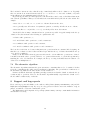
Predicates, relations, unary and binary operations may be strings of letters, digits and the underscore
character. For example, if we declare
5