1
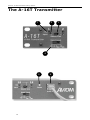
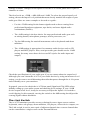
If your mixer has direct outputs available, then a cable from each channel that needs
to be sent to the monitors is connected to the Transmitter inputs. A maximum of
sixteen direct outputs can be plugged into the Transmitter unit.
If you have more than sixteen direct outputs to be monitored, then some of the
channels will need to be sub-mixed. This can be accomplished on most consoles by
using a bus output, described below.
Bus Outputs
A bus output is typically used to route audio signals to a recording device or to
control the volume of a group of channels from a single fader. Most mixers equipped
with bus outputs have fewer bus outputs than channels. Four, eight, or sixteen bus
outputs are common mixer configurations.
To use a bus output with the A-16T, the individual channels in your mixer need to
be assigned to the desired bus output. This is usually done with a selector button
located somewhere within each channel strip. Assigning a channel to a bus output
does not remove the signal from the main mix. (Some mixers do allow the option,
however.) Specific instructions about how to use your particular mixer in this case
are beyond the scope of this document. Consult your mixer’s documentation to learn
more.
With a channel assigned to a bus output, you can then control the level of the bus
independent of the other levels on the mixer. In fact, if you assign multiple channels
to a bus output, this acts as a sub-mixer, combining the audio from all assigned
channels into one signal. The individual channel level fader is used to set the relative
balance of all channels assigned to the bus.
As an example, you could assign all the channels of the main mixer devoted to
drums to a bus. As mentioned previously, the relative mix of all the components
of the drum sound would remain the same; the levels are based on the individual
channel’s level settings. By sending all the drum channels to a bus, the entire drum
kit sound can be raised or lowered in volume from a single fader. (By using two bus
outputs a stereo drum sub-mix with panning can be created. More on this below.)
The same theory extends to the operation of the A-16. If you send the sub-mixed
drum sound in the example above from a console bus output to the A-16T Transmitter, then each Personal Mixer in the system has a single channel devoted to the
drums. Each performer can control the amount of drums in his/her mix with a single
knob. He/she cannot, however, change the relative balance of the drums that make
up this mix (more snare, less cymbals, etc.). This change would need to be made at
the main mixer, and would affect the balance in all connected A-16 Mixers.
31