1
Appendix 1: Potential Mining Areas
The following categories of minerals are contained in the Potential Mining Areas data.
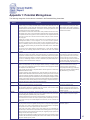
Mineral
Anhydrite
Description
Location
Anhydrite is white, sometimes greyish, bluish or purple calcite mineral which, when exposed to Originally found in Cumbria, Nottinghamshire,
water, readily transforms to the more commonly occurring gypsum. It is most frequently found East Sussex, Leicestershire and Staffordshire,
in salt deposits within a gypsum area, where depth is the critical factor. The nearer the surface with the East Midlands being the most important
the more likely anhydrite will be altered to gypsum by absorption of circulating ground water. area.
It was used as a source of sulphur for use in fertilizers and as a constituent of sulphuric acid.
Demand is currently very low and the last mine devoted to production for sulphuric acid closed
in 1975.
Arsenic
Arsenic is a notoriously poisonous metalloid that is used in pesticides, herbicides, insecticides The majority of arsenic mining was conducted
and various alloys. It is chemically very similar to phosphorus and the fumes given off when
it oxidises have an odour resembling garlic. Lead hydrogen arsenate has been used, well
into the 20th century, as an insecticide on fruit trees (resulting in neurological damage to
those working the sprayers. The historical application of most concern to the general public is
in Cornwall and West Devon, accounting for
both mineral deposits and spoil heaps, although
there are also very small natural concentrations
in the ground and stream water in Lincolnshire,
probably that of wood which has been treated with chromated copper arsenate (CCA), and the Leicestershire, Oxfordshire & Northamptonshire.
vast majority of older “pressure treated” wood).
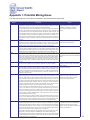
Ball Clay
Ball clays consist chiefly of the clay mineral kaolinite, with a minor amount of montmorillonite It is especially concentrated in Dorset.
and organic material. Ball clay is lightweight, chalk-like in appearance, and used in china,
whiteware, and various ceramic products.
Bauxite
Bauxite is a sedimentary rock produced by in situ chemical weathering typically under tropical Major world concentrations are in Australia &
to subtropical climate conditions. It is the raw material most widely used in the production of Brazil. UK historic mining was highly localised
aluminium on a commercial scale.
and focused along the south coast.
Chalk
In England the Chalk topographically forms what are known as the ‘Downs’ in southern and There are specific concentrations of past mining
eastern counties. It is exposed in quarries and roadcutting but the best exposures are along activity in Kent, Berkshire, Hertfordshire, Norfolk
the coastlines where Chalk often forms spectacular clifflines, the most famous of which are and Buckinghamshire.
the ‘White Cliffs of Dover.’ It is comprised of a sequence of mainly soft, white, very fine-grained
extremely pure limestones which are commonly 300-400 m thick. In Yorkshire the chalk of the
Yorkshire wolds and the cliffs at Scarborough are much harder than the chalks of Southern
England.
Chalk cliffs, due to their weakness, erode relatively quickly, yet the interbedding of weak and
stronger layers allows high cliffs to form. When these fail, large landslips occur.
Finely prepared chalk, used as a drawing implement, most commonly in teaching. It is both
used in the making of cement, it is a fertilizer for farmland and as a flux in smelting copper and
lead ores and in making iron and steel.
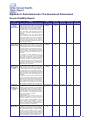
China Clay
China Clay (or Kaolinite) is a layered silicate mineral, It is a soft, earthy, usually white mineral Deposits in central Cornwall near to St Austell
produced by the chemical weathering of silicate minerals like feldspar.
are the largest in the world. They have been
Kaolinite is one of the most common minerals. Due to its extremely fine nature (finer than
silt), it is mixed with water and transported in tanks as a liquid slurry. It is used in ceramics,
medicine, bricks, coated paper, as a food additive, in toothpaste, as a light diffusing material
in white incandescent light bulbs, and in cosmetics. A recent use is as a specially formulated
spray applied to fruits, vegetables, and other vegetation to repel or deter insect damage. A
extracted since 1746 totalling some 120 million
tons, but reserves in the ground will last at
least another hundred years. There are also
concentrations near Carlisle, Cumbria.
traditional use is to soothe an upset stomach.
Clay
The term “clay” is applied to various earthy materials composed dominantly of hydrous Well known concentrations of clays include
aluminum magnesium silicate minerals. The most familiar characteristic of clay is plasticity or London, Essex and Cambridgeshire.
the ability of moist clay to be fashioned into a desired shape. The physical properties of a clay
are plasticity, strength, and refractoriness. Plasticity enables the clay to be molded; strength
permits it to be handled during the forming, drying, and burning processes; and refractoriness
permits it to be burned into a hard body of permanent form.
Clay is especially susceptible to changes in climate and hydrology and the action of shrinking
and swelling can be a major contributor to subsidence and heave.
9