1
PAT H S C A L E E K O C O M P I L E R S U I T E ™
USER GUIDE
PathScale EKO Compiler Suite
User Guide
Release 1.2
PathScale, Inc.
Copyright © 2004 PathScale, Inc. All Rights Reserved.
PathScale, the PathScale EKO Compiler Suite, and Accelerating Cluster Performance
are trademarks of PathScale, Inc. All other trademarks belong to their respective
owners.
In accordance with the terms of their valid PathScale customer agreements,
customers are permitted to make electronic and paper copies of this document for
their own exclusive use.
All other forms of reproduction, redistribution, or modification is prohibited without
the prior express written permission of PathScale, Inc.
Document number: 1-02404-03
Last generated on June 28, 2004
ii
Contents
1 Introduction
1
1.1 Conventions used in this document . . . . . . . . . . . . . . . . . . . . . . .
2
1.2 Other resources . . . . . . . . . . . . . . . . . . . . . . . . . . . . . . . . . .
2
2 Compiler Quick Reference
5
2.1 What you installed . . . . . . . . . . . . . . . . . . . . . . . . . . . . . . . .
5
2.2 How to invoke the PathScale EKO compilers . . . . . . . . . . . . . . . . .
6
2.3 Input file types . . . . . . . . . . . . . . . . . . . . . . . . . . . . . . . . . . .
7
2.4 Other input files . . . . . . . . . . . . . . . . . . . . . . . . . . . . . . . . . .
8
2.5 Common compiler options . . . . . . . . . . . . . . . . . . . . . . . . . . . .
9
2.6 Shared libraries . . . . . . . . . . . . . . . . . . . . . . . . . . . . . . . . . .
9
2.7 Large file support . . . . . . . . . . . . . . . . . . . . . . . . . . . . . . . . . 10
2.8 Large object support . . . . . . . . . . . . . . . . . . . . . . . . . . . . . . . 10
2.8.1 Support for "large" memory model . . . . . . . . . . . . . . . . . . . 11
2.9 Debugging . . . . . . . . . . . . . . . . . . . . . . . . . . . . . . . . . . . . . 11
2.10 Profiling: Locate your program’s hot spots . . . . . . . . . . . . . . . . . . . 12
2.11 Taskset: Assigning a process to a specific CPU . . . . . . . . . . . . . . . . 13
iii
iv
CONTENTS
3 The PathScale EKO Fortran compiler
15
3.1 Using the Fortran compiler . . . . . . . . . . . . . . . . . . . . . . . . . . . 15
3.1.1 Fixed-form and free-form files . . . . . . . . . . . . . . . . . . . . . . 16
3.2 Modules . . . . . . . . . . . . . . . . . . . . . . . . . . . . . . . . . . . . . . . 17
3.3 Extensions . . . . . . . . . . . . . . . . . . . . . . . . . . . . . . . . . . . . . 17
3.3.1 Promotion of REAL and INTEGER types . . . . . . . . . . . . . . . 18
3.3.2 Cray pointers . . . . . . . . . . . . . . . . . . . . . . . . . . . . . . . 18
3.3.3 Directives
. . . . . . . . . . . . . . . . . . . . . . . . . . . . . . . . . 18
3.4 Compiler and runtime features . . . . . . . . . . . . . . . . . . . . . . . . . 19
3.4.1 Preprocessing source files . . . . . . . . . . . . . . . . . . . . . . . . 19
3.4.2 Explain . . . . . . . . . . . . . . . . . . . . . . . . . . . . . . . . . . . 19
3.4.3 Mixed code . . . . . . . . . . . . . . . . . . . . . . . . . . . . . . . . . 20
3.4.4 Bounds checking
. . . . . . . . . . . . . . . . . . . . . . . . . . . . . 20
3.4.5 Pseudo-random numbers . . . . . . . . . . . . . . . . . . . . . . . . . 20
3.5 Runtime I/O compatibility . . . . . . . . . . . . . . . . . . . . . . . . . . . . 21
3.5.1 Performing endian conversions . . . . . . . . . . . . . . . . . . . . . 21
3.5.1.1
The assign command . . . . . . . . . . . . . . . . . . . . . . 21
3.5.1.2
Using the wildcard option . . . . . . . . . . . . . . . . . . . 21
3.5.1.3
Converting data and record headers . . . . . . . . . . . . . 22
3.5.1.4
The ASSIGN() procedure . . . . . . . . . . . . . . . . . . . 22
3.6 Source code compatibility . . . . . . . . . . . . . . . . . . . . . . . . . . . . 22
3.6.1 Fortran KINDs . . . . . . . . . . . . . . . . . . . . . . . . . . . . . . 22
3.6.2 Fortran 95 . . . . . . . . . . . . . . . . . . . . . . . . . . . . . . . . . 23
3.7 Library compatibility . . . . . . . . . . . . . . . . . . . . . . . . . . . . . . . 23
3.7.1 Name mangling . . . . . . . . . . . . . . . . . . . . . . . . . . . . . . 24
3.7.2 ABI compatibility . . . . . . . . . . . . . . . . . . . . . . . . . . . . . 24
CONTENTS
v
3.7.3 Linking with g77-compiled libraries . . . . . . . . . . . . . . . . . . 25
3.7.3.1
AMD Core Math Library (ACML) . . . . . . . . . . . . . . 26
3.8 Debugging and troubleshooting . . . . . . . . . . . . . . . . . . . . . . . . . 26
3.8.1 Writing to constants can cause crashes . . . . . . . . . . . . . . . . 27
3.8.2 Aliasing: -OPT:alias=no_parm
4 The PathScale EKO C/C++ compiler
. . . . . . . . . . . . . . . . . . . . . 27
29
4.1 Using the C/C++ compilers . . . . . . . . . . . . . . . . . . . . . . . . . . . . 30
4.2 Compiler and runtime features . . . . . . . . . . . . . . . . . . . . . . . . . 31
4.2.1 Preprocessing source files . . . . . . . . . . . . . . . . . . . . . . . . 31
4.2.2 Mixing code . . . . . . . . . . . . . . . . . . . . . . . . . . . . . . . . 31
4.2.3 Linking . . . . . . . . . . . . . . . . . . . . . . . . . . . . . . . . . . . 31
4.3 Debugging . . . . . . . . . . . . . . . . . . . . . . . . . . . . . . . . . . . . . 31
4.4 GCC extensions not supported . . . . . . . . . . . . . . . . . . . . . . . . . . 32
5 Porting and compatibility
5.1 Getting started
33
. . . . . . . . . . . . . . . . . . . . . . . . . . . . . . . . . . 33
5.2 Cookbook . . . . . . . . . . . . . . . . . . . . . . . . . . . . . . . . . . . . . . 34
5.3 Compatibility . . . . . . . . . . . . . . . . . . . . . . . . . . . . . . . . . . . 34
5.3.1 GCC compatibility wrapper script . . . . . . . . . . . . . . . . . . . 34
5.3.2 Modifying existing scripts . . . . . . . . . . . . . . . . . . . . . . . . 35
5.3.3 Name mangling . . . . . . . . . . . . . . . . . . . . . . . . . . . . . . 35
5.4 Compiler options for porting and correctness . . . . . . . . . . . . . . . . . 36
5.5 Fortran compiler stack size . . . . . . . . . . . . . . . . . . . . . . . . . . . 36
vi
CONTENTS
6 Tuning Quick Reference
6.1 Basic optimization
39
. . . . . . . . . . . . . . . . . . . . . . . . . . . . . . . . 39
6.2 IPA . . . . . . . . . . . . . . . . . . . . . . . . . . . . . . . . . . . . . . . . . 39
6.3 Feedback directed optimization . . . . . . . . . . . . . . . . . . . . . . . . . 40
6.4 Aggressive optimization . . . . . . . . . . . . . . . . . . . . . . . . . . . . . 40
6.5 Performance analysis
. . . . . . . . . . . . . . . . . . . . . . . . . . . . . . 41
6.6 Optimize your hardware . . . . . . . . . . . . . . . . . . . . . . . . . . . . . 41
7 Tuning options
43
7.1 Basic optimizations: The -O flag . . . . . . . . . . . . . . . . . . . . . . . . 43
7.2 Syntax for complex optimizations (-CG, -IPA, -LNO -OPT, -WOPT) . . 45
7.3 Inter-Procedural Analysis (IPA) . . . . . . . . . . . . . . . . . . . . . . . . . 45
7.3.1 Size and correctness limitations to IPA . . . . . . . . . . . . . . . . 47
7.4 Loop Nest Optimization (LNO) . . . . . . . . . . . . . . . . . . . . . . . . . 47
7.4.1 Loop fusion and fission . . . . . . . . . . . . . . . . . . . . . . . . . . 48
7.4.2 Cache size specification . . . . . . . . . . . . . . . . . . . . . . . . . . 48
7.4.3 Cache blocking, loop unrolling, interchange transformations . . . . 49
7.4.4 Prefetch . . . . . . . . . . . . . . . . . . . . . . . . . . . . . . . . . . . 49
7.4.5 Vectorization . . . . . . . . . . . . . . . . . . . . . . . . . . . . . . . . 50
7.5 Code Generation (-CG:) . . . . . . . . . . . . . . . . . . . . . . . . . . . . . . 50
7.6 Feedback Directed Optimization (FDO) . . . . . . . . . . . . . . . . . . . . 51
7.7 Aggressive optimizations . . . . . . . . . . . . . . . . . . . . . . . . . . . . . 52
7.7.1 Alias analysis . . . . . . . . . . . . . . . . . . . . . . . . . . . . . . . 52
7.7.2 Numerically unsafe optimizations . . . . . . . . . . . . . . . . . . . 53
7.7.3 IEEE 754 compliance . . . . . . . . . . . . . . . . . . . . . . . . . . . 54
7.7.3.1
Arithmetic . . . . . . . . . . . . . . . . . . . . . . . . . . . . 54
CONTENTS
vii
7.7.3.2
Roundoff . . . . . . . . . . . . . . . . . . . . . . . . . . . . . 55
7.7.4 Other unsafe optimizations . . . . . . . . . . . . . . . . . . . . . . . 56
7.7.5 Assumptions about numerical accuracy . . . . . . . . . . . . . . . . 56
7.8 Opteron performance . . . . . . . . . . . . . . . . . . . . . . . . . . . . . . . 57
7.8.1 Hardware setup . . . . . . . . . . . . . . . . . . . . . . . . . . . . . . 57
7.8.2 BIOS setup . . . . . . . . . . . . . . . . . . . . . . . . . . . . . . . . . 58
7.8.3 Multiprocessor memory . . . . . . . . . . . . . . . . . . . . . . . . . 58
7.8.4 Kernel and system effects . . . . . . . . . . . . . . . . . . . . . . . . 58
7.8.5 Tools and APIs . . . . . . . . . . . . . . . . . . . . . . . . . . . . . . . 59
7.8.6 Testing memory latency and bandwidth . . . . . . . . . . . . . . . . 59
8 Examples
61
8.1 Compiler flag tuning and profiling with pathprof . . . . . . . . . . . . . . 61
9 Debugging and troubleshooting
65
9.1 Subscription Manager problems . . . . . . . . . . . . . . . . . . . . . . . . . 65
9.2 Debugging . . . . . . . . . . . . . . . . . . . . . . . . . . . . . . . . . . . . . 65
9.3 Large object support . . . . . . . . . . . . . . . . . . . . . . . . . . . . . . . 65
9.4 Using -ipa and -Ofast . . . . . . . . . . . . . . . . . . . . . . . . . . . . . 66
9.5 Tuning . . . . . . . . . . . . . . . . . . . . . . . . . . . . . . . . . . . . . . . 67
A Environment variables
69
A.1 Environment variables for use with C . . . . . . . . . . . . . . . . . . . . . 69
A.2 Environment variables for use with C++ . . . . . . . . . . . . . . . . . . . . 69
A.3 Environment variables for use with Fortran . . . . . . . . . . . . . . . . . . 69
A.4 Language independent environment variables . . . . . . . . . . . . . . . . 70
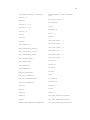
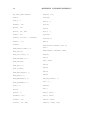
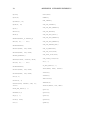
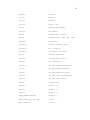
B Supported intrinsics
71
C Glossary
79
Chapter 1
Introduction
This User Guide covers how to use the PathScale EKO Compiler Suite™ compilers;
how to configure them, how to use them to optimize your code, and how to get the best
performance from them. This guide also covers the language extensions and
differences from the other commonly available language compilers.
The PathScale EKO Compiler Suite now generates both 32-bit and 64-bit code. 64-bit
code is the default; to generate 32-bit code use -m32 on the command line. See the
eko man page for details.
The information in this guide is organized into these sections:
• Chapter 2 is a quick reference to using the PathScale EKO compilers
• Chapter 3 covers the PathScale EKO Fortran compiler
• Chapter 4 covers the PathScale EKO C/C++ compilers
• Chapter 5 provides suggestions for porting and compatibility
• Chapter 6 is a Tuning Quick Reference, with tips for getting faster code
• Chapter 7 discusses tuning options in more detail
• Chapter 8 provides examples of optimizing code
• Chapter 9 covers debugging and troubleshooting code
• Appendix A lists environmental variables used with the compilers
• Appendix B is a list of the supported intrinsics
• Appendix C provides descriptions of the optimization flags
• Appendix D is a glossary of terms associated with the compilers
1
2
CHAPTER 1. INTRODUCTION
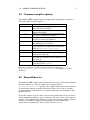
1.1
Conventions used in this document
These conventions are used throughout the PathScale documentation.
Convention
command
variable
user input
$
#
[]
...
N OTE :
1.2
Meaning
Fixed-space font is used for literal items such
as commands, files, routines, and pathnames.
Italic typeface is used for variable names or
concepts being defined.
Bold, fixed-space font is used for literal items
the user types in. Output is shown in non-bold,
fixed-space font.
Indicates a command line prompt
Command line prompt as root
Brackets enclose optional portions of a command or directive line.
Ellipses indicate that a preceding element can
be repeated.
Indicates important information
Other resources
The PathScale EKO Compiler Suite product documentation set includes:
• The PathScale EKO Compiler Suite Install Guide
• The PathScale EKO Compiler Suite User Guide
• The PathScale EKO Compiler Suite Support Guide
There are also online manual pages (“man pages”) available describing the flags and
options for the PathScale EKO Compiler Suite. You can type "man -k pathscale" or
"apropos pathscale" to get a list of all the PathScale man pages on your system.
This feature does not work on SLES 8.
Please see the PathScale website at http://www.pathscale.com/support.html
for further information about current releases and developer support. In addition, you
may want to refer to these books for more information on high performance
computing, compilers, and language usage.
• Fortran 95 Explained by Metcalf, M. and Reid, J., Oxford University Press, 1996.
ISBN 0-19-851888-8
• C Programming Language by Brian W. Kernighan, Dennis Ritchie, Dennis M.
Ritchie, Prentice Hall, 1988, 2nd edition, ISBN 0-13-110362-8
1.2. OTHER RESOURCES
• The C++ Programming Language by Bjarne Stroustrup, Addison-Wesley
Publishing Company, 2000, 3rd edition, ISBN 0-20-170073-5
• The Practice of Programming by Brian W. Kernighan and Rob Pike,
Addison-Wesley Publishing Company, 1st edition, 1999, ISBN 0-20-161586-X
• High Performance Computing by Kevin Doud, O’Reilly & Associates, Inc., 1993.
ISBN 1-56592-032-5
3
4
CHAPTER 1. INTRODUCTION
Chapter 2
Compiler Quick Reference
This chapter describes how to get started using the PathScale EKO Compiler Suite.
The compilers follow the standard conventions of Unix and Linux compilers. They
produce code that follows the Linux/AMD64 ABI and run on the AMD64 family of
chips. This means that object files produced by the PathScale EKO compilers can link
with object files produced by other Linux/AMD64-compliant compilers such as Red
Hat and SuSE GNU gcc, g++, and g77. AMD64 is AMD’s 64-bit extension to Intel’s
IA32 architecture, often referred to as “x86”.
2.1
What you installed
The PathScale EKO Compiler Suite™ includes optimizing compilers and runtime
support for C, C++, and Fortran.
Depending on the type of subscription you purchased, you enabled some or all of the
following:
• PathScale EKO C Compiler for AMD64 architecture
• PathScale EKO C++ Compiler for AMD64 architecture
• PathScale EKO Fortran Compiler for AMD64 architecture
• Documentation
• Libraries
• Subscription Manager client1
• Subscription Manager server (optional)2
1 You
2 The
must have a valid subscription (and associated subscription file) in order to run the compiler.
PathScale Subscription Manager server is required for floating subscriptions.
5
6
CHAPTER 2. COMPILER QUICK REFERENCE
• GNU binutils
For more details on installing the PathScale EKO compilers, see the PathScale EKO
Compiler Suite Install Guide.
2.2
How to invoke the PathScale EKO compilers
The PathScale EKO Compiler Suite has three different front-ends to handle programs
written in C, C++, and Fortran, and it has common optimization and code generation
components that interface with all the language front-ends. The language your
program uses determines which command (driver) name to use:
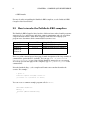
Language
C
C++
Fortran 77
Fortran 90
Fortran 95
Command Name
pathcc
pathCC
pathf90
Compiler Name
PathScale EKO C compiler
PathScale EKO C++ compiler
PathScale EKO Fortran compiler
There are online manual pages (“man pages”) with descriptions of the large number of
command line options that are available. You can type "man -k pathscale" or
"apropos pathscale" to get a list of all the PathScale man pages on your system.
To view the general man page for the compilers, type man pathscale_intro at the
command line.
If invoked with the flag -v, the compilers will emit some text that identifies the
version. For example:
$ pathcc -v
PathScale Compiler Suite(TM): Version 1.2
gcc version 3.3.1 (PathScale 1.2 driver)
You can create a common example program called world.c:
#include <stdio.h>
main() {
printf ("Hello World!\n");
}
2.3. INPUT FILE TYPES
7
Then you can compile it from your shell prompt very simply:
# pathcc world.c
The default output file for the pathcc-generated executable is named a.out. You can
execute it and see the output:
# ./a.out
Hello World!
As with most compilers, you can use the -o <filename> option to give your program
executable file the desired name.
N OTE: By default the PathScale EKO compilers generate 64-bit code. To generate
32-bit code you must specify -m32 on the command line when you compile. See the
eko man pages for details.
2.3
Input file types
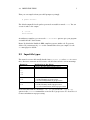
The name for a source file usually has the form filename.ext, where ext is a one to
three character extension used on a source code file that can have various meanings:
Extension
.c
.C
.cc
.cpp
.cxx
Implication to the driver
C source file that will be preprocessed
C++ source file that will be preprocessed
.f
.f90
Fortran source file
.f is fixed format, no preprocessor
.f90 is freeform format, no preprocessor
Fortran source file
.F is fixed format, invokes preprocessor
.F90 is freeform format, invokes preprocessor
.F
.F90
For Fortran files with the extensions .f or .f90, you can use the -ftpp or -cpp
options on the pathf90 command line to invoke the C preprocessor. See Section 3.4.1
for more information on preprocessing.
8
CHAPTER 2. COMPILER QUICK REFERENCE
The compiler drivers can use the extension to determine which language front-end to
invoke. For example, some mixed language programs can be compiled with a single
command:
# pathf90 stream_d.f second_wall.c -o stream
The pathf90 driver will use the .c extension to know that it should automatically
invoke the C front-end on the second_wall.c module and link the generated object
files into the stream executable.
N OTE: GNU make does not contain a rule for generating object files from Fortran
.f90 files. You can add the following rules to your project Makefiles to achieve this:
$.o:
$.o:
%.f90
$(FC) $(FFLAGS) -c $<
%.F90
$(FC) $(FFLAGS) -c $<
You may need to modify this for your project, but in general it should follow this form.
For more information on compatibility and porting existing code, see Section 5.
Information on GCC compatibility and a wrapper script you can use for your build
packages can be found in Section 5.3.1.
2.4
Other input files
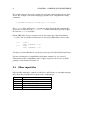
Other possible input files, common to both C/C++ and Fortran, are assembly-language
files, object files, and libraries as inputs on the command line.
Extension
.i
.s
.o
.a
.so
Implication to the driver
Preprocessed source file
Assembly language file
object file
a static library of object files
a library of shared (dynamic) object files
2.5. COMMON COMPILER OPTIONS
2.5
9
Common compiler options
The PathScale EKO Compiler Suite has command line options that are similar to
many other Linux or Unix compilers:
Option
-c
-g
-I<dir>
-l<library>
-L<dir>
-lm
-o <filename>
-O3
-O or -O2
-pg
What it does
generates an intermediate object file for each
source file, but doesn’t link
produces debugging information to allow full
symbolic debugging
Add <path> to the directories searched by preprocessor for include file resolution.
Searches the library specified during the linking phase for unresolved symbols.
Add <path> to the directories searched during
the linking phase for libraries.
links using the libm math library. This is typically required in C programs that use functions
such as exp(), log(), sin(), cos().
generates the named executable (binary) file
generates a highly optimized executable, generally numerically safe
generates an optimized executable that is numerically safe. (This is also the default if no -O
flag is used.)
generates profile information suitable for the
analysis program pathprof
Many more options are available and described in the man pages
(pathscale_intro, pathcc, pathf90, pathCC, eko) and Chapter 7 in this
document.
2.6
Shared libraries
The PathScale EKO Compiler Suite includes shared versions of the runtime libraries
that the compilers use. The shared libraries are packaged in the
pathscale-compilers-libs package. The compiler will use these shared libraries
by default when linking executables and shared objects. As a result, if you link a
program with these shared libraries, you must install them on systems where that
program will run.
You should continue to use the static versions of the runtime libraries if you wish to
obtain maximum portability or peak performance. The latter is the case because the
compiler cannot optimize shared libraries as aggressively as static libraries. Shared
libraries are compiled using position-independent code, which limits some
opportunities for optimization, while our static libraries are not.
10
CHAPTER 2. COMPILER QUICK REFERENCE
To link with static libraries instead of shared libraries use the -static option. For
example the following code is linked using the shared libraries.
$ pathcc -o hello hello.c
$ ldd hello
libpscrt.so.1 => /opt/pathscale/lib/1.2/libpscrt.so.1
(0x0000002a9566d000)
libmpath.so.1 => /opt/pathscale/lib/1.2/libmpath.so.1
(0x0000002a9576e000)
libc.so.6 => /lib64/libc.so.6
(0x0000002a9588b000)
libm.so.6 => /lib64/libm.so.6
(
0x0000002a95acd000)
/lib64/ld-linux-x86-64.so.2 => /lib64/ld-linux-x86-64.so.2
(0x0000002a95556000) $
If you use the -static option, notice that the shared libraries are no longer required.
$ pathcc -o hello hello.c -static
$ ldd hello
not a dynamic executable
$
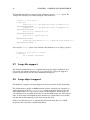
2.7
Large file support
The Fortran runtime libraries are compiled with large file support. PathScale does
not provide any runtime libraries for C or C++ that do I/O, so large file support is
provided by the libraries in the Linux distribution being used.
2.8
Large object support
The PathScale compilers currently support two memory models: small and medium.
The default memory model on AMD64 systems, and the default for the compilers, is
small (equivalent to GCC’s -mcmodel=small). This means that offsets of code and
data within binaries are represented as signed 32-bit quantities. In this model, all
code and data in an executable must come to less than 2GB in total size. Note that by
data, we mean static and unlimited static data that are compiled into an executable,
not data allocated dynamically on the stack or from the heap.
Pointers are 64-bits however, so dynamically allocated memory may exceed 2GB.
Programs can be statically or dynamically linked.
2.9. DEBUGGING
11
Additionally the compilers support the medium memory model with the use of the
option -mcmodel=medium on all of the compilation and link commands. This means
that offsets of code within binaries are represented as signed 32-bit quantities. The
offsets for data within the binaries are represented as signed 64-bit quantities. In this
model, all code in an executable must come to less than 2GB in total size. The data,
both static and BSS, are allowed to exceed 2GB in size.
As with the small memory model, pointers are also signed 64-bit quantities and may
exceed 2 GB in size.
See 9.3 for more information on using large objects, and your GCC 3.3.1
documentation for more information on this topic.
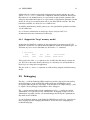
2.8.1
Support for "large" memory model
At this time the PathScale compilers do not support the large memory model. The
significance is that the code offsets must fit within the signed 32-bit address space. To
determine if you are close to this limit, use the Linux size command.
$ size bench
text
data
910219
1448
bss
3192
dec
914859
hex filename
df5ab bench
If the total value of the text segment is close to 2GB, then this may be an issue for
you. We believe that codes that are this large are extremely rare and would like to
know if you are using such an application.
The size of the bss and data segments are addressed by using the medium memory
model.
2.9
Debugging
The flag ’-g’ tells the PathScale EKO compilers to produce data in the form used by
modern debuggers, such as GDB. This format is known as DWARF 2.0 and is
incorporated directly into the object files. Code that has been compiled using -g will
be capable of being debugged using GDB or other debuggers.
The -g option automatically sets the optimization level to -O0 unless an explicit
optimization level is provided on the command line. Debugging of higher levels of
optimization is possible, but the code transforming performed by the optimizations
may make it more difficult.
See the individual chapters on the PathScale EKO Fortran and C /C++ compilers for
more language-specific debugging information, and Section 9 for debugging and
troubleshooting tips.
12
CHAPTER 2. COMPILER QUICK REFERENCE
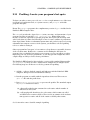
2.10
Profiling: Locate your program’s hot spots
To figure out where to tune your code, use time for a rough estimate to see if the issue
is system load, application load, or a system resource, and pathprof to find the
program’s hot spots.
N OTE: The pathprof program is the complimentary version of gprof included in the
PathScale EKO Compiler Suite.
The time tool provides the elapsed (or wall) time, user time, and system time of your
program. Its usage is typically: time ./program args. Elapsed time is the
measure of interest, especially for parallel programs, but if your system is busy with
other loads, then user time would usually be a more accurate estimate of performance
than elapsed time. If there is substantial system time and you don’t expect to be using
substantial non-compute resources of the system, you should use a kernel profiling
tool to see what is causing it.
Often a program has "hot spots," a few routines or loops that are responsible for most
of the execution time. Profilers are a common tool for finding the hot spots of a
program. Once you find the hot spots in your program, you can concentrate on either
improving your code for better performance, or you may get some insight into which
compiler flags are likely to lead to better performance.
The PathScale EKO Compiler Suite includes a version of the standard Linux profiler
gprof (pathprof). There are more details and an example later in Chapter 8, but
the following steps are all that are needed to get started in profiling:
1. Add the -pg flag to both the compile and link steps with the PathScale EKO
compilers. This generates an instrumented binary.
2. Run the program executable with the input data of interest. This creates a
gmon.out file with the profile data.
3. Run pathprof <program-name> to generate the profiles. The standard output
of pathprof includes two tables:
(a) a flat profile with the time consumed in each routine and the number of
times it was called, and
(b) a call-graph profile that shows, for each routine, which routines it called
and which other routines called it. There is also an estimate of the inclusive
time spent in a routine and all of the routines called by that routine.
See Section 8 for a more detailed example of profiling.
2.11. TASKSET: ASSIGNING A PROCESS TO A SPECIFIC CPU
2.11
13
Taskset: Assigning a process to a specific CPU
To improve the performance of the compiler on multiprocessor machines, it is often
useful to assign the process to a specific CPU. The tool used to do this is taskset,
which can be used to retrieve or set a process’ affinity. This command is part of the
schedutils package/RPM and may or may not be installed as part of your default
configuration.
The CPU affinity is represented as a bitmask, typically given in hexadecimal.
Assigning a process to a specific CPU prevents the Linux scheduler from moving or
splitting the process.
Example:
$ taskset 0x00000001
This would assign the process to processor #0.
If an invalid mask is given, an error is returned, so when taskset returns, it is
guaranteed that the program has been scheduled on a valid and legal CPU. See the
taskset(1) man page for more information.
N OTE: Some of the Linux distributions supported by the PathScale compilers do not
contain the schedutils package/RPM.
14
CHAPTER 2. COMPILER QUICK REFERENCE
Chapter 3
The PathScale EKO Fortran
compiler
The PathScale EKO Fortran compiler supports Fortran 77, Fortran 90, and Fortran
95. The PathScale EKO Fortran compiler:
• Conforms to ISO/IEC 1539:1991 Programming languages–Fortran (Fortran 90)
• Conforms to the more recent ISO/IEC 1539-1:1997 Programming
languages–Fortran (Fortran 95)
• Supports legacy FORTRAN 77 (ANSI X3.9-1978) programs
• Provides support for some common extensions to the above language definitions
• Links binaries generated with the GNU Fortran 77 compiler
• Generated code complies with AMD64 ABI
3.1
Using the Fortran compiler
To invoke the PathScale EKO Fortran compiler, use this command:
$ pathf90
By default, the compiler will treat input files with an .F suffix or .f suffix as
fixed-form files. Files with an .F90 suffix or .f90 suffix are treated as free-form files.
This behavior can overridden using the -fixedform and -freeform switches. See
Section 3.1.1 for more information on fixed-form and free-form files.
15
16
CHAPTER 3. THE PATHSCALE EKO FORTRAN COMPILER
Files ending in .F90 or .F are first preprocessed using the Fortran preprocessor. If
you specify the -ftpp option, all files are preprocessed using the Fortran preprocessor,
regardless of suffix. See Section 3.4.1 for more information on preprocessing.
Invoking the compiler without any options instructs the compiler to use optimization
level -O2. These three commands are equivalent:
$ pathf90 test.f90
$ pathf90 -O test.f90
$ pathf90 -O2 test.f90
Using optimization level -O0 instructs the compiler to do no optimization.
Optimization level -O1 performs only local optimization. Level -O2, the default,
performs extensive optimizations that will always shorten execution time, but may
cause compile time to be lengthened. Level -O3 performs aggressive optimization that
may or may not improve execution time. See Section 7.1 for more information about
the -O flag.
Use the -ipa switch to enable inter-procedural analysis:
$ pathf90 -c -ipa matrix.f90
$ pathf90 -c -ipa prog.f90
$ pathf90 -ipa matrix.o prog.o -o prog
Note that the link line also specifies the -ipa option. This is required to perform the
IPA link properly.
See Section 7.3 for more information on IPA.
N OTE: The compiler typically allocates data for Fortran programs on the stack for
best performance. Some major Linux distributions impose a relatively low limit on
the amount of stack space a program can use. When you attempt to run a Fortran
program that uses a large amount of data on such a system, it will print an
informative error message and abort. You can use your shell’s "ulimit" (bash) or
"limit" (tcsh) command to increase the stack size limit to a point where the program
no longer crashes, or remove the limit entirely. See Section 5.5 for more information
on this subject.
3.1.1
Fixed-form and free-form files
Fixed-form files follow the obsolete Fortran standard of assigning special meaning to
the first 6 character positions of each line in a source file.
If a C, ! or * character is present in the first character position on a line, that specifies
that the remainder of the line is to be treated as a comment. If a ! is present at any
3.2. MODULES
17
character position on a line except for the 6th character position, then the remainder
of that line is treated as a comment. Lines containing only blank characters or empty
lines are also treated as comments.
If any character other than a blank character is present in the 6th character position
on a line, that specifies that the line is a continuation from the previous line. The
Fortran standard specifies that no more than 19 continuation lines can follow a line,
but the PathScale compiler supports up to 499 continuation lines.
Source code appears between the 7th character position and the 72nd character
position in the line, inclusive. Semicolons are used to separate multiple statements on
a line. A semicolon cannot be the first non-blank character between the 7th character
position and the 72nd character position.
Character positions 1 through 5 are for statement labels. Since statement labels
cannot appear on continuation lines, the first five entries of a continuation line must
be blank.
Free-form files have fewer limitations on line layout. Lines can be arbitrarily long,
and continuation is indicated by placing an ampersand (&) at the end of the line before
the continuation line. Statement labels can be placed at any character position in a
line, as long as it is preceded by blank characters only. Comments start with a !
character anywhere on the line.
3.2
Modules
When a Fortran module is compiled, information about the module is placed into a file
called MODULENAME.mod in the directory where the command is executed. This file
allows other Fortran files to use procedures, functions, variables, and any other
entities defined in the module. Module files can be considered similar to C header files.
Like C header files, you can use the -I option to point to the location of module files:
$ pathf90 -I/work/project/include -c foo.f90
This instructs the compiler to look for .mod files in the /work/project/include
directory. If foo.f90 contains a ’use arith’ statement, the following locations would
be searched:
/work/project/include/ARITH.mod
./ARITH.mod
3.3
Extensions
The PathScale EKO Fortran compiler supports a number of extensions to the Fortran
standard, which are described in this section.
18
CHAPTER 3. THE PATHSCALE EKO FORTRAN COMPILER
3.3.1
Promotion of REAL and INTEGER types
Section 5 has more information about porting code, but it useful to mention the
following option you can use to help in porting your Fortran code.
-r8 -i8 Respectively promotes the default representation for REAL and INTEGER
type from 4 bytes to 8 bytes. Useful for porting from Cray code when integer and
floating point data is 8 bytes long by default. Watch out for type mismatches
with external libraries.
N OTE: The -r8 and -i8 flags only affect default reals and integers, not variable
declarations or constants which specify an explicit KIND. This can cause incorrect
results if a 4-byte default real or integer is passed into a subprogram which declares a
KIND=4 integer or real. Using an explicit KIND value like this is unportable and is
not recommended. Correct usage of KIND (i.e. KIND=4) will not result in any
problems.
3.3.2
Cray pointers
The Cray pointer is a data type extension to Fortran to specify dynamic objects,
different from the Fortran pointer. Both Cray and Fortran pointers use the POINTER
keyword, but they are specified in such a way that the compiler can differentiate
between them.
The declaration of a Cray pointer is:
POINTER ( <pointer>, <pointee> )
Fortran pointers are declared using:
POINTER :: [ <object_name> ]
PathScale’s implementation of Cray Pointers is the Cray implementation, which is a
stricter implementation than in other compilers. In particular, the PathScale EKO
Fortran compiler does not treat pointers exactly like integers. The compiler will
report an error if you do something like p = ((p+7)/8)*8 to align a pointer.
3.3.3
Directives
At this time the PathScale compiler does not support directives. We will be evolving
support for them in future releases.
3.4. COMPILER AND RUNTIME FEATURES
3.4
19
Compiler and runtime features
3.4.1
Preprocessing source files
Before being passed to the compiler front-end, source files are optionally passed
through a source code preprocessor. The preprocessor searches for certain directives
in the file and, based on these directives, can include or exclude parts of the source
code, include other files or define and expand macros.
All Fortran .F and .F90 files are passed through the Fortran preprocessor, which is
the same as the C processor with the -traditional flag used. No .f or .f90 files
are passed through the preprocessor unless the -ftpp flag is used.
3.4.2
Explain
The explain program is a compiler and runtime error message utility that prints a
more detailed message for the numerical compiler messages you may see.
When the Fortran compiler or runtime prints out an error message, it prefixes the
message with a string in the format “subsystem-number”. For example,
“pathf90-0724”. The “pathf90-0724” is the message ID string that you will give to
explain.
When you type explain pathf90-0724, the explain program provides a more
detailed error message:
$ explain pathf90-0724
Error : Unknown statement. Expected assignment statement
but found "%s" instead of "=" or "=>".
The compiler expected an assignment statement
but could not find an assignment or pointer assignment
operator at the correct point.
Another example:
$ explain pathf90-0700
Error : The intrinsic call "%s" is being made with illegal
arguments.
A function or subroutine call which invokes the name of
an intrinsic procedure does not match any specific intrinsic.
All dummy arguments without the OPTIONAL attribute must
match in type and rank exactly.
20
CHAPTER 3. THE PATHSCALE EKO FORTRAN COMPILER
3.4.3
Mixed code
If you have a large application that mixes Fortran code with code written in other
languages, and the main entry point to your application is from C or C++, you can
optionally use pathcc or pathCC to link the application, instead of pathf90. If you
do, you must manually add the Fortran runtime libraries to the link line.
As an example, you might do something like this:
$ pathCC -o my_big_app file1.o file2.o -lpathfortran
3.4.4
Bounds checking
The PathScale EKO Fortran compiler can perform bounds checking on arrays. To
enable this feature, use the -C option:
$ pathf90 -C gasdyn.f90 -o gasdyn
The generated code checks all array accesses to ensure that they fall within the
bounds of the array. If an access falls outside the bounds of the array, you will get a
warning from the program printed on the standard error at runtime:
$ ./gasdyn
lib-4961 : WARNING
Subscript 20 is out of range for dimension 1 for array
’X’ at line 11 in file ’t.f90’ with bounds 1:10.
If you set the environment variable F90_BOUNDS_CHECK_ABORT to YES, then the
resulting program will abort on the first bounds check violation.
Obviously, array bounds checking will have an impact on code performance, so it
should be enabled only for debugging and disabled in production code that is
performance sensitive.
3.4.5
Pseudo-random numbers
The pseudo-random number generator (PRNG) implemented in the standard
PathScale EKO Fortran library is a non-linear additive feedback PRNG with a
32-entry long seed table. The period of the PRNG is approximately 16*((2**32)-1).
3.5. RUNTIME I/O COMPATIBILITY
3.5
21
Runtime I/O compatibility
Files generated by the Fortran I/O libraries on other systems may contain data in
different formats than that generated or expected by codes compiled by the PathScale
EKO Fortran compiler. This section discusses how the PathScale EKO Fortran
compiler interacts with files created by other systems.
3.5.1
Performing endian conversions
Use the assign command, or the ASSIGN() procedure, to perform endian conversions
while doing file I/O.
3.5.1.1
The assign command
The assign command changes or displays the I/O processing directives for a Fortran
file or unit. The assign command allows various processing directives to be
associated with a unit or file name. This can be used to perform numeric conversion
while doing file I/O.
The assign command uses the file pointed to by the FILENV environment variable to
store the processing directives. This file is also used by the Fortran I/O libraries to
load directives at runtime. See the assign(1) man page for more details and
information.
For example:
$ FILENV=.assign
$ export FILENV
$ assign -N mips u:15
This instructs the Fortran I/O library to treat all numeric data read from or written to
unit 15 as being MIPS-formatted data. This effectively means that the contents of the
file will be translated from big-endian format (MIPS) to little-endian format (Intel)
while being read. Data written to the file will be translated from little-endian format
to big-endian format.
3.5.1.2
Using the wildcard option
The wildcard option for the assign command is:
assign -N mips p:%
22
CHAPTER 3. THE PATHSCALE EKO FORTRAN COMPILER
Before running your program, run the following commands:
$ FILENV=.assign
$ export FILENV
$ assign -N mips p:%
3.5.1.3
Converting data and record headers
To convert numeric data in all unformatted units from big endian, and convert the
record headers from big endian, use the following:
$ assign -F f77.mips -N mips g:su
$ assign -I -F f77.mips -N mips g:du
3.5.1.4
The ASSIGN() procedure
The ASSIGN() procedure provides a programmatic interface to the assign command.
It takes as an argument a string specifying the assign command and an integer to
store a returned error code. For example:
integer :: err
call ASSIGN("assign -N mips u:15", err)
This example has the same effect as the example in Section 3.5.1.1.
3.6
Source code compatibility
This section discusses our compatibility with source code developed for other
compilers. Different compilers represent types in various ways, and this may cause
some problems.
3.6.1
Fortran KINDs
The Fortran KIND attribute is a way to specify the precision or size of a type. Modern
Fortran uses "kinds" to declare types. This system is very flexible, but has one
drawback. The recommended and portable way to use KINDS is to find out what they
are like this:
3.7. LIBRARY COMPATIBILITY
23
integer :: dp_kind = kind(0.0d0)
In actuality, some users hard-wire the actual values into their programs:
integer :: dp_kind = 8
This is an unportable practice, because some compilers use different values for the
KIND of a double-precision floating point value.
The majority of compilers use the number of bytes in the type as the KIND value. For
floating point numbers, this means KIND=4 is 32-bit floating point, and KIND=8 is
64-bit floating point. The PathScale compiler follows this convention.
Unfortunately for us and our users, this is incompatible with unportable programs
written using GNU Fortran, g77. g77 uses KIND=1 for single precision (32 bits) and
KIND=2 for double precision (64 bits). For integers, however, g77 uses KIND=3 for 1
byte, KIND=5 for 2 bytes, KIND=1 for 4 bytes, and KIND=2 for 8 bytes.
We are investigating the cost of providing a compatibility flag for unportable g77
programs. If you find this to be a problem, the best solution is to change your program
to inquire for the actual KIND values instead of hard-wiring them.
3.6.2
Fortran 95
The PathScale EKO Fortran compiler is compliant with the Fortran 95 standard. The
only outstanding issue as of release 1.2 is that initializing POINTER elements of
derived types to NULL() incorrectly gives an error. This feature is expected to be
implemented soon.
3.7
Library compatibility
This section discusses our compatibility with libraries compiled with C or other
Fortran compilers.
Linking object code compiled with other Fortran compilers is a complex issue. Fortran
90 or 95 compilers implement modules and arrays so differently that it is hopeless to
attempt to link code from two or more compilers. For Fortran 77, run-time libraries
for things like I/O and intrinsics are different, but it is possible to link both runtime
libraries to an executable. We have experimented with this with object code compiled
by g77, and it works at least some of the time. It is possible that some of our library
functions have the same name but different calling conventions than some of g77’s
library functions. We have not experimented at all with linking to object code from the
PGI or Intel compilers.
24
CHAPTER 3. THE PATHSCALE EKO FORTRAN COMPILER
3.7.1
Name mangling
Name mangling is a mechanism by which names of functions, procedures, and
common blocks from Fortran source files are converted into an internal representation
when compiled into object files. For example, a Fortran subroutine called foo gets
turned into the name "foo_" when placed in the object file. We do this to avoid name
collisions with similar functions in other libraries. This makes mixing code from C,
C++, and Fortran easier.
Name mangling ensures that function, subroutine, and common-block names from a
Fortran program or library do not clash with names in libraries from other
programming languages. For example, the Fortran library contains a function named
"access", which performs the same function as the function access in the standard
C library. However, the Fortran library access function takes four arguments,
making it incompatible with the standard C library access function, which takes
only two arguments. If your program links with the standard C library, this would
cause a symbol name clash. Mangling the Fortran symbols prevents this from
happening.
By default, we follow the same name mangling conventions as the GNU g77 compiler
and libf2c library when generating mangled names. Names without an underscore
have a single underscore appended to them, and names containing an underscore
have two underscores appended to them. The following examples should help make
this clear:
molecule -> molecule_
run_check -> run_check__
energy_ -> energy___
This behavior can be modified by using the -fno-second-underscore and the
-fno-underscoring options to the pathf90 compiler.
PGI Fortran and Intel Fortran’s default policies correspond to our
-fno-second-underscore option.
Common block names are also mangled. Our name for the blank common block is the
same as g77 (_BLNK__). PGI’s compiler uses the same name for the blank common
block, while Intel’s compiler uses _BLANK__.
3.7.2
ABI compatibility
The PathScale EKO compilers support the official AMD64 Application Binary
Interface (ABI), which is not always followed by other compilers. In particular, g77
does not pass the return values from functions returning COMPLEX or REAL values
according to the AMD64 ABI. (Double precision REALs are OK.) For more details
about what g77 does, see the “info g77” entry for the -ff2c flag.
3.7. LIBRARY COMPATIBILITY
25
This issue is a problem when linking binary-only libraries such as Kazushige Goto’s
BLAS library or the ACML library (AMD Core Math Library). Libraries such as FFTW
and MPICH don’t have any functions returning REAL or COMPLEX, so there are no
issues with these libraries.
For linking with g77-compiled functions returning COMPLEX or REAL values see
Section 3.7.3.
Like most Fortran compilers, we represent character strings passed to subprograms
with a character pointer, and add an integer length parameter to the end of the call
list.
3.7.3
Linking with g77-compiled libraries
If you wish to link with a library compiled by g77, and if that library contains
functions that return COMPLEX or REAL types, you need to tell the PathScale compiler
to treat those functions differently. Use the -ff2c-abi switch to point the PathScale
compiler at a file that contains a list of functions in the g77-compiled libraries that
return COMPLEX or REAL types. When the PathScale compiler generates code that
calls these listed functions, it will modify its ABI behavior to match g77’s
expectations.
N OTE: You can only specify the -ff2c-abi switch once on the command line. If you
have multiple g77-compiled libraries, you need to place all the appropriate symbol
names into a single file.
The format of the file is one symbol per line. Each symbol should be as you would
specify it in your Fortran code (i.e. do not mangle the symbol). As an example:
$ cat example-list
sdot
cdot
$
You can use the fsymlist program to generate a file in the appropriate format. For
example:
$ fsymlist /opt/acml2.0/gnu64/lib/libacml.a > acml-2.0-list
This will find all Fortran symbols in the libacml.a library and place them into the
acml-2.0-list file. You can then use this file with the -ff2c-abi switch. See
Section 3.7.3.1 for more details on using the switch with ACML.
N OTE: The fsymlist program generates a list of all Fortran symbols in the library,
including those that do not return COMPLEX or REAL types. The extra symbols will be
ignored by the compiler.
26
CHAPTER 3. THE PATHSCALE EKO FORTRAN COMPILER
3.7.3.1
AMD Core Math Library (ACML)
The AMD Core Math Library (ACML) incorporates BLAS, LAPACK, and FFT routines,
and is designed to obtain excellent performance from applications running on AMD
platforms. This highly optimized library contains numeric functions for
mathematical, engineering, scientific, and financial applications. ACML is available
both as a 32-bit library (for compatibility with legacy x86 applications), and as a
64-bit library that is designed to fully exploit the large memory space and improved
performance offered by the AMD64 architecture.
There are two issues to be solved: An I/O library issue, and an ABI issue. In order to
link to the gcc/g77 version of the ACML library, you need to link to g77’s I/O library.
You can do this by adding -lg2c to your link line.
For the ABI issue, you need the -ff2c-abi switch in all your compilations. We have
provided a symbol list to use for both the ACML 1.5 and ACML 2.0 libraries
(acml-1.5 and acml-2.0).
To use ACML 1.5 with the PathScale EKO Fortran compiler, use the following:
$ pathf90 -ff2c-abi /opt/pathscale/etc/f2c-abi/acml-1.5
foo.f bar.f
You should then link with the GNU version of the ACML libraries:
$ pathf90 -o program foo.o bar.o -lacml -lg2c
To use ACML 2.0 with the PathScale EKO Fortran compiler, use the following:
$ pathf90 -ff2c-abi /opt/pathscale/etc/f2c-abi/acml-2.0
foo.f bar.f
3.8
Debugging and troubleshooting
The flag ’-g’ tells the PathScale EKO compilers to produce data in the form used by
modern debuggers, such as GDB, Etnus’ TotalView, Absoft Fx2, and Streamline’s
DDT. This format is known as DWARF 2.0 and is incorporated directly into the object
files. Code that has been compiled using -g will be capable of being debugged using
GDB or other debuggers.
The -g option automatically sets the optimization level to -O0 unless an explicit
optimization level is provided on the command line. Debugging of higher levels of
3.8. DEBUGGING AND TROUBLESHOOTING
27
optimization is possible, but the code transforming performed by the optimizations
many make it more difficult.
Bounds checking is quite a useful debugging aid. This can also be used to debug
allocated memory.
If you are noticing numerical accuracy problems, see Section 7.7 for more information
on numerical accuracy.
See Section 9 for more information on debugging and troubleshooting.
3.8.1
Writing to constants can cause crashes
Some Fortran compilers allocate storage for constant values in read-write memory.
The PathScale EKO Fortran compiler allocates storage for constant values in
read-only memory. Both strategies are valid, but the PathScale compiler’s approach
allows it to propagate constant values aggressively.
This difference in constant handling can result in crashes at runtime when Fortran
programs that write to constant variables are compiled with the PathScale EKO
Fortran compiler. A typical situation is that an argument to a subroutine or function
is given a constant value such as 0 or .FALSE., but the subroutine or function tries to
assign a new value to that argument.
We recommend that where possible, you fix code that assigns to constants so that it no
longer does this. Such a change will continue to work with other Fortran compilers,
but will allow the PathScale EKO Fortran compiler to generate code that will not
crash and will run more efficiently.
If you cannot modify your code, we provide an option called -LANG:rw_const=on that
will change the compiler’s behavior so that it allocates constant values in read-write
memory. We do not make this option the default, as it reduces the compiler’s ability to
propagate constant values, which makes the resulting executables slower.
3.8.2
Aliasing: -OPT:alias=no_parm
The Fortran standards require that arguments to functions and subroutines not alias
each other. As an example, this is illegal:
program bar
...
call foo(c,c)
...
subroutine foo(a,b)
integer i
28
CHAPTER 3. THE PATHSCALE EKO FORTRAN COMPILER
real a(100), b(100)
do i = 2, 100
a(i) = b(i) - b(i-1)
enddo
In this example, if the dummy arguments a and b are actually the same array, foo
will get the wrong answer due to aliasing.
Programmers occasionally break this aliasing rule, and as a result, their programs get
the wrong answer under high levels of optimization. This sort of bug frequently is
thought to be a compiler bug, so we have added this option to the compiler for testing
purposes. If your program gets the right answer with -OPT:alias=no_parm, and the
wrong answer without, then your program is breaking the aliasing rule.
Chapter 4
The PathScale EKO C/C++
compiler
The PathScale EKO C and C++ compilers conform to the following set of standards
and extensions.
The C compiler:
• Conforms to ISO/IEC 9899:1990, Programming Languages - C standard
• Supports extensions to the C programming language as documented in "Using
GCC: The GNU Compiler Collection Reference Manual," October 2003, for GCC
version 3.3.1.
• Refer to section 4.4.1 of this document for the list of extensions that are
currently not supported.
• Complies with the C Application Binary Interface as defined by the GNU C
compiler (gcc) as implemented on the platforms supported by the PathScale
EKO Compiler Suite.
• Supports most of the widely used command line options supported by gcc.
• Generated code complies with AMD64 ABI
The C++ compiler:
• Conforms to ISO/IEC 14882:1998(E), Programming Languages - C++ standard
• Supports extensions to the C++ programming language as documented in "Using
GCC: The GNU Compiler Collection Reference Manual," October 2003, for GCC
version 3.3.1. Refer to section 4.4.1 of this document for the list of extensions
that are currently not supported.
29
30
CHAPTER 4. THE PATHSCALE EKO C/C++ COMPILER
• Complies with the C Application Binary Interface as defined by the GNU C++
compiler (g++) as implemented on the platforms supported by the PathScale
EKO Compiler Suite.
• Supports most of the widely used command line options supported by g++.
• Generated code complies with AMD64 ABI
To invoke the PathScale EKO C and C++ compilers, use these commands:
• pathcc - invoke the C compiler
• pathCC - invoke the C++ compiler
The command line flags for both compilers are compatible with those taken by the
GCC suite. See Section 4.1 for more discussion of this.
4.1 Using the C/C++ compilers
If you currently use the GCC compilers, the PathScale EKO compiler commands will
be familiar. Makefiles that presently work with GCC should operate with the
PathScale EKO compilers effortlessly–simply change the command used to invoke the
compiler and rebuild. See Section 5.3.2 for information on modifying existing scripts
The invocation of the compiler is identical to the GCC compilers, but the flags to
control the compilation are different. We have sought to provide flags compatible with
GCC’s flag usage whenever possible and also provide optimization features that are
absent in GCC, such as IPA and LNO.
Generally speaking, instead of being a single component as in GCC, the PathScale
compiler is structured into components that perform different classes of optimizations.
Accordingly, compilation flags are provided under group names like -IPA, -LNO, -OPT,
-CG, etc. For this reason, many of the compilation flags in PathScale will differ from
those in GCC. See the list of optimization flags in Appendix ?? for more information.
The default optimization level is 2. This is equivalent to passing -O2 as a flag. The
following three commands are identical in their function:
$ pathcc hello.c
$ pathcc -O hello.c
$ pathcc -O2 hello.c
See Section 7.1 for information about the optimization levels available for use with
the compiler.
To run with -Ofast or with -ipa, the flag must also be given on the link command.
4.2. COMPILER AND RUNTIME FEATURES
31
$ pathCC -c -Ofast warpengine.cc
$ pathCC -c -Ofast wormhole.cc
$ pathCC -o ftl -Ofast warpengine.o wormhole.o
See Section 7.3 for information on -ipa and -Ofast.
4.2
4.2.1
Compiler and runtime features
Preprocessing source files
Before being passed to the compiler front-end, source files are optionally passed
through a source code preprocessor. The preprocessor searches for certain directives
in the file and, based on these directives, can include or exclude parts of the source
code, include other files or define and expand macros.
All C and C++ files are passed through the the C preprocessor unless the -noccp flag
is specified.
4.2.2
Mixing code
If you have a large application that mixes Fortran code with code written in other
languages, and the main entry point to your application is from C or C++, you can
optionally use pathcc or pathCC to link the application, instead of pathf90. If you
do, you must manually add the Fortran runtime libraries to the link line.
See Section 3.4.3 for details. To link object files that were generated with pathCC
using pathcc or pathf90, include the option -lstdc++.
4.2.3
Linking
Note that the pathcc (C language) user needs to add -lm to the link line when calling
libm functions. The second pass of feedback compilation may require an explicit -lm.
4.3
Debugging
The flag ’-g’ tells the PathScale EKO C and C++ compilers to produce data in the
form used by modern debuggers, such as GDB. This format is known as DWARF 2.0
and is incorporated directly into the object files. Code that has been compiled using -g
will be capable of being debugged using GDB or other debuggers.
32
CHAPTER 4. THE PATHSCALE EKO C/C++ COMPILER
The -g option automatically sets the optimization level to -O0 unless an explicit
optimization level is provided on the command line. Debugging of higher levels of
optimization is possible, but the code transforming performed by the optimizations
many make it more difficult.
See Section 9 for more information on troubleshooting and debugging.
4.4
GCC extensions not supported
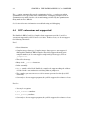
The PathScale EKO C and C++ Compiler Suite supports most of the C and C++
extensions supported by GCC Version 3.3.1 Suite. In this release, we do not support
the following extensions:
For C:
• Nested functions
• Complex integer data type: Complex integer data types are not supported.
Although the PathScale EKO Compiler Suite fully supports floating point
complex numbers, it does not support complex integer data types, such as
_Complex int.
• Thread local storage
• Many of the __builtin functions
• Inline assembly
• A goto outside of the block. PathScale compilers do support taking the address
of a label in the current function and doing indirect jumps to it.
• The compiler generates incorrect code for structs generated on the fly (a GCC
extension).
• Currently we do not support pragmas; they will be supported in a future release.
For C++:
• Java-style exceptions
• java_interface attribute
• init_priority attribute
• Currently we do not support pragmas; they will be supported in a future release.
Chapter 5
Porting and compatibility
5.1
Getting started
Here are some tips to get you started compiling your favorite applications with the
PathScale EKO Compiler Suite. Some of the known issues are:
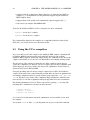
• The PathScale EKO Compiler Suite C, C++, and Fortran compilers are
compatible with gcc and g77. Some packages will check strings like the gcc
version or the name of the compiler to make sure you are using gcc; you may
have to work around these tests. See Section 5.3.1 for more information.
• Some packages continue to use deprecated features of gcc. While gcc may print
a warning and continue compilation, the PathScale EKO Compiler Suite C, C++,
and Fortran compilers may print an error and exit. Use the instructions in the
error to substitute an updated flag. For example, some packages will specify the
deprecated "-Xlinker" gcc flag to pass arguments to the linker, while the
PathScale EKO Compiler Suite uses the modern "-Wl" flag.
• Some gcc flags may not yet be implemented. These will be documented in the
release notes.
• If a configure script is being used, using the compat-gcc wrappers found in
<installation_dir>/compat-gcc/bin may help. See Section 5.3.1 for more
information.
• Some source packages make assumptions about the locations of libraries and fail
to look in lib64 named directories for libraries resulting in unresolved symbols
at during the link.
33
34
CHAPTER 5. PORTING AND COMPATIBILITY
5.2
Cookbook
This is a step-by-step approach to porting code. These are the steps to go through to
get your code compiling with the PathScale EKO compilers:
1. Select sample code to work with
2. Change your makefile if necessary (very likely if you use IPA)
3. Check for these things:
(a) Look for library dependencies
(b) Check the options you are using
(See the eko man page for the Pathscale compiler options)
(c) Check extensions1
(d) Check intrinsic functions
(See Appendix B for the list of supported instrinsics)
4. Compile your sample code and look at the results
(a) Look for behavior differences; does the program behave correctly?
(b) Are you getting the right answer?
(for example, with numerical analysis)
5. Troubleshoot and repeat
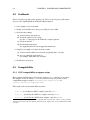
5.3 Compatibility
5.3.1
GCC compatibility wrapper script
Many software build packages check for the existence of gcc, and may even require
the compiler used to be called gcc in order to build correctly. We provide a GCC
compatibility wrapper script in /opt/pathscale/compat-gcc/bin (or
<install_directory>/compat-gcc/bin).
This script can be invoked with different names:
• gcc, cc - to look like the GNU C compiler, and call pathcc
• g++, c++ - to look like the GNU C++ compiler, and call pathCC
• g77, f77 - to look like the GNU Fortran compiler, and call pathf90
1 While the PathScale compilers aim to be compatible with code from other vendors, you may encounter
unsupported extensions. All of the planned extensions for the compilers have not been implemented in this
1.2 release.
5.3. COMPATIBILITY
35
To use this script, you must put the path to this directory in your shell’s search path
before the location of your system’s gcc (which is usually /usr/bin). You can confirm
the order in the search path by running "type gcc" after modifying your search
path. The output should print the location of the gcc wrapper, not /usr/bin/gcc.
To pass in PathScale-specific compiler options, you can set several environment
variables before you do a build. They are:
PSC_GENFLAGS - generic flags, passed to all compilers
PSC_CFLAGS - only passed to the C compiler, pathcc
PSC_CXXFLAGS - only passed to the C++ compiler, pathCC
PSC_FFLAGS - only passed to the Fortran compiler, pathf90
5.3.2
Modifying existing scripts
If you are building a piece of software that is configured with GNU autoconf, you
can run the configure script like this (using Bourne shell syntax):
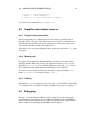
$ CC=pathcc CXX=pathCC FC=pathf90 ./configure [..usual options..]
If you are using a regular Makefile, you may simply be able to run it as follows:
$ make CC=pathcc CXX=pathCC FC=pathf90
Software packages that build or configure in somewhat different ways, such as many
scientific libraries, may need a little more work.
5.3.3
Name mangling
Name mangling ensures that function, subroutine, and common-block names from a
Fortran program or library do not clash with names in libraries from other
programming languages. This makes mixing code from C, C++, and Fortran easier.
See Section 3.7.1 for details on name mangling.
36
5.4
CHAPTER 5. PORTING AND COMPATIBILITY
Compiler options for porting and correctness
The following options can help you fix problems prior to debugging your code.
-static Some codes expect data to be initialized to zero and allocated in the heap.
-r8 -i8 Respectively promotes the default representation for REAL and INTEGER
type from 4 bytes to 8 bytes. Useful for porting from Cray code when integer and
floating point data is 8 bytes long by default. Watch out for type mismatches
with external libraries.
5.5
Fortran compiler stack size
The Fortran compiler allocates data on the stack by default. Some environments set a
low limit on the size of a process’s stack, which may cause Fortran programs that use
a large amount of data to crash shortly after they start.
If the PathScale EKO Fortran runtime environment detects a low stack size limit, it
will automatically increase the size of the stack allocated to a Fortran process before
the Fortran program begins executing.
By default, it automatically increases this limit to the total amount of physical
memory on a system, less 128 megabytes per CPU. For example, when run on a
4-CPU system with 1G of memory, the Fortran runtime will attempt to raise the stack
size limit to 1G - (128M * 4), or 640M.
To have the Fortran runtime tell you what it is doing with the stack size limit, set the
PSC_STACK_VERBOSE environment variable before you run a Fortran program. You
can control the stack size limit that the Fortran runtime attempts to use using the
PSC_STACK_LIMIT environment variable.
If this is set to the empty string, the Fortran runtime will not attempt modify the
stack size limit in any way.
Otherwise, this variable must contain a number. If the number is not followed by any
text, it is treated as a number of bytes. If it is followed by the letter "k" or "K", it is
treated as kilobytes (1024 bytes). If "m" or "M", it is treated as megabytes (1024K). If
"g" or "G", it is treated as gigabytes (1024M). If "%", it is treated as a percentage of the
system’s physical memory.
If the number is negative, it is treated as the amount of memory to leave free, i.e. it is
subtracted from the amount of physical memory on the machine. If the text so far is
followed by "/cpu", it is treated by a "per cpu" number, and the number is multiplied
by the number of CPUs on the system. This is useful for multiprocessor systems that
are running several processes concurrently.
For a 4-CPU system with 1G of memory, here are examples of the meanings of some
values for stack size that could be set:
5.5. FORTRAN COMPILER STACK SIZE
100000
820K
-0.25g
128M/cpu
-10M/cpu
37
100000 bytes
820K (839680 bytes)
all but 0.25G, or 0.75G total
128M per CPU, or 512M total
all but 10M per CPU (all but 40M total), or 0.96G total
If the Fortran runtime encounters problems while attempting to modify the stack size
limit, it will print some warning messages, but will not abort.
38
CHAPTER 5. PORTING AND COMPATIBILITY
Chapter 6
Tuning Quick Reference
This chapter provides some ideas for tuning your code’s performance with the
PathScale EKO compiler.
The following sections describe a small set of tuning options that are relatively easy to
try, and often give good results. These are tuning options that do not require Makefile
changes, or risk the correctness of your code results. More detail on these flags can be
found in the next chapter, in Appendix ??, and in the man pages.
6.1
Basic optimization
Here are some things to try first when optimizing your code.
For basic optimization, use the -O flag, which is equivalent to -O2. This is the first
flag to think about using when tuning your code. After trying -O, try:
-O2
then ,
-O3
and then,
-O3 -OPT:Ofast.
For more information on the -O flags and -OPT:Ofast, see Section 7.1.
6.2
IPA
Inter-Procedural Analysis (IPA), invoked most simply with -ipa, is a compilation
technique that analyzes an entire program. This allows the compiler to do
39
40
CHAPTER 6. TUNING QUICK REFERENCE
optimizations without regard to which source file the code appears in. IPA can
improve performance significantly.
IPA can be used in combination with the other optimization flags. -O3 -ipa or -O2
-ipa will typically provide increased performance over the -O3 or -O2 flags alone.
-ipa needs to be used both in the compile and in the link steps of a build. See Section
7.3 for more details on how to use -ipa.
6.3
Feedback directed optimization
Feedback-directed optimization uses a special instrumented executable to collect
profile information about the program that is then used in later compilations to tune
the executable.
See Section 7.6 for more information.
6.4
Aggressive optimization
The PathScale EKO compilers provide an extensive set of additional options to cover
special case optimizations. The ones documented in Chapter 7 contain options that
may significantly improve the speed or performance of your code.
This section briefly introduces some of the first tuning flags to try beyond -O2 or -O3.
Some of these options require knowledge of what the algorithms are and what coding
style of the program require, otherwise they may impact the program’s correctness.
Some of these options depend on certain coding practices to be effective.
One word of caution: The PathScale EKO Compiler Suite, like all modern
compilers, has a range of optimizations. Some produce identical program output to
the non-optimized, some can change the program’s behavior slightly. The first class of
optimizations is termed "safe" and the second "unsafe". See for Section 7.7 for more
information on these optimizations.
-OPT:Olimit=0 is a generally safe option but may result in the compilation taking a
long time or consuming large quantities of memory. This option tells the compiler to
optimize the files being compiled at the specified levels no matter how large they are.
The option -fno-math-errno bypasses the setting of ERRNO in math functions.
This can result in a performance improvement if the program does not rely on IEEE
exception handling to detect runtime floating point errors.
Likewise, -OPT:roundoff=2 allows for fairly extensive code transformations that
may result in floating point round-off or overflow differences in computations. Refer to
Section 7.7.3.2 and 7.7.3 for more information.
6.5. PERFORMANCE ANALYSIS
41
The option -OPT:div_split=on allows the conversion of x/y into x*(recip(y))
which may result in less accurate floating point computations. Refer to Sections
7.7.3.2 and 7.7.3 for more information.
The -OPT:alias settings allow the compiler to apply more aggressive optimizations
to the program. The option -OPT:alias=typed assumes that the program has been
coded in adherence with the ANSI/ISO C standard which states that two pointers of
different types cannot point to the same location in memory. Setting
-OPT:alias=restrict allows the compiler to assume that points refer to distinct,
non-overlapping objects. If the these options are specified and the program does
violate the assumptions being made, the program may behave incorrectly. Refer to
Section 7.7.1 for more information.
There are several shorthand options that can be used in place of the above options.
The option -OPT:Ofast is equivalent to
-OPT:roundoff=2:Olimit=0:div_split=on:alias=typed. -Ofast is
equivalent to -O3 -ipa -OPT:fast -fno-math-errno. When using this
shorthand options, make sure the impact of the option is understood by stepwise
building up the functionality by using the equivalent options.
There are many more options that may help the performance of the program. These
options are discussed elsewhere in the User Guide and in the associated man pages.
6.5
Performance analysis
In addition to these suggestions for optimizing your code, here are some other ideas to
assist you in tuning. Section 2.10 discusses figuring out where to tune your code,
using time to get an overview of your code, and using pathprof to find your
program’s hot spots.
6.6
Optimize your hardware
Make sure you are optimizing your hardware as well. Section 7.8 discusses getting
the best performance out of processors based on the AMD64 family of chips (Opteron,
Athlon64, and Athlon64 FX).
42
CHAPTER 6. TUNING QUICK REFERENCE
Chapter 7
Tuning options
This chapter discusses in more depth some of the major groups of flags available in
the PathScale EKO Compiler Suite.
7.1
Basic optimizations: The -O flag
The -O flag is the first flag to think about using. See Table 7.1 showing the default
flag settings for various levels of optimization.
-O0 (O followed by a zero) specifies no optimization–this is useful for debugging. The
-g debugging flag is fully compatible with this level of optimization.
N OTE: Using -g by itself without specifying -O will change the default optimization
level from -O2 to -O0 unless explicitly specified.
-O1 specifies minimal optimizations with no noticeable impact on compilation time
compared with -O0. Such optimizations are limited to those applied within
straight-line code (basic blocks), like peephole optimizations and instruction
scheduling. The -O1 level of optimization minimizes compile time.
-O2 only turns on optimizations which always increase performance and the
increased compile time (compared to -O1) is commensurate with the increased
performance. This is the default, if you don’t use any of the -O flags. The
optimizations performed at level 2 are:
43
44
CHAPTER 7. TUNING OPTIONS
• For inner loops, perform:
– Loop unrolling
– Simple if-conversion
– Recurrence-related optimizations
• Two passes of instruction scheduling
• Global register allocation based on first scheduling pass
• Global optimizations within function scopes:
– Partial redundancy elimination
– Strength reduction and loop termination test replacement
– Dead store elimination
– Control flow optimizations
– Instruction scheduling across basic blocks
• -O2 implies the flag -OPT:goto=on, which enables the conversion of GOTOs
into higher level structures like FOR loops.
-O3 turns on additional optimizations which will most likely speed your program up,
but may, in rare cases, slow your program down. The optimizations provided at this
level include all -O1 and -O2 optimizations and the flags noted below:
• -LNO:opt=1 Turn on Loop Nest Optimization (for more details, see Section 7.4)
• -OPT with the following options in the OPT group: (see the -opt man pages for
more information)
-OPT:got_call_conversion=on (see the opt(7) man page)
-OPT:roundoff=1 (see Section 7.7.3.2)
-OPT:IEEE_arith=2 (see Section 7.7.3)
-OPT:Olimit=6000 (see Section 6.3)
-OPT:reorg_common=1 (see the opt(7) man page)
N OTE: In our in-house testing, we have noticed that several codes which are slower at
-O3 than -O2 are fixed by using -O3 -LNO:prefetch=0. This seems to mainly help
codes that fit in cache.
7.2. SYNTAX FOR COMPLEX OPTIMIZATIONS (-CG, -IPA, -LNO -OPT, -WOPT)45
7.2
Syntax for complex optimizations (-CG, -IPA,
-LNO -OPT, -WOPT)
The group optimizations control a variety of behaviors and can override defaults. This
section covers the syntax of these options.
The group options allow for the setting of multiple suboptions in two ways:
• Separating each sub-flag by colons, or
• Using multiple flags on the command line.
For example, the following command lines are equivalent:
pathcc -OPT:roundoff=2:alias=restrict wh.c
pathcc -OPT:roundoff=2 -OPT:alias=restrict wh.c
Some suboptions either enable or disable the feature. To enable a feature, either
specify only the subflag name or with =1, =ON, or =TRUE. Disabling a feature, is
accomplished by adding =0, =OFF, or =FALSE. The following command lines mean the
same thing:
pathf90 -OPT:div_split:fast_complex=FALSE:IEEE_NaN_inf=OFF wh.F
pathf90 -OPT:div_split=1:fast_complex=0:IEEE_NaN_inf=false wh.F
7.3
Inter-Procedural Analysis (IPA)
IPA (Inter-Procedural Analysis) is a compilation technique that analyzes an entire
program at once. It is most simply invoked with -ipa. IPA allows the compiler to do
optimizations such as constant propagation and inlining of functions without regard
to which source file code appears in. IPA can be used with any optimization level, but
gives the biggest potential benefit when combined with -O3. The -Ofast flag turns
on -ipa as part of its many optimizations.
Inter-procedural analysis is invoked in several possible ways: -ipa, -IPA, and
implicitly via -Ofast. In the following section we briefly explain how to invoke this
analysis, which can have a significant effect on performance.
When compiling with -ipa the .o files that are created are not a regular .o files. IPA
uses the .o files in its analysis of your program, and then does a second compilation
using that information to optimize the executable.
46
CHAPTER 7. TUNING OPTIONS
N OTE: When you are using -ipa, all the .o files have to have been compiled with
-ipa, and all libraries have to have been compiled without -ipa for your compilation
to be successful.
Currently the IPA linker is looking for one optimization level for the entire program.
You will get a warning if there are several different levels of optimization in your
compilation. The warning doesn’t work with system libraries. In future versions of
the compiler, you will be able to compile and link system libraries with different levels
of optimization.
Flags like -ipa can be used in combination with a very large number of other flags,
but some typical combinations with the -O flags are shown below:
-O3 -ipa or -O2 -ipa is a typical additional attempt at improved performance over
the -O3 or -O2 flag alone. -ipa needs to be used both in the compile and in the link
steps of a build.
Using IPA with your program can be simple or moderately complex. If you have only a
few source files, you can simply use it like this:
pathf90 -O3 -ipa main.f subs1.f subs2.f
If you compile files separately, the *.o files generated by the compiler do not actually
contain object code; they contain a representation of the source code. Actual
compilation happens at link time. The link command also needs the -ipa flag added.
Thus,
pathf90
pathf90
pathf90
pathf90
-c -O3 -ipa main.f
-c -O3 -ipa subs1.f
-c -O3 -ipa subs2.f
-O3 -ipa main.o subs1.o subs2.o
N OTE: IPA has some restrictions that may require modifying Makefiles. In particular,
when you link, all *.o files must have been compiled with -ipa, and all library
archives (libfoo.a) must have been compiled without -ipa. If your Makefiles build
libraries, and you wish this code to be built with -ipa, you will need to split these
libraries into separate *.o files before linking. For example, if your link line is:
pathf90 -O3 -ipa main.o sub1.o lib/libfoo.a
and the code in libfoo.a was built with IPA, you will need to do something like:
mkdir ipa_temp
cd ipa_temp
ar x ../lib/libfoo.a
cd ..
pathf90 -O3 -ipa main.o sub1.o ipa_temp/*.o
7.4. LOOP NEST OPTIMIZATION (LNO)
47
Note that, in a non-IPA compile, most of the time is incurred with compiling all the
files to create the object files (the .o’s) and the link step is quite fast. In an IPA
compile, the creating of .o files is very fast, but the link step can take a long time.
The total compile time can be considerably longer with IPA than without.
7.3.1
Size and correctness limitations to IPA
IPA often works well on programs up to 100,000 lines, but is not recommended for use
in larger programs in this release.
7.4
Loop Nest Optimization (LNO)
If your program has many nests of loops, you may want to try some of the Loop Nest
Optimization group of flags. This group defines transformations and options that can
be applied to loop nests.
One of the nice features of the PathScale EKO compilers is that its powerful Loop
Nest Optimization feature is invoked by default at -O3. This feature can provide up to
a 10-20x performance advantage over other compilers on certain matrix operations at
-O3.
In rare circumstances, this feature can make things slower, so you can use
-LNO:opt=0 to disable nearly all loop nest optimization. Trying to make an -O2
compile faster by adding -LNO:opt=on will not work because the -LNO feature is only
active with -O3 (or -Ofast which implies -O3).
Some of the features that one can control with the -LNO: group are:
• Loop fusion and fission
• Blocking to optimize cache line reuse
• Cache management
• TLB (Translation Lookaside Buffer) optimizations
• Prefetch
In this section we will highlight a few of the LNO options that have frequently been
valuable.
48
7.4.1
CHAPTER 7. TUNING OPTIONS
Loop fusion and fission
Sometimes loop nests have too few instructions and consecutive loops should be
combined to improve utilization of CPU resources. Another name for this process is
loop fusion.
Sometimes a loop nest will have too many instructions, or deal with too many data
items in its inner loop, leading to too much pressure on the registers, resulting in
spills of registers to memory. In this case, splitting loops can be beneficial. Like
splitting an atom, splitting loops is termed fission. These are the LNO options to
control these transformations:
-LNO:fusion=n Perform loop fusion, n: 0 off, 1 conservative, 2 aggressive. Level 2
implies that outer loops in consecutive loop nests should be fused, even if it is found
that not all levels of the loop nests can be fused. The default level is 1 (standard outer
loop fusion), but 2 has been known to benefit a number of well-known codes.
-LNO:fission=n Perform loop fission, n: 0 off, 1 standard, 2 try fission before
fusion. The default level is 1, but 2 has been known to benefit a number of
well-known codes.
Be careful with mixing the above two flags, because fusion has some precedence over
fission: if -LNO:fission=[1 or 2] and -LNO:fusion=[1 or 2] then fusion is
performed.
-LNO:fusion_peeling_limit=n controls the limit for the number of iterations
allowed to be peeled in fusion, where n has a default of 5 but can be any non-negative
integer.
Peeling is done when the iteration counts in consecutive loops is different, but close,
and several iterations are replicated outside the loop body to make the loop counts the
same.
7.4.2
Cache size specification
The PathScale EKO compilers are primarily targeted at the Opteron CPU currently,
so they assume an L2 cache size of 1MB. Athlon 64 can have either a 512KB or 1MB
L2 cache size. If your target machine is Athlon 64 and you have the smaller cache
size, then setting -LNO:cs2=512k could help. Here is the more general description of
some of what is available.
-LNO:cs1=n, cs2=n, cs3=n, cs4=n
This option specifies the cache size. n can be 0 or a positive integer followed by one of
the following letters: k, K, m, or M. These letters specify the cache size in Kbytes or
Mbytes.
Specifying 0 indicates there is no cache at that level.
7.4. LOOP NEST OPTIMIZATION (LNO)
49
cs1 is the primary cache
cs2 refers to the secondary cache
cs3 refers to memory
cs4 is the disk
Default cache size for each type of cache depends on your system. Use
-LIST:options=ON to see the default cache sizes used during compilation.
With a smaller cache, the cache set associativity is often decreased as well. The flag
set: -LNO:assoc1=n, assoc2=n, assoc3=n, assoc4=n can define this appropriately
for your system.
Once again, the above flags are already set appropriately for Opteron.
7.4.3
Cache blocking, loop unrolling, interchange
transformations
Cache blocking, also called ’tiling’, is the process of choosing the appropriate loop
interchanges and loop unrolling sizes at the correct levels of the loop nests so that
cache reuse can be optimized and memory accesses reduced. This whole LNO feature
is on by default, but can be turned off with: -LNO:blocking=off.
-LNO:blocking_size=n specifies a block size that the compiler must use when
performing any blocking, where n is a positive integer that represents the number of
iterations.
-LNO:interchange is on by default, but setting this =0 can disable the loop
interchange transformation in the loop nest optimizer.
The LNO group controls outer loop unrolling, but the -OPT: group controls inner loop
unrolling. Here are the major -LNO: flags to control loop unrolling:
-LNO:outer_unroll_max,ou_max=n specifies that the compiler may unroll outer
loops in a loop nest by up to n per loop, but no more. The default is 4.
-LNO:ou_prod_max=n
Indicates that the product of unrolling levels of the outer loops in a given loop nest is
not to exceed n, where n is a positive integer. The default is 16.
To be more specific about how much unrolling is to be done, use
-LNO:outer_unroll,ou=n. This indicates that exactly n outer loop iterations
should be unrolled, if unrolling is legal. For loops where outer unrolling would cause
problems, unrolling is not performed.
7.4.4
Prefetch
The LNO group can provide guidance to the compiler about the level and type of
prefetching to enable. General guidance on how aggressively to prefetch is specified
50
CHAPTER 7. TUNING OPTIONS
by -LNO:prefetch=n, where n=1 is the default level. n=0 disables prefetching in
loop nests, while n=2 means to prefetch more aggressively than the default.
-LNO:prefetch_ahead=n defines how many cache lines ahead of the current data
being loaded should be prefetched. The default is n=2 cache lines.
7.4.5
Vectorization
Vectorization is an optimization technique that works on multiple pieces of data at
once. For example, the compiler will turn a loop computing the mathematical function
sin() into a call to the vsin() function, which is twice as fast.
The use of vectorized versions of functions in the math library like sin(), cosin() is
controlled by the flag -LNO:vintr=ON|OFF. Vectorization of user code (excluding
these mathematical functions) is controlled by the flag -LNO:simd[=(0|1|2)].
-LNO:simd_verbose=ON prints vectorizer information (from vectorizing user code)
to stdout.
See the eko man page for more information.
7.5
Code Generation (-CG:)
The code generation group governs some aspects of instruction-level code generation
that can have benefits for code tuning.
-CG:gcm=OFF turns off the instruction-level global code motion optimization phase.
The default is ON.
-CG:load_exe=n specifies the threshold for subsuming a memory load operation into
the operand of an arithmetic instruction. The value of 0 turns off this subsumption
optimization. By default this subsumption is performed only when the result of the
load has only one (n=1) use. This subsumption is not performed if the number of times
the result of the load is used exceeds the value n, a non-negative integer. We have
found that load_exe=2 or 0 are occasionally profitable.
-CG:use_prefetchnta=ON means for the compiler to use the prefetch operation that
assumes that data is Non-Temporal at All (NTA) levels of the cache hierarchy. This is
for data streaming situations in which the data will not need to be re-used soon.
Default is OFF.
-CG:use_movlpd=ON makes the code generator use the MOVLPD SSE2 instruction
instead of MOVSD. See AMD64’s instruction description for the difference between
these two instructions. Default is OFF.
7.6. FEEDBACK DIRECTED OPTIMIZATION (FDO)
7.6
51
Feedback Directed Optimization (FDO)
Feedback-directed optimization uses a special instrumented executable to collect
profile information about the program; for example, it records how frequently every
if() statement is true. This information is then used in later compilations to tune
the executable.
FDO is most useful if a program’s typical execution is roughly similar to the execution
of the instrumented program on its input data set; if different input data has
dramatically different if() frequencies, using FDO might actually slow down the
program. This section also discusses how to invoke this feature with the fb_create
and fb_opt flags.
FDO requires compiling the program at least twice. In the first pass:
pathcc -O3 -ipa -fb_create fbdata -o foo foo.c
The executable foo will contain extra instrumentation library calls to collect feedback
information; this means foo will actually run a bit slower than normal.
Next, run the program foo with an example dataset:
./foo < typical_input_data >
During this run, a file named "fbdata" will be created, containing feedback
information. To use this data in a subsequent compile:
pathcc -O3 -ipa -fb_opt fbdata -o foo foo.c
This new executable should run faster than a non-FDO foo, and will not contain any
instrumentation library calls.
Experiment to see if FDO provides significant benefit for your application.
More details on feedback compilation with the PathScale EKO compilers can be found
under the -fb_create and -fb_opt options in the group_flags man page.
52
CHAPTER 7. TUNING OPTIONS
7.7
Aggressive optimizations
The PathScale EKO Compiler Suite, like all modern compilers, has a range of
optimizations. Some produce identical program output to the original, some can
change the program’s behavior slightly. The first class of optimizations is termed
"safe" and the second "unsafe". As a general rule, our -O1,-O2,-O3 flags only perform
"safe" optimizations. But the use of "unsafe" optimizations often can produce a good
speedup in a program, while producing a sufficiently accurate result.
Some “unsafe” optimizations may be “safe” depending on the coding practices used.
We recommend first trying "safe" flags with your program, and then moving on to
"unsafe" flags, checking for incorrect results and noting the benefit of unsafe
optimizations.
Examples of unsafe optimizations include the following.
7.7.1
Alias analysis
Both C and Fortran have occasions where it’s possible that two variables might
occupy the same memory. For example, in C, two pointers might point to the same
location, such that writing through one pointer changes the value of the variable
pointed to by another. While the C standard prohibits some kinds of aliasing, many
real programs violate these rules, so the aliasing behavior of PathScale’s compiler is
controlled by the OPT:alias flag. See Section 7.7.3.2 for more information.
Aliases are hidden definitions and uses of data due to:
• accesses through pointers
• partial overlap in storage locations (e.g. unions in C)
• procedure calls for non-local objects
• raising of exceptions
The compiler normally has to assume that aliasing will occur. The compiler does alias
analysis to identify when there is no alias, so later optimizations can be performed.
Certain C and C++ language rules allow some levels of alias analysis. Fortran has
additional rules which make it possible to rule out aliasing in more situations:
subroutine parameters have no alias; and side effects of calls are limited to global
variables and actual parameters.
For C or C++, the coding style can help the compiler make the right assumptions.
Using type qualifiers such as const, restrict, or volatile can help the compiler.
Furthermore, if you supply some assumptions to make concerning your program, more
optimizations can then be applied. The following are some of the various aliasing
7.7. AGGRESSIVE OPTIMIZATIONS
53
models you can specify, listed in order of increasingly stringent, and potentially
dangerous, assumptions you are telling the compiler to make about your program:
-OPT:alias=any the default level, which implies that any two memory references
can be aliased.
-OPT:alias=typed means to activate the ANSI rule that objects are not aliased it
they have different base types. This option is activated by -Ofast.
-OPT:alias=unnamed assumes that pointers never to point to named objects.
-OPT:alias=restrict tells the compiler to assume that all pointers are restricted
pointers and point to distinct non-overlapping objects. This allows the compiler to
invoke as many optimizations as if the program were written in Fortran. A restricted
pointer behaves as though the C ’restrict’ keyword had been used with it in the
source code.
-OPT:alias=disjoint says that any two pointer _expressions_ are assumed to
point to distinct, non-overlapping objects.
To make the opposite assertion about your program’s behavior, put ’no_’ before the
value. For example, -OPT:alias=no_restrict means that distinct pointers may
point to overlapping storage.
Additional -OPT:alias values are relevant to Fortran programmers in some
situations:
-OPT:alias=cray_pointer asserts that an object pointed to by a Cray pointer is
never overlaid on another variable’s storage. This flag also specifies that the compiler
can assume that the pointed-to object is stored in memory before a call to an external
procedure and is read out of memory at its next reference. It is also stored before a
END or RETURN statement of a subprogram.
-OPT:alias=parm promises that Fortran parameters do not alias to any other
variable. This is the default. no_parm asserts that parameter aliasing is present in
the program.
7.7.2
Numerically unsafe optimizations
Rearranging mathematical expressions and changing the order or number of floating
point operations can slightly change the result. Example:
A = 2. * X
B = 4. * Y
C = 2. * (X + 2. * Y)
54
CHAPTER 7. TUNING OPTIONS
A clever compiler will notice that C = A + B. But the order of operations is different,
and so a slightly different C will be the result. This particular transformation is
controlled by the OPT:roundoff flag, but there are several other numerically unsafe
flags.
Some options that fall into this category are:
The options that control IEEE behavior such as -OPT:roundoff=N and
-OPT:IEEE_arithmetic=N. Here are a couple of others:
-OPT:div_split=(ON|OFF) This option enables or disables transforming
expressions of the form X/Y into X*(1/Y). The reciprocal is inherently less
accurate than a straight division, but may be faster.
-OPT:recip=(ON|OFF) This option allows expressions of the form 1/X to be
converted to use the reciprocal instruction of the computer. This is inherently
less accurate than a division, but will be faster.
These options can have performance impacts. For more information, see the opt
manual page. You can view the manual page by typing man opt at the command line.
7.7.3
IEEE 754 compliance
It is possible to control the level of IEEE 754 compliance through options. Relaxing
the level of compliance allows the compiler greater latitude to transform the code for
improved performance. The following subsections discuss some of those options.
7.7.3.1
Arithmetic
Sometimes it is possible to allow the compiler to use operations that deviate from the
IEEE 754 standard to obtain significantly improved performance, while still obtaining
results that satisfy the accuracy requirements of your application.
The flag regulating the level of conformance to ANSI/IEEE 754-1985 floating pointing
roundoff and overflow behavior is:
-OPT:IEEE_arithmetic=N (where N= 1, 2, or 3).
-OPT:IEEE_arithmetic
=1 Requires strict conformance to the standard
=2 Allows use of any operations as long as exact results are produced. This allows
less accurate inexact results. For example, X*0 may be replaced by 0, and X/X may
7.7. AGGRESSIVE OPTIMIZATIONS
55
replaced by 1 even though this is inaccurate when X is +inf, -inf, or NaN. This is the
default level at -O3.
=3 Means to allow any mathematically valid transformations. For example,
replacing x/y by x*(recip(y)).
For more information on the defaults for IEEE arithmetic at different levels of
optimization, see Table 7.1.
7.7.3.2
Roundoff
Use -OPT:roundoff= to identify the extent of roundoff error the compiler is allowed
to introduce:
0 No roundoff error
1 Limited roundoff error allowed
2 Allow roundoff error caused by re-associating expressions
3 Any roundoff error allowed
The default roundoff level with -O0, -O1, and -O2 is 0. The default roundoff level
with -O3 is 2.
Listing some of the other -OPT: suboptions that are activated by various roundoff
levels can give more understanding about what the levels mean.
-OPT:roundoff=1 implies:
• -OPT:fast_exp=OFF (it is ON at all other round off levels) This option enables
optimization of exponentiation by replacing the run-time call for exponentiation
by multiplication and/or square root operations for certain compile-time
constant exponents (integers and halves).
• -OPT:fast_trunc implies inlining of the NINT, ANINT, AINT, and AMOD
Fortran intrinsics.
-OPT:roundoff=2 turns on the following sub-options:
• -OPT:fold_reassociate which allows optimizations involving re-association
of floating-point quantities.
• -OPT:recip directs that faster, but potentially less accurate, reciprocal
operations should be performed.
56
CHAPTER 7. TUNING OPTIONS
• -OPT:rsqrt tells the compiler to use faster, but potentially less accurate,
square root operations.
-OPT:roundoff=3 turns on the following sub-options:
• -OPT:div_split enables or disables the calculation of x/y as x*(1.0/y).
• -OPT:fast_complex When this is set ON, complex absolute value (norm) and
complex division use fast algorithms that overflow for an operand (the divisor, in
the case of division) that has an absolute value that is larger than the square
root of the largest representable floating-point number.
• -OPT:fast_nint uses a hardware feature to implement single and
double-precision versions of NINT and ANINT
7.7.4
Other unsafe optimizations
A few advanced optimizations intended to exploit some exotic instructions such as
CMOVE (conditional move) result in slightly changed program behavior, such as
programs which write into variables guarded by an if() statement. For example:
if (a .eq. 1) then
a = 3
endif
In this example, the fastest code on an x86 CPU is code which avoids a branch by
always writing a; if the condition is false, it writes a’s existing value into a, else it
writes 3 into a. If a is a read-only value not equal to 1, this optimization will cause a
segmentation fault in an odd but perfectly valid program.
7.7.5
Assumptions about numerical accuracy
See the following table for the assumptions made about numerical accuracy at
different levels of optimization.
7.8. OPTERON PERFORMANCE
Table 7.1:
-OPT: option name
alias
div_split
fast_complex
fast_exp
fast_nint
fast_sqrt
fast_trunc
fold_reassociate
fold_unsafe_relops
fold_unsigned_relops
IEEE_arithmetic
IEEE_NaN_inf
recip
roundoff
rsqrt
57
Numerical accuracy with options
-O0 -O1 -O2 -O3 -Ofast
Notes
any any any any
typed
off
off
off
off
on
on if IEEE_a=3
off
off
off
off
off
on if roundoff=3
off
off
off
on
on
on if roundoff>=1
off
off
off
off
off
on if roundoff=3
off
off
off
off
off
off
off
off
on
on
on if roundoff>=1
off
off
off
off
on
on if roundoff>=2
on
on
on
on
on
off
off
off
off
off
1
1
1
2
2
off
off
off
off
off
off
off
off
off
on
on if roundoff>=2
0
0
0
1
2
off
off
off
off
off
For example, if you use -OPT:IEEE_arithmetic at -O3, the flag is set to
IEEE_arithmetic=2 by default.
7.8
Opteron performance
Although the Opteron platform has excellent performance, there are a number of
subtleties in configuring your hardware and software that can each cause substantial
performance degradations. Many of these are not obvious, but they can reduce
performance by 30% or more at a time. We have collected a set of techniques for
obtaining best performance described below.
7.8.1
Hardware setup
There is no "catch all" memory configuration that works best across all systems. We
have seen instances where the number, type, and placement of memory modules on a
motherboard can each affect the memory latency and bandwidth that you can achieve.
Most motherboard manuals have tables that document the effects of memory
placement in different slots. We recommend that you read the table for your
motherboard, and experiment.
If you fail to set up your memory correctly, this can account for up to a factor-of-two
difference in memory performance. In extreme cases, this can even affect system
stability.
58
7.8.2
CHAPTER 7. TUNING OPTIONS
BIOS setup
Some BIOSes allow you to change your motherboard’s memory interleaving options.
Depending on your configuration, this may have an effect on performance.
For a discussion of memory interleaving across nodes, see Section 7.8.3 below.
7.8.3
Multiprocessor memory
Traditional small multiprocessor (MP) systems use symmetric multiprocessing (SMP),
in which the latency and bandwidth of memory is the same for all CPUs.
This is not the case on Opteron multiprocessor systems, which provide non-uniform
memory access, known as NUMA. On Opteron MP systems, each CPU has its own
direct-attached memory. Although every CPU can access the memory of all others,
memory that is physically closest has both the lowest latency and highest bandwidth.
The larger the number of CPUs, the higher will be the latency and the lower the
bandwidth between the two CPUs that are physically furthest apart.
Most multiprocessor BIOSes allow you to turn on or off the interleaving of memory
across nodes. Memory interleaving across nodes masks the NUMA variation in
behavior, but it imposes uniformly lower performance. We recommend that you turn
node interleaving off.
7.8.4
Kernel and system effects
To achieve best performance on a NUMA system, a process or thread and as much as
possible of the memory that it uses must be allocated to the same single CPU. The
Linux kernel has historically had no support for setting the affinity of a process in
this way.
Running a non-NUMA kernel on a NUMA system can result in changes in
performance while a program is running, and non-reproducibility of performance
across runs. This occurs because the kernel will schedule a process to run on
whatever CPU is free without regard to where the process’s memory is allocated.
Recent kernels have some degree of NUMA support. They will attempt to allocate
memory local to the CPU where a process is running, but they still may not prevent
that process from later being run on a different CPU after it has allocated memory.
Current NUMA-aware kernels do not migrate memory across NUMA nodes, so if a
process moves relative to its memory, its performance will suffer in unpredictable
ways.
Note that not all vendors ship NUMA-aware kernels or C libraries that can interface
to them. If you are unsure of whether your kernel supports NUMA, check with your
distribution vendor.
7.8. OPTERON PERFORMANCE
7.8.5
59
Tools and APIs
Recent Linux distributions include tools and APIs that allow you to bind a thread or
process to run on a specific CPU. This provides an effective workaround for the
problem of the kernel moving a process away from its memory.
Your Linux distribution may come with a package called schedutils, which includes
a program called taskset. You can use taskset to specify that a program must run
on one particular CPU.
For low-level programming, this facility is provided by the sched_setaffinity(2)
call in the C library. You will need a recent C library to be able to use this call.
On systems that lack NUMA support in the kernel, and on runs that do not set
process affinity before they start, we have seen variations in performance of 30% or
more between individual runs.
7.8.6
Testing memory latency and bandwidth
To test your memory latency and bandwidth, we recommend two tools.
For memory latency, the LMbench package provides a tool called lat_mem_rd. This
provides a cryptic, but fairly accurate, view of your memory hierarchy latency.
LMbench is available from http://www.bitmover.com/lmbench/
For measuring memory bandwidth, the STREAM benchmark is a useful tool.
Compiling either the Fortran or C version of the benchmark with the following
command lines will provide excellent performance:
$ pathf90 -Ofast stream_d.f second_wall.c -DUNDERSCORE
$ pathcc -Ofast -lm stream_d.c second_wall.c
(If you do not compile with at least -O3, performance may drop by 40% or more.)
The STREAM benchmark is available from http://www.streambench.org/
For both of these tools, we recommend that you perform a number of identical runs
and average your results, as we have observed variations of more than 10% between
runs.
60
CHAPTER 7. TUNING OPTIONS
Chapter 8
Examples
8.1
Compiler flag tuning and profiling with
pathprof
We’ll use the 168.wupwise program from the CPU2000 floating point suite for this
example. This is a Physics/Quantum Chromodynamics (QCD) code. For those who
care, "wupwise" is an acronym for "Wuppertal Wilson Fermion Solver," a program in
the area of lattice gauge theory (quantum chromodynamics). The code is in about
2100 lines of Fortran 77 in 23 files. We’ll be running and tuning wupwise
performance on the reference (largest) dataset. Each run takes about two to four
minutes on a 2 GHz Opteron system to complete.
Even though this is a Fortran 77 code, the PathScale EKO Fortran compiler can
handle it.
Outline:
Try pathf90 -O2 and pathf90 -O3 first.
Run times (user time) were:
-O2
-O3
seconds
150.3
174.3
We’re a little surprised since -O3 is supposed to be faster than -O2 in general. But the
man page did say that the -O3 "may include optimizations that are generally
beneficial but may hurt performance."
So, let’s look at a profile of the -O2 binary. We do need to recompile using flags -O2
-pg.
61
62
CHAPTER 8. EXAMPLES
Then we need to run the generated, instrumented binary again with the same
reference dataset: $ time -p ./wupwise > wupwise.out (Here we used the -p
(POSIX) flag to get a different time output format). This run generates the file
gmon.out of profiling information.
Then we need to run pathprof to generate the human-readable profile.
$ pathprof ./wupwise
Flat profile:
Each sample counts as 0.01 seconds.
%
cumulative self
self
total
time
seconds
seconds calls s/call s/call name
51.15
83.54
83.54 155648000
0.00
0.00 zgemm_
17.65
112.37
28.83 603648604
0.00
0.00 zaxpy_
8.72
126.61
14.24 214528306
0.00
0.00 zcopy_
8.03
139.72
13.11 933888000
0.00
0.00 lsame_
4.59
147.21
7.49
s_cmp
1.51
149.67
2.46
512301
0.00
0.00 zdotc_
1.49
152.11
2.44 603648604
0.00
0.00 dcabs1_
1.37
154.34
2.23 155648000
0.00
0.00 gammul_
1.08
156.10
1.76 155648000
0.00
0.00 su3mul_
1.07
157.85
1.75
152
0.01
0.50 muldeo_
...
0.00
163.32
0.00
1
0.00
155.83 MAIN__
0.00
163.32
0.00
1
0.00
0.00 init_
0.00
163.32
0.00
1
0.00
0.06 phinit_
%
the percentage of the total running time of the
time
program used by this function.
cumulative
a running sum of the number of seconds accounted
seconds
for by this function and those listed above it.
...
N OTE: The pathprof program is the complimentary version of gprof included in the
PathScale EKO Compiler Suite.
Now, we note that the total time that pathprof measures is 163.3 secs. vs. the 150.3
that we measured for the original -O2 binary. But considering that the -O2 -pg
instrumented binary took 247 seconds to run, this is a pretty good estimate.
It is nice that the top hot-spot, zgemm consumes about 50% of the total time. We also
note that some very small routines zaxpy, zcopy, and lsame are called a very large
number of times. These look like ideal candidates for inlining.
In the second part of the pathprof output (after the explanation of the column
headings for the flat profile), is a call-graph profile. In the example of such a profile
below, one can follow the chain of calls from main to matmul_, muldoe_, su3mul_,
and zgemm_, where most of the time is consumed.
8.1. COMPILER FLAG TUNING AND PROFILING WITH PATHPROF
63
================================================
Additional call-graph profile info:
Call graph (explanation follows)
granularity: each sample hit covers 4 byte(s) for 0.01%
of 163.32 seconds
index % time
self children
called
name
0.00 155.83
1/1
main [2]
[1]
95.4
0.00 155.83
1
MAIN__ [1]
0.00 151.19
152/152
matmul_ [3]
0.05
4.47
1/1
uinith_ [13]
0.00
0.06
1/1
phinit_ [22
0.02
0.04
1/2
rndphi_ [21]
0.00
0.00
301/512301
zdotc_ [14]
0.00
0.00
77/1024077
dznrm2_ [17]
0.00
0.00
452/603648604
zaxpy_ [9]
0.00
0.00
154/214528306
zcopy_ [10]
0.00
0.00
75/39936075
zscal_ [16]
0.00
0.00
1/1
init_ [23]
--------------------------------------------...
-------------------------------------------0.00 151.19
152/152
MAIN__ [1]
[3]
92.6
0.00 151.19
152
matmul_ [3]
1.75
73.84
152/152
muldoe_ [7]
1.75
73.84
152/152
muldeo_ [6]
0.00
0.00
152/214528306
zcopy_ [10]
0.00
0.00
152/603648604
zaxpy_ [9]
--------------------------------------------0.88
48.33 77824000/155648000
muldeo_ [6]
0.88
48.33 77824000/155648000
muldoe_ [7]
[4]
60.3
1.76
96.65 155648000
su3mul_ [4]
83.54
13.11 155648000/155648000
zgemm_ [5]
--------------------------------------------83.54
13.11 155648000/155648000
su3mul_ [4]
[5]
59.2
83.54
13.11 155648000
zgemm_ [5]
13.11
0.00 933888000/933888000
lsame_ [11]
--------------------------------------------...
==============================================================
The -ipa option can analyze the code to make smart decisions on when and which
routines to inline so we try that. -O2 -ipa results in a 133.8 second run time–a nice
improvement over our previous best of 150 seconds with only -O2.
Since we heard somewhere that improvements with compiler flags are not always
predictable, we also try -O3 -ipa. To our great surprise, we achieve a run time of
110.5 seconds, a 58% speed-up over our previous -O3 time, and a nice speed-up over
-O2 -ipa.
64
CHAPTER 8. EXAMPLES
Section 7.7 mentions the flags -O3 -ipa -LNO:fusion=2 and
-OPT:div_split=on. Testing combinations of these two flags as additions to the -O3
-ipa we have already tested results in:
-O3 -ipa -LNO:fusion=2 results in 109.74 seconds run time
-O3 -ipa -OPT:div_split=on results in 112.24 seconds
-O3 -ipa -OPT:div_split=on -LNO:fusion=2 results in 111.28 seconds
So, -O3 -ipa is essentially a tie for the best set of flags with -O3 -ipa
-LNO:fusion=2.
Chapter 9
Debugging and
troubleshooting
9.1
Subscription Manager problems
For recommendations in addressing problems or issues with subscriptions, refer to
Section 6.2 “Subscription problems" in the PathScale EKO Compiler Suite Install
Guide.
9.2
Debugging
The earlier chapters on the PathScale EKO Fortran and C /C++ compilers contain
language-specific debugging information. See Section 3.8 and Section 4.3. More
general information on debugging can be found in this section.
The flag ’-g’ tells the PathScale EKO compilers to produce data in the form used by
modern debuggers, such as GDB. This format is known as DWARF 2.0 and is
incorporated directly into the object files. Code that has been compiled using -g will
be capable of being debugged using GDB or other debuggers.
The -g flag does not affect the optimization level, but it is advisable to use -O0 when
debugging for most accuracy. If you use -g, you automatically use -O0 optimization.
Otherwise debugging may give unpredictable results.
9.3
Large object support
Statically allocated data (.bss) objects such as Fortran COMMON blocks and C
variables with file scope are currently limited to 2GB in size. If the total size exceeds
65
66
CHAPTER 9. DEBUGGING AND TROUBLESHOOTING
that, the compilation (without the -mcmodel=medium option) will likely fail with the
message:
relocation truncated to fit: R_X86_64_PC32
For Fortran programs with only one COMMON block or with no COMMON blocks
after the one that exceeds the 2GB limit, the program may compile and run correctly.
At higher optimization levels (-O3, -Ofast), -OPT:reorg_common is set to ON by
default. This might split a COMMON block such that a block begins beyond the 2GB
boundary. If a program builds correctly at -O2 or below but fails at -O3 or -Ofast,
try adding -OPT:reorg_common=OFF to the flags. Alternatively, using the
-mcmodel=medium option will allow this optimization.
9.4
Using -ipa and -Ofast
When compiling with -ipa, the .o files that are created are not a regular .o files.
IPA uses the .o files in its analysis of your program, and then does a second
compilation using that information.
N OTE: When you are using -ipa, all the .o files have to have been compiled with
-ipa, and all libraries have to have been compiled without -ipa for your compilation
to be successful. In particular, when you link, all *.o files must have been compiled
with -ipa, and all library archives (libfoo.a) must have been compiled without
-ipa.
The requirement of -ipa may mean modifying Makefiles. If your Makefiles build
libraries, and you wish this code to be built with -ipa, you will need to split these
libraries into separate *.o files before linking.
By default, -ipa is turned on when you use -Ofast, so the caveats above apply to
using -Ofast as well.
9.5. TUNING
9.5
67
Tuning
Our compilers often optimize loops by eliminating the loop variable, and instead using
a quantity related to the loop variable, called an "induction variable". If the induction
variable overflows, the loop test will be incorrectly evaluated. This is a very rare
circumstance. To see if this is causing your code to fail under optimization, try:
-OPT:wrap_around_unsafe_opt=off
68
CHAPTER 9. DEBUGGING AND TROUBLESHOOTING
Appendix A
Environment variables
This appendix lists environment variables utilized by the compiler, along with a short
description. These variables are organized by language, with a separate section for
those which are language independent.
A.1
Environment variables for use with C
PSC_CFLAGS - only passes flags to the the C compiler, pathcc
A.2
Environment variables for use with C++
PSC_CXXFLAGS - only passes flags to the C++ compiler, pathCC
A.3
Environment variables for use with Fortran
NLSPATH - flags for run-time and compile-time messages
F90_BOUNDS_CHECK_ABORT - set to YES, causes the program to abort on the first
bounds check violation
PSC_FFLAGS - only passes flags to the Fortran compiler, pathf90
PSC_STACK_LIMIT - controls the stack size limit the Fortran runtime attempts to use
PSC_STACK_VERBOSE - Fortran runtime output about what it is doing with the stack
size limit
69
70
A.4
APPENDIX A. ENVIRONMENT VARIABLES
Language independent environment variables
PSC_GENFLAGS - generic flags are passed to all compilers
Appendix B
Supported intrinsics
The following instrinsics are supported by the PathScale EKO Compiler Suite.
ABS(A)
ASSOCIATED(POINTER, TARGET)
ACOS(X)
ATAN(X)
ACOSD(X)
ATAN2(Y, X)
ADD_AND_FETCH(I, J)
ATAN2D(Y, X)
ADJUSTL(STRING)
ATAND(X)
ADJUSTR(STRING)
BITEST(I, POS)
AIMAG(Z)
BIT_SIZE(I)
AINT(A,KIND)
BJTEST(I, POS)
ALL(MASK, DIM)
BKTEST(I, POS)
ALLOCATED(ARRAY)
BTEST(I, POS)
AND(I, J)
CCOS(X)
AND_AND_FETCH(I, J)
CDCOS(X)
ANINT(A, KIND)
CDEXP(X)
ANY(MASK, DIM)
CDLOG(X)
ASIN(X)
CDSIN(X)
ASIND(X)
CDSQRT(X)
71
72
APPENDIX B. SUPPORTED INTRINSICS
CEILING(A)
CVMGT(I, J, K)
CEXP(X)
CVMGZ(I, J, K)
CHAR(I, KIND) intrinsic or ACHAR(I)
C_LOC(X)
CLEAR_IEEE_EXCEPTION(EXCEPTION)
DACOS(X)
CLOC(C)
DACOSD(X)
CLOCK()
DASIN(X)
CMPLX(X, Y, KIND)
DASIND(X)
COMPARE_AND_SWAP(I, J, K)
DATAN(X)
COMPL(I)
DATAND(X)
CONJG(Z)
DATE()
COS(X)
DBLE(A)
COSD(X)
DBLEQ(A)
COSH(X)
DCOS(X)
COT(X)
DCOSD(X)
COUNT(MASK, DIM)
DCOSH(X)
CQCOS(X)
DCOT(X)
CQEXP(X)
DDIM(X,Y)
CQLOG(X)
DEXP(X)
CQSIN(X)
DFLOAT(A)
CQSQRT(X)
DFLOATI(A)
CSHIFT(ARRAY, SHIFT, DIM)
DFLOATJ(A)
CSIN(X)
DFLOATK(A)
CSMG(I, J, K)
DIGITS(X)
CSQRT(X)
DIM(X,Y)
CVMGM(I, J, K)
DISABLE_IEEE_INTERRUPT(INTERRUPT)
CVMGN(I, J, K)
DLOG(X)
CVMGP(I, J, K)
DLOG10(X)
73
DOT_PRODUCT(VECTOR_A, VECTOR_B)
EOSHIFT(ARRAY, SHIFT, BOUNDARY,
DIM)
DPROD(X, Y)
EPSILON(X) EQV(I, J)
DREAL(A)
EXIT(STATUS)
DSHIFTL(I, J, K)
EXP(X)
DSHIFTR(I, J, K)
EXPONENT(X)
DSIGN(A, B)
FCD(I, J)
DSIN(X)
FDATE()
DSIND(X)
FETCH_AND_ADD(I, J)
DSINH(X)
FETCH_AND_AND(I, J)
DSM_CHUNKSIZE()
FETCH_AND_NAND(I, J)
DSM_DISTRIBUTION_BLOCK()
DSM_DISTRIBUTION_CYCLIC()
DSM_DISTRIBUTION_STAR()
DSM_ISDISTRIBUTED()
DSM_ISRESHAPED()
DSM_NUMCHUNKS()
DSM_NUMTHREADS()
FETCH_AND_OR(I, J)
FETCH_AND_SUB(I, J)
FETCH_AND_XOR(I, J)
FLOATI(A)
FLOATJ(A)
FLOATK(A)
DSM_REM_CHUNKSIZE()
FLOOR(A)
DSM_THIS_CHUNKSIZE()
FNUM
DSM_THIS_STARTINGINDEX()
FP_CLASS(X)
DSM_THIS_THREADNUM()
FRACTION(X)
DSQRT(X)
FREE(P)
DTAN(X)
FSTAT
DTAND(X)
GETPOS(I)
DTANH(X)
GET_IEEE_EXCEPTIONS(STATUS)
DTIME()
GET_IEEE_INTERRUPTS(STATUS)
ENABLE_IEEE_INTERRUPT(INTERRUPT)
GET_IEEE_ROUNDING_MODE(STATUS)
74
APPENDIX B. SUPPORTED INTRINSICS
GET_IEEE_STATUS(STATUS)
IIBSET(I, POS)
HUGE(X)
IIDINT(A)
IAND(I, J)
IIEOR(I, J)
IBCHNG(I, POS)
IIFIX(A)
IBCLR(I, POS)
IINT(A)
IBITS(I, POS, LEN)
IIOR(I, J)
IBSET(I, POS)
IIQINT(A)
ICHAR(C) intrinsic or IACHAR(C)
IISIGN(A, B)
IDATE(I, J, K)
ILEN(I)
IDINT(A)
IMVBITS(FROM, FROMPOS, LEN, TO,
TOPOS)
IEEE_BINARY_SCALE(Y, N)
IEEE_CLASS(X)
IEEE_COPY_SIGN(X, Y)
IEEE_EXPONENT(X, Y)
IEEE_FINITE(X)
IEEE_INT(X, Y)
IEEE_IS_NAN(X)
INDEX(STRING, SUBSTRING, BACK)
ININT(A)
INOT(I)
INT(A, KIND)
INT1(A)
INT2(A)
IEEE_NEXT_AFTER(X, Y)
INT4(A)
IEEE_REAL(X, Y)
INT8(A)
IEEE_REMAINDER(X, Y)
INT_MULT_UPPER(I, J)
IEEE_UNORDERED(X, Y)
IOR(I, J)
IEOR(I, J)
IQINT(A)
IFIX(A)
IRTC()
IIAND(I, J)
ISHA(I, SHIFT)
IIBCHNG(I, POS)
ISHC(I, SHIFT)
IIBCLR(I, POS)
ISHFT(I, SHIFT)
IIBITS(I, POS, LEN)
ISHFTC(I, SHIFT, SIZE)
75
ISHL(I, SHIFT)
KIFIX(A)
ISIGN(A, B)
KILL
ISNAN(X)
KIND(X)
JDATE()
KINT(A)
JIAND(I, J)
KIOR(I, J)
JIBCHNG(I, POS)
KIQINT(A)
JIBCLR(I, POS)
KISIGN(A, B)
JIBITS(I, POS, LEN)
KMVBITS(FROM, FROMPOS, LEN, TO,
TOPOS)
JIBSET(I, POS)
KNINT(A)
JIDINT(A)
KNOT(I)
JIEOR(I, J)
LBOUND(ARRAY, DIM)
JIFIX(A)
LEADZ(I)
JINT(A)
LEN(STRING)
JIOR(I, J)
LENGTH(I)
JIQINT(A)
LEN_TRIM(STRING)
JISIGN(A, B)
LGE(STRING_A, STRING_B)
JMVBITS(FROM, FROMPOS, LEN, TO,
TOPOS)
LGT(STRING_A, STRING_B)
LLE(STRING_A, STRING_B)
JNINT(A)
LLT(STRING_A, STRING_B)
JNOT(I)
KIAND(I, J)
LOC(I) LOCK_RELEASE(I)
LOCK_TEST_AND_SET(I, J)
KIBCHNG(I, POS)
LOG(X)
KIBCLR(I, POS)
LOG10(X)
KIBITS(I, POS, LEN)
LOG2_IMAGES()
KIBSET(I, POS)
LOGICAL(L, KIND)
KIDINT(A)
LONG(A)
KIEOR(I, J)
LSHIFT(I, POSITIVE_SHIFT)
76
APPENDIX B. SUPPORTED INTRINSICS
M@CLR()
NULL(MOLD)
M@LD(X1)
NUMARG()
M@LDMX(X1, X2)
NUM_IMAGES()
M@MX(X1, X2)
OMP_GET_DYNAMIC()
M@UL()
OMP_GET_MAX_THREADS()
MALLOC(P)
OMP_GET_NESTED()
MASK(I)
OMP_GET_NUM_PROCS()
MATMUL(MATRIX_A, MATRIX_B)
OMP_GET_NUM_THREADS()
MAX(A1, A2, ...
OMP_GET_NUM_THREADS()
A63)
OMP_GET_THREAD_NUM()
MAXEXPONENT(X)
MAXLOC(ARRAY, DIM, MASK)
MAXVAL(ARRAY, DIM, MASK)
OMP_SET_LOCK(LOCK)
OMP_TEST_LOCK(LOCK)
MEMORY_BARRIER()
MERGE(TSOURCE, FSOURCE, MASK)
MIN(A1, A2, ...
OMP_IN_PARALLEL()
A63)
MINEXPONENT(X)
OMP_UNSET_LOCK(LOCK)
OR(I, J)
OR_AND_FETCH(I, J)
PACK(ARRAY, MASK, VECTOR)
MINLOC(ARRAY, DIM, MASK)
POPCNT(I)
MINVAL(ARRAY, DIM, MASK)
POPPAR(I)
MOD(A, P)
PRECISION(X)
MODULO(A, P)
PRESENT(A)
MVBITS(FROM, FROMPOS, LEN, TO,
TOPOS)
PRODUCT(ARRAY, DIM, MASK)
NAND_AND_FETCH(I, J)
QACOS(X)
NEAREST(X,S)
QACOSD(X)
NEQV(I, J)
QASIN(X)
NINT(A, KIND)
QASIND(X)
NOT(I)
QATAN(X)
77
QATAND(X)
RANGET(I)
QCOS(X)
RANSET(I)
QCOSD(X)
READ@SM()
QCOSH(X)
REAL(A, KIND)
QCOT(X)
REMOTE_WRITE_BARRIER()
QDIM(X,Y)
REM_IMAGES()
QEXP(X)
REPEAT(STRING, NCOPIES)
QEXT(A)
RESHAPE(SOURCE, SHAPE, PAD, ORDER)
QFLOAT(A)
RRSPACING(X)
QFLOATI(A)
RSHIFT(I, NEGATIVE_SHIFT)
QFLOATJ(A)
RTC() SCALE(X,I)
QFLOATK(A)
SCAN(STRING, SET, BACK)
QLOG(X)
SELECTED_INT_KIND(R)
QLOG10(X)
SELECTED_REAL_KIND(P,R)
QREAL(A)
SET_EXPONENT(X,I)
QSIGN(A, B)
SET_IEEE_EXCEPTION(EXCEPTION)
QSIN(X)
SET_IEEE_EXCEPTIONS(STATUS)
QSIND(X)
SET_IEEE_INTERRUPTS(STATUS)
QSINH(X)
SET_IEEE_ROUNDING_MODE(STATUS)
QSQRT(X)
SET_IEEE_STATUS(STATUS)
QTAN(X)
SHAPE(SOURCE)
QTAND(X)
SHIFT(I, J)
QTANH(X)
SHIFTA(I, J)
RADIX(X)
SHIFTL(I, J)
RANDOM_NUMBER(HARVEST)
SHIFTR(I, J)
RANDOM_SEED(SIZE, PUT, GET)
SHORT(A)
RANF() RANGE(X)
SIGN(A, B)
78
APPENDIX B. SUPPORTED INTRINSICS
SIGNAL()
TEST_IEEE_INTERRUPT(INTERRUPT)
SIN(X)
THIS_IMAGE([array[,dim]])
SIND(X)
TIME(BUF)
SINH(X)
TIME8
SIZE(ARRAY, DIM)
TINY(X)
SIZEOF(X)
TRANSFER(SOURCE, MOLD, SIZE)
SNGL(A)
TRANSPOSE(MATRIX)
SNGLQ(A)
TRIM(STRING)
SPACING(X)
UBOUND(ARRAY, DIM)
SPREAD(SOURCE, DIM, NCOPIES)
SQRT(X)
STAT
SUB_AND_FETCH(I, J)
UNIT(I)
UNPACK(VECTOR, MASK, FIELD)
VERIFY(STRING, SET, BACK)
WRITE_MEMORY_BARRIER()
SUM(ARRAY, DIM, MASK)
XOR(I, J)
SYNCHRONIZE()
XOR_AND_FETCH(I, J)
SYNC_IMAGES([image])
ZABS
SYSTEM_CLOCK(COUNT, COUNT_RATE,
COUNT_MAX)
ZCOS
TAN(X)
ZEXP
TAND(X)
ZLOG
TANH(X)
ZSIN
TEST_IEEE_EXCEPTION(EXCEPTION)
ZSQRT
Appendix C
Glossary
The following is a list of terms used in connection with the PathScale EKO Compiler
Suite.
AMD64 AMD’s 64-bit extensions to Intel’s IA32 (more commonly known as "x86")
architecture. The AMD64 extensions are referred to by Intel as IA32e.
alias An alternate name used for identification, such as for naming a field or a file.
aliasing Two variables are said to be "aliased" if they potentially are in the same
location in memory. This inhibits optimization. A common example in the C
language is two pointers; if the compiler cannot prove that they point to
different locations, a write through one of the pointers will cause the compiler to
believe that the second pointer’s target has changed.
assertion A statement in a program that a certain condition is expected to be true at
this point. If it is not true when the program runs, execution stops with an
output of where the program stopped and what the assertion was that failed.
base Set of standard flags used in SPEC runs with compiler.
bind To link subroutines in a program. Applications are often built with the help of
many standard routines or object classes from a library, and large programs may
be built as several program modules. Binding links all the pieces together.
Symbolic tags are used by the programmer in the program to interface to the
routine. At binding time, the tags are converted into actual memory addresses
or disk locations. Or (bind) to link any element, tag, identifier or mnemonic with
another so that the two are associated in some manner. See alias and linker.
CG Code generation; a pass in the PathScale EKO Compiler.
common block A Fortran term for variables shared between compilation units
(source files). Common blocks are a Fortran-77 language feature that creates a
group of global variables. The PathScale EKO compiler does sophisticated
padding of common blocks for higher performance when the Inter-Procedural
Analysis (IPA) is in use.
79
80
APPENDIX C. GLOSSARY
constant A constant is a variable with a value known at compile time.
DSO (dynamic shared object) A library that is linked in at runtime. In Linux, the C
library (glibc) is commonly dynamically linked in. In Windows, such libraries are
called DLLs.
DWARF A debugging file format used by many compilers and debuggers to support
source level debugging. It is architecture-independent and applicable to any
processor or operating system. It is widely used on Unix, Linux, and other
operating systems, as well in stand-alone environments.
EBO The Extended Block Optimization pass in the PathScale EKO compiler.
equivalence A Fortran feature similar to a C/C++ union, in which several variables
occupy the same are of memory.
feedback A compiler optimization technique in which information from a run of the
program is then used by the compiler to generate better code. The PathScale
EKO Compiler Suite uses feedback information for branches, loop counts, calls,
switch statements, and variable values.
flag A command line option for the compiler, usually an option relating to code
optimization.
gcov A utility used to determine if a test suite exercises all code paths in a program.
IPA (Inter-Procedural Analysis) A sophisticated compiler technique in which
multiple functions and subroutines are optimized together.
linker A utility program that links a compiled or assembled program to a particular
environment. Also known as a "link editor," the linker unites references between
program modules and libraries of subroutines. Its output is a load module,
which is executable code ready to run in the computer.
LNO (loop nest optimizer) Performs transformation on a loop nest, improves data
cache performance, improves optimization opportunities in later phases of
compiling, vectorizes loops by calling vector intrinsics, parallelizes loops,
computes data dependency information for use by code generator, can generate
listing of transformed code in source form.
MP Multiprocessor
NUMA Non-uniform memory access is a method of configuring a cluster of
microprocessors in a multiprocessing system so that they can share memory
locally, improving performance and the ability of the system to be expanded.
NUMA is used in a symmetric multiprocessing (SMP) system.
pathcov The version of gcov that PathScale supports with its compilers. Other
versions of gcov may not work with code generated by the PathScale EKO
Compiler Suite, and are not supported by PathScale.
pathprof The version of gprof that PathScale supports with its compilers. Other
versions of gprof may not work with code generated by the PathScale EKO
Compiler Suite, and are not supported by PathScale.
81
peak Set of optional flags used with compiler in SPEC runs to optimize performance.
SIMD (Single Instruction Multiple Data) An i386/AMD64 instruction set extension
which allows the CPU to operate on multiple pieces of data contained in a single,
wide register. These extensions were in three parts, named MMX, SSE, and
SSE2.
SMP Symmetric multiprocessing is a "tightly-coupled," "share everything" system in
which multiple processors working under a single operating system access each
other’s memory over a common bus or "interconnect" path.
SPEC (Standard Performance Evaluation Corporation) SPEC provides a
standardized suite of source code based upon existing applications that has
already been ported to a wide variety of platforms by its membership. The
benchmarker takes this source code, compiles it for the system in question and
tunes the system for the best results. See http://www.spec.org/ for more
information.
TLB Translation Lookaside Buffer
vectorization An optimization technique that works on multiple pieces of data at
once. For example, the PathScale EKO Compiler Suite will turn a loop
computing the mathematical function sin() into a call to the vsin() function,
which is twice as fast.
WHIRL The intermediate language (IR) used by compilers allowing the C, C++, and
Fortran front-ends to share a common backend. It was developed at Silicon
Graphics Inc. and is used by the Open64 compilers.
Index
CMOVE, 56
code generation, 50
code tuning example, 61
COMMON block, 66
compat-gcc, 33
compat-gcc script, 34
compiler environment variables, 69
compiler options, 9
Compiler Quick Reference, 5
COMPLEX, 25
conventions, 2
Cray pointer, 18
-C, 20
-O0, 16, 43
-O1, 16, 43
-O2, 16, 43
-O3, 16, 44
-Ofast, 30, 66
-cpp, 7
-ff2c-abi, 25
-fixedform, 15
-fno-second-underscore, 24
-fno-underscoring, 24
-freeform, 15
-ftpp, 7, 16, 19
-g, 11, 32, 65
-ipa, 30, 39, 45, 66
-lm, 31
-pg, 12
-traditional, 19
-v, 6
.F, 15, 19
.F90, 15, 19
.f, 7, 15
.f90, 7, 15
.o files, 45
default optimization level, 30
disable a feature, 45
DWARF, 11, 65
enable a feature, 45
environment variables for compat-gcc,
35
fbdata, 51
feedback-directed optimization, 40, 51
fixed-form, 15
Fortran compatibility, 15
Fortran compiler stack size, 36
Fortran KIND, 22
Fortran modules, 17
Fortran runtime libraries, 31
Fortran stack size, 16
ABI, 5, 24
alias analysis, 52
aliasing, 52
AMD64, 5
apropos, 2, 6
autoconf, 35
g77, 25, 33
gcc, 33
GCC compilers, 30
GDB, 11
gmon.out, 12
gprof, 12, 41, 61, 62
group optimizations, 45
basic optimization, 39, 43
BIOS setup, 58
bounds checking, 20
C compiler compatibility, 29
C preprocessor, 31
C++ compiler compatibility, 29
cache blocking, 49
cache size, 48
hardware setup, 57
higher optimization, 40
82
INDEX
IEEE 754 compliance, 54
IEEE arithmetic, 55
induction variable, 67
inner loop unrolling, 49
input file types, 7
interleaving, 58
limit, 16
loop fission, 48
loop fusion, 48
loop fusion and fission, 47
Loop Nest Optimization (LNO), 47
loop unrolling, 49
man pages, 2
memory latency and bandwidth, 59
modifying Makefiles, 46
modifying scripts, 35
multiprocessor memory, 58
name mangling, 35
Non-Temporal at All (NTA), 50
NUMA, 58
object files from .f90 files, 8
Opteron performance, 57
outer loop unrolling, 49
pathCC, 30
pathcc, 30
pathf90, 15
peeling, 48
Prefetch, 47
prefetch, 49
PRNG, 20
REAL, 25
roundoff, 55
schedutils, 59
shared runtime libraries, 9
statically allocated data, 65
STREAM, 59
taskset, 59
tiling, 49
time, 41
time tool, 12
TLB, 47
Tuning Quick Reference, 39
ulimit, 16
83
vectorization, 50
www.pathscale.com, 2
84
INDEX
PAT H S C A L E , I N C .
TEL
408.746.9100
4 7 7 N O R T H M AT H I L D A AV E N U E
FA X
408.746.9150
S U N N Y VA L E , C A
PAT H S C A L E . C O M
94085
USA