Transcript
OE quality you can trust
Secondary Air Systems
The secondary air system is key to emission control and significantly
reduces the emission of harmful gases. By blowing oxygen-rich secondary
air into the exhaust gas, a post-oxidation process occurs, considerably
reducing hydrocarbon (HC) and carbon monoxide (CO) emissions.
Technology in Focus explains more...
Key Products
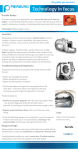
The secondary air system is made up of two key components –
the secondary air pump and secondary air valve:
Secondary Air Pumps – The secondary air pump provides the
fresh or ‘secondary’ air that enables the post-oxidation process.
The pump is sealed off from the engine compartment in order
to protect the motor from the corrosive effects of exhaust gas
condensate.
Secondary Air Valves – The secondary air valve combines the
function of a non-return and shut-off valve, preventing
backflow of exhaust gases into the pump. It also prevents air
from entering the exhaust manifold after the cold start phase.
Troubleshooting and Diagnostics
Points to note when servicing the secondary air system:
• European on-board diagnostics (EOBD) only checks the
electrical connection of the pump, not its effect, therefore a
fault may only be detected by unusual whistling or varying
idle speed in the cold running phase
• Most faults with the pump are caused by exhaust gas
condensate – as the valve is designed to prevent this, it also
needs to be checked and replaced if necessary
• To check the valve, a ‘finger test’ will reveal a fault – simply
loosen the connecting hose and wipe through the opening
with one finger. If there are deposits present, the valve and
pump should both be replaced.
Range Coverage
The Pierburg range has 30 secondary air pumps and over 20
secondary air valves.
Pierburg is the leading European manufacturer of secondary air
systems and the range is available through your local motor factor.
Links
Click on the links below
to find out more...