1
Plumbing Advice
Timer control of a system with a woodburning boiler appliance
As wood burning appliances are not automated, and can therefore not be ignited, controlled
and extinguished by electrical control from a heating programmer it needs to be borne in
mind that any heat produced when the heating is not being called for must be able to be
dissipated in order to negate unnecessary triggering of the safety devices.
The use of a thermostat on the low loss header that runs the CH pump (and opens the
appropriate motorised valves) when there is heat to be distributed is therefore necessary.
There should be provision made on the heating system to ensure that enough radiators (or
under floor heating zones) are permanently open and NOT thermostatically controlled to
allow at least 20% of the wood boilers nominal output.
In installations that only use a wood boiler and therefore have no low loss header a high
limit stat should be fitted to the flow from the boiler, set to ensure that the open circuit can
dissipate at least 20% of the nominal boiler output
Thermal Stores An alternative way to link up different heat sources is through a Thermal Store; this can link
many appliances together and offers the best storage solution for any hot water produced.
Using a thermal store also allows for the option of linking in solar heating with your system
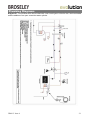
if required. Typical installation guides for link up systems can be found in the diagrams at
the back of this plumbing advvice section. Checks on Initial Firing Before connecting up the boiler, the installer must ensure that they thoroughly flush all of
the system’s pipes in order to remove any residue which could compromise the correct
operation of all system components (pumps, valves etc). It is also important to verify that
the chimney has sufficient draught, there are no blockages and that no other appliance
exhausts are inserted into the flue.
Inform the householder of the safety systems fitted to this stove. Explain the necessity to
maintain the water supply to the SCWS (cooling loop).
Filling up the System Once all connections are complete, the installer can proceed with the boiler connection.
Open all the vent pipes of the radiators, the boiler and the system. Gradually open the load
valve, ensuring that the air vent pipes are working correctly. Use the gauge to confirm the
system is pressurised. With closed tank systems, a pressure of 0.11 – 0.12 MPa (1.1 – 1.2
bar) must be reached. GB0113 Issue 4
17