1
FARGO3D User Guide, Release 1.1
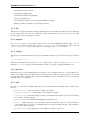
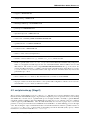
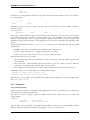
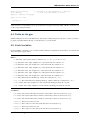
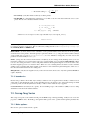
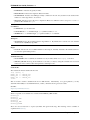
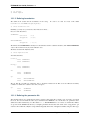
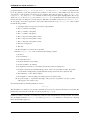
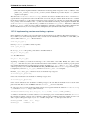
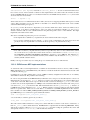
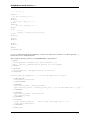
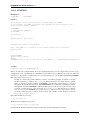
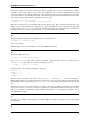
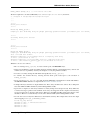
(︂
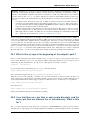
𝑠 = RocheSmoothing × 𝑟 ×
𝑚𝑝
3𝑀𝑠𝑡𝑎𝑟
)︂1/3
• Eccentricity: (real) The initial eccentricity of all the planets.
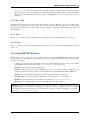
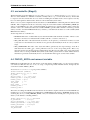
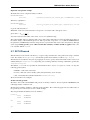
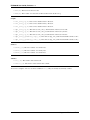
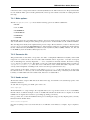
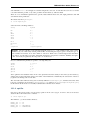
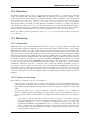
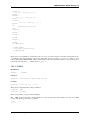
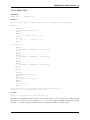
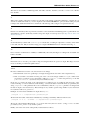
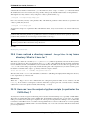
• ExcludeHill: (boolean) When this parameter is set to YES, a cut-off is introduced when the force is computed. The cut-off is calculated with the formula:
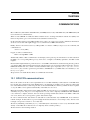
ℎ𝑐 = 0
if 𝑟/𝑟𝐻𝑖𝑙𝑙 < 0.5
ℎ𝑐 = 1
if 𝑟/𝑟𝐻𝑖𝑙𝑙 > 1.0
2
ℎ𝑐 = sin [𝜋 (𝑟/𝑟ℎ − 1/2)]
otherwise
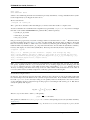
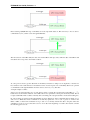
and the force is cut off prior to the torque calculation (see src/compute_force.c):
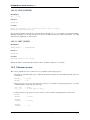
𝐹cut off = 𝐹 × ℎ𝑐
Note: This parameter needs the make option called HILLCUT to be activated in the .opt file (it is because this cut
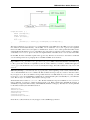
is somehow expensive on the gpu). This is achieved by adding this line to the setups/fargo/fargo.opt
file: FARGO_OPT += -DHILLCUT
IndirectTerm: (boolean) Selects if the calculation of the potential indirect term that arises from the primary
acceleration due to the planets’ and disk’s gravity is performed. In the fargo setup, the reference frame is always
on the central star (you can see src/potential.c, it is not difficult to change this). For this reason, this
parameter should normally be set to yes.
Frame: (string) Sets the reference frame behavior: F (Fixed), C (Corotating) and G (Guiding center) (it is case
insensitive). When it is set to F, the frame rotates at a constant angular speed, specified by OmegaFrame. When
it is set to Corotating, the frame corotates with planet number 0. If this planet migrates or has an eccentric orbit,
the frame angular speed is not constant in time. When it is set to Guiding-Center, the frame corotates with the
guiding-center of planet 0. The frame angular speed therefore varies with time if planet 0 migrates, and it does so
in a smoother manner than in the Corotating case.
OmegaFrame: (real) It is the angular velocity of the reference frame. It has sense only if the parameter Frame is
equal to F (Fixed).
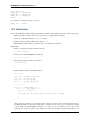
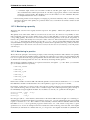
7.1.3 boundaries
Because this problem is 2D in XY, only boundary conditions in Y are applied. The boundary conditions are an
extrapolation of the Keplerian profile for the azimuthal velocity, the density is also extrapolated using its initial
power law profile, and an antisymmetric boundary condition on the radial velocity is applied.
If STOCKHOLM is activated (in the .opt file), the wave-killing recipe of De Val-Borro (2006) is used to damp
disturbances near the mesh radial boundaries.
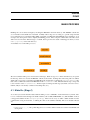
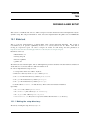
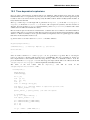
7.2 Orszag-Tang Vortex
This setup corresponds to the well known 2D periodic MHD setup of Orszag and Tang, widely used to assess the
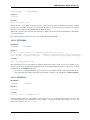
properties of MHD solvers. We briefly go through the make options of the .opt file and through the parameter file.
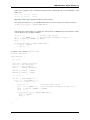
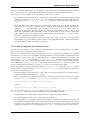
7.2.1 Make options
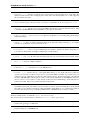
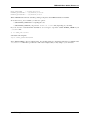
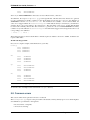
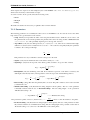
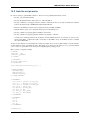
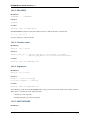
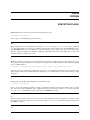
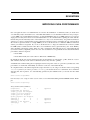
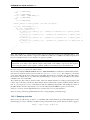
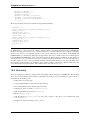
Here are the options activated in the .opt file:
7.2. Orszag-Tang Vortex
37