1
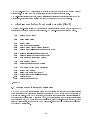
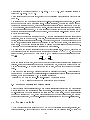
The total velocity at each point on the airfoil surface and wake, with contributions from the
freestream, the airfoil surface vorticity, and the equivalent viscous source distribution, is obtained
from the panel solution with the Karman-Tsien correction added. This is incorporated into the
viscous equations, yielding a nonlinear elliptic system which is readily solved by a full-Newton
method as in the ISES code. Execution times are quite rapid, requiring a few seconds on a fast
workstation for a high-resolution calculation with 160 panels. For a sequence of closely spaced
angles of attack (as in a polar), the calculation time per point can be substantially smaller.
If lift is specied, then the wake trajectory for a viscous calculation is taken from an inviscid
solution at the specied lift. If alpha is specied, then the wake trajectory is taken from an inviscid
solution at that alpha. This is not strictly correct, since viscous eects will in general decrease lift
and change the trajectory. This secondary correction is not performed, since a new source inuence
matrix would have to be calculated each time the wake trajectory is changed. This would result
in unreasonably long calculation times. The eect of this approximation on the overall accuracy
is small, and will be felt mainly near or past stall, where accuracy tends to degrade anyway. In
attached cases, the eect of the incorrect wake trajectory is imperceptible.
2
Data Structure
XFOIL stores all its data in RAM during execution. Saving of the data to les is normally
performed automatically, so the user must be careful to save work results before exiting XFOIL.
The exception to this is optional automatic saving to disk of polar data as it's being computed in
OPER (described later).
not
2.1 Stored airfoils and polars
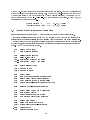
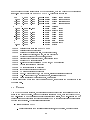
XFOIL 6.9 stores multiple polars and associated airfoils and parameters during one interactive
session. Each such data set is designated by its \stored polar" index:
polar 1: x,y, CL(a), CD(a)... Re, Ma, Ncrit...
polar 2: x,y, CL(a), CD(a)... Re, Ma, Ncrit...
.
.
Not all of the data need to be present for each stored polar. For example, x; y would be absent if
the CL,CD polar was read in from an external le rather than computed online.
Earlier XFOIL versions in eect only allowed one stored airfoil and stored polar at a time. The
new multiple storage feature makes iterative redesign considerably more convenient, since the cases
can contain multiple design versions which can be easily overlaid on plots.
2.2 Current and buer airfoils
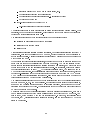
XFOIL 6.9 retains the concept of a "current airfoil" and "buer airfoil" used in previous versions.
These are the airfoils on which the various calculations are performed, and they are distinct from
the \polar" x; y coordinates described above. The polar x; y are simply archived data, and do not
directly participate in computations. The polar x; y must rst be transferred into the current airfoil
if they are to be used for computation.
6