1
authorisation in more than one Member State, the mutual recognition or decentralised
procedure are available to facilitate the granting of harmonised national authorisations
across Member States. Chapter 2 of Volume 2A of the Notice to Applicants should be
consulted for further information.
1.2 Overview of (data) requirements for obtaining marketing authorisation in the EU
An application for marketing authorisation for a new medicinal product for human use
must generally be accompanied by the particulars and documents set out in Article 8(3)
and Annex 1 of Directive 2001/83/EC 8 . The requirements include data generated from
pharmaceutical (physicochemical, biological or microbiological) tests, non-clinical
(toxicological and pharmacological) tests and clinical trials, evaluation of the potential
environmental risks posed by the medicinal product, as well as a detailed description of
the pharmacovigilance system and, where appropriate, of the risk-management system
which the applicant will introduce (see Sections 4.1-4.3 and 6.13). For medicines
developed for use in children there is a requirement to agree a paediatric investigation
plan early in development (see Section 4.5.2).
Article 12(3) and Annex I to Directive 2001/82/EC 9 , as amended, list the requirements for
the individual sections of the dossier that needs to be submitted as part of the application
for authorisation of a veterinary medicinal product.
An overview of the key issues to be addressed in the development of medicinal products
for human use and veterinary use are outlined in Section 4 and 5 of this guide
respectively.
1.3 EU legislative framework for pharmaceuticals
All EU legislative texts are published in the Official Journal of the European Union (OJEU)
in all official EU languages 10 . For sponsors unfamiliar with the EU legislative process, a
useful starting point is the overview of the hierarchy of Community texts given in Chapter
1, Annex I of Volumes 2A (human) and 6A (veterinary) of the Notice to Applicants.
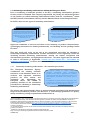
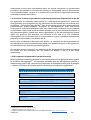
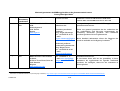
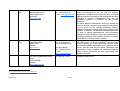
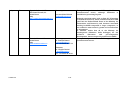
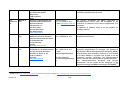
Commission Regulation 2049/2005 of 15 December 2005 introduces provisions for SMEs.
Regulation (EC) No 726/2004 of the European Parliament and of the Council of 31 March 2004, as amended, is the
legal base for the centralised procedure for the authorisation and supervision of human and veterinary medicinal
products and the establishment of the European Medicines Agency (EMEA).
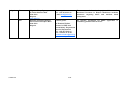
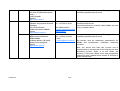
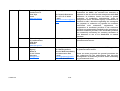
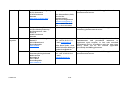
Regulation (EC) No 141/2000 of the European Parliament and of the Council of 16 December 1999 on orphan
medicinal products, (which entered into force on 22 January 2000), introduces provisions to stimulate the
development of medicinal products for patients suffering from rare diseases.
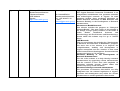
Regulation (EC) No 1901/2006 of the European Parliament and of the Council of 12 December 2006, as amended on
medicinal products for paediatric use.
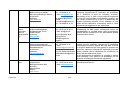
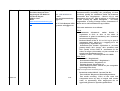
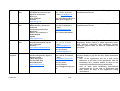
Directives 2001/82/EC and 2001/83/EC of the European Parliament and of the Council of 6 November 2001, as
amended, lay down the Community code relating to medicinal products for veterinary use and human use
respectively.
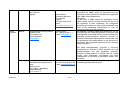
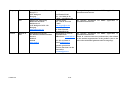
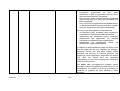
Council Regulation (EEC) No 2377/90 of 26 June 1990, as amended, lays down a Community procedure for the
establishment of maximum residue limits for veterinary medicinal products in foodstuffs of animal origin.
8
Official Journal L 311, 28/11/2004 pp. 67-128.
Official Journal L 311, 28/11/2001 pp. 1-66.
Legislation published in the OJEU can be found via the EUR-Lex website: http://eur-lex.europa.eu/
© EMEA 2009
9
10
7/69