1
Chapter 1
A short description of ELAN
This chapter presents in a top-down approach the ELAN main features. If you are beginning to
use ELAN, you should certainly have a look at this chapter rst. On the contrary, Chapter 3
presents a bottom-up complete description of the language.
1.1 What could you do in ELAN?
Relying on the premiss that inferences rules can be quite conveniently described by rewrite rules,
we started in the early nineties to design and implement a language in which inference systems
can be represented in a natural way, and executed reasonably eciently.
This leads us quickly to formalise such a language using the rewriting logic introduced by
J. Meseguer [Mes92] and to see ELAN as a logical framework where the frame logic is rewriting
logic extended with the fundamental notion of strategies [Vit94, KKV95]. We call a rewrite
theory and an associated strategy a computational system.
Thus in ELAN, a logic can be expressed by specifying its syntax, its inference rules and a
description of the way you would like to apply these rules. The syntax of the logic can be
described using mixx operators as in the OBJ language [GKK+ 87] or SDF [HHKR89]. The
inference rules of the logic are described by conditional rewrite rules with where assignments
allowing to introduce variables local to a rule.
From this description of the logic and a description of the signature considered, we infer
automatically a computational system consisting of a rewriting theory plus strategies.
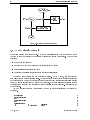
Since we wanted ELAN to be modular, with a syntactic level well-adapted to the user needs,
the language is designed in such a way that three programming levels are possible.
First the design of a logic is done by the so-called super-user with the help of a powerful
preprocessor.
Such a logic can be used by the (standard) user in order to write a specication.
Finally, the end-user can evaluate queries valid in the specication, following the semantics
described by the logic.
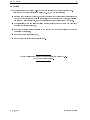
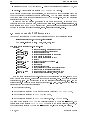
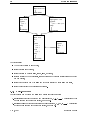
This corresponds to the general diagram given in Figure 1.1. The query is interactively given
by the end-user at the ELAN prompt level.
May 9, 1997
ELAN user manual