1
LAS réf.
VIR réf.
Issue
Date
VLT-PLA-VIRA1.0
Rév. 0.0
24-Oct-02
page
24
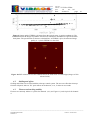
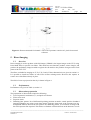
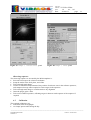
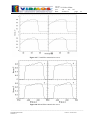
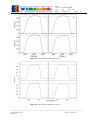
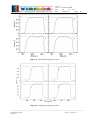
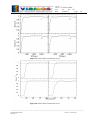
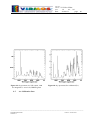
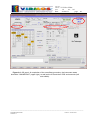
Figure 11: flexures measured for channel 2. The circle represents a motion of 1 pixel from central
reference.
5. Direct Imaging
5.1
Overview
Direct imaging is used to produce wide field images (VIMOS is the largest imager on the VLT) using
broad band filters or specific user filters. This mode has two functions: produce science images, and
produce the preliminary images needed to register the slit masks to the position of targets on the focal
plane of the VLT-UT3.
The filters available for imaging are U', B, V, R, I and z. Filters characteristics are given in section 8.1.
It is possible to install user filters in each of the 4 filter exchange units. However, this requires to
remove one of the filters already in place.
The field of view as projected on the sky is shown in Figure 1.
5.2
Performances
Performances are given in Table 4, section 2.3.
5.3
Observation preparation
The preparation of observations require the following:
• List of equatorial coordinates α,δ , and epoch of reference
• Filters to be used
• Exposure times
• Dithering/jitter pattern: list of differential pointing positions around a central position. Standard
imaging techniques are using several short images (exposure times such as the exposures are sky
background limited) observed at each position of a dithering pattern, to reconstruct an image with
the total exposure time required. This allows to eliminate cosmetic defects on the detectors as well
_______________________________________________________________________________________
Word Windows 2000
manual-v1
Fichier : vimos-users-