1
Source Program Coding
❏
No macro operation capability is included.
❏
No conditional assembly is used.
❏
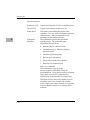
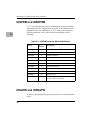
Several symbols recognized by the resident assembler are not
included in the 16XBug assembler character set. These
symbols include > and <. Three other symbols have multiple
meanings to the resident assembler, depending on the
context (refer to the section on Addressing Modes). These are:
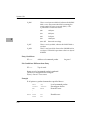
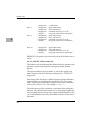
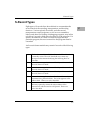
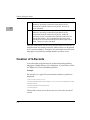
Asterisk (*)
Multiplication operator or current value of the program
counter.
Slash (/)
Division operator or delimiter in a register list.
Ampersand (&)
Logical operator AND or a decimal number preÞx.
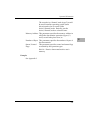
Although functional differences exist between the two
assemblers, the one-line assembler is a true subset of the
resident assembler. The format and syntax used with the
16XBug assembler are acceptable to the resident assembler
except as described above.
Source Program Coding
A source program is a sequence of source statements arranged in a
logical way to perform a predetermined task. Each source
statement occupies a line and must be either an executable
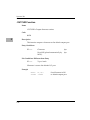
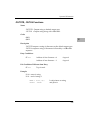
instruction, a DC.W directive, or a SYSCALL assembler directive.
Each source statement follows a consistent source line format.
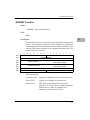
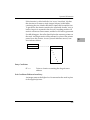
Source Line Format
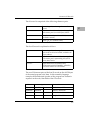
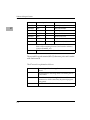
Each source statement is a combination of operation and, as
required, operand fields. Line numbers, labels, and comments are
not used.
1-3
1