1
with the implemented protocol, it is necessary that these parameters can be set
independently, at compile time or at run time, for each data item.
The second group of details deals with the transformation from the internal
representation of messages into their external representation, and vice versa.
The internal representation is the one used to perform all the operations prescribed by the protocol logic on the data; whereas the external representation is
the stream of bytes that must be exchanged with the other parties. Decoupling
internal and external representations is necessary in order to obtain interoperability, because the external representation must conform to the agreed binary
formats defined for the protocol.
Another task that the spi2Java refiner carries out is to statically assign a
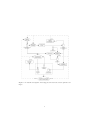
type to each spi calculus term. This is necessary because the spi calculus is an
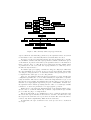
untyped language, while Java is statically typed. An extensible type hierarchy,
reported in figure 3, has been defined for this purpose.
Here is a brief description of the meaning of types shown in figure 3.
Message is the most generic type: it represents an opaque message.
Name is a partially specialized type that represents any atomic spi calculus term (i.e. a spi calculus name). Subtypes of this type are used
to specialize the meaning of atomic data. Terms belonging to most
of the subtypes of the Name type can be instantiated as fresh data.
Channel is the abstract representation of generic communication
channels and has some extensions that are worth noting:
Tcp/Ip Channel provides access to the Tcp/Ip communication layers;
Key Store Channel provides access to an abstract keystore.
One of its specialization is the Java Key Store Channel that
uses the Java keystore implementation. Other implementations could be defined, such as an openSSH compatible
keystore.
File Channel provides access to the local file system.
Key Pair represents a pair of public/private keys for use with asymmetric cryptosystems. Note that a key pair is still an atomic
message, because public/private keys are obtained by + and −
constructors, and not by pair splitting.
Shared Key represents a key for use with symmetric cryptosystems.
Nonce represents a randomly chosen sequence of bits.
Identifier represents some information which identifies an entity in
a unique way. For example, it can be used as an alias to identify
a key or a certificate stored inside a KeyStore. It cannot be
instantiated fresh. In order to obtain a random string, the Nonce
type should be used.
Timestamp represents a time snapshot.
Public Key represents the public component of a key Pair.
Certificate represents a digital certificate. It is considered a specialization of Public Key because each digital certificate contains
a public key, along with some other information.
9