1
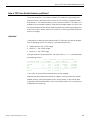
Averaging window
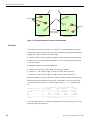
• On microbilling, the scheduler adds the CPU time of the current thread to both
the current slot in the table, and also to the total field. For example:
usage_hist[cur_hist_index] += delta_time;
used_cycles += delta_time;
• On window rotation, the scheduler does the following:
• subtracts the oldest slot from the total:
used_cycles -= usage_hist[(cur_hist_index +1) MOD 100]
• increments the table index, modulo its table size (say 100):
cur_hist_index = (cur_hist_index+1) MOD 100
This is done for every partition, for both normal and critical CPU time.
Can I change the window size?
See the next answer.
How does changing the window size affect scheduling?
You can change the window size with the SchedCtl(SCHED_APS_SET_PARMS,...)
on the fly. The scheduler doesn't malloc() new tables, but it does zero the history in
all tables, zeros all the totals, and zeros the table indexes.
The effect is to wipe the memory of the scheduler. Here the scheduler assumes that
no partition has run in the last x ms, where x is the new window size.
We recommend you leave the window size at the default, or set it during startup. Also,
you shouldn't change the window size often.
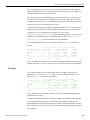
How do maximum latencies relate to the averaging window size?
In general, the longer the averaging window, the longer the partition has to wait before
it gets the CPU time.
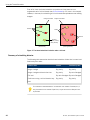
For example, with a 100 milliseconds averaging window and a partition p with a 10%
budget, the partition p will exhaust its budget if it runs continuously for 10
milliseconds. It has to wait another 90 milliseconds before window rotations cause
the averaging window to lose memory of its past execution. So, it will be 90
milliseconds before the partition p gets some available budget back and runs again.
However, in most real systems that engage in inter-partition interaction, partition p's
10 milliseconds of running time is likely to get spread out in the averaging window.
So even if p exhausts the budget soon, it will most likely get available budget back in
much less than 90 milliseconds.
The Adaptive Partitioning User's Guide describes an unlikely scenario where two
interacting partitions result in a larger latency than the window size budget.
© 2014, QNX Software Systems Limited
73