1
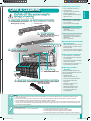
■ About
MOVABLE PANEL
• Opens for air intake when operation
starts, and closes when operation
stops. During this time, do not hold
it as it may cause malfunction or
breakdown.
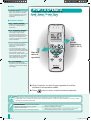
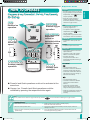
HOW TO OPERATE
Cool, Auto, Heat, Dr y
■ Operation Details
COOL - Cooling Operation
• Enables you to enjoy the cooling
effect at your preferred setting
temperature.
AUTO - Automatic Operation
• The unit will automatically select
the operation mode according
to the setting, outdoor and room
temperature. During operation mode
selection, power indicator blinks.
For every 30 minutes, the operation
mode is reselected.
2
Set the
temperature.
(16°C ~ 30°C)
HEAT - Heating Operation
• Enables you to enjoy the warming
effect at your preferred setting
temperature.
• For cold air prevention, air might
not blow out immediately and power
indicator blinks when operation starts.
• Also operates in defrost mode
(maximum 12 minutes) where by the
power indicator blinks. The melted
frost is drained at outdoor unit and
indoor/outdoor fan is stopped.
1
Start the
desired
operation.
DRY - Dry Operation
• Enables you to set the desired
temperature at low fan speed which
provides you with the dehumidifying
surroundings.
● Quiet, Powerful, Ion and Oxygen operations could be
activated in all operation modes.
● Press
button to stop / start the selected operation.
Hints
●
●
To save electricity, close the curtains when using air conditioner to prevent sunlight and heat from coming in.
Approximately 10% of electricity can be saved if you set the temperature 1°C higher in cooling operation or 2°C lower in heating
operation than the desired temperature.
Troubleshooting
●
Operation delayed for a few minutes after restart.
Sounds like water flowing during operation.
Noise during operations.
➤ This is a normal self protection control.
➤ Caused by refrigerant flow inside.
➤ Installation work could be slanted or front panel didn’t open properly.
●
Cracking sound can be heard during operations.
➤ Panel expanding/contracting due to change in temperature.
●
●
4
B1_X_1EN(1-7).indd 4
5/31/2005 9:37:08 AM