1
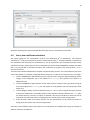
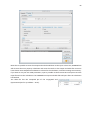
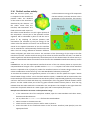
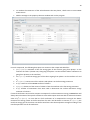
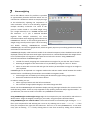
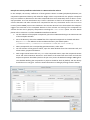
58 5.11 Salt solubility screening Like the solvent screening option, the salt solubility screening option is especially adjusted to fit screening purposes. The thermodynamic background is the same as in the Salt Solubility option. Both relative screening and absolute solubility applications can be done. Like in the solvent screening option, the screening cannot be done in a single COSMOtherm run. Instead, many input files have to be generated and stored. For saving a salt solubility screening run, special summary input files (.inpx) are generated. Liquid solutes: The use of the salt solubility screening option is straightforward in these cases. Define the salt, choose a NON ITERATIVE (infinite dilution) or ITERATIVE (finite concentration) type of calculation and add all solvents or solvent mixtures to the property section. Relative solubility of solid compounds: This option works similar to the calculation of liquid solutes. Note that the RELATIVE SCREENING is always calculated in infinite dilution (NON ITERATIVE). Absolute solubility of solid compounds: When the absolute solubility of a salt should be computed, the free energy of fusion has to be taken into account. Since the absolute solubility depends on the concentration of the solute itself, the iterative procedure (finite concentration) is used. After selecting the corresponding options (State of solute is SOLID, and ABSOLUTE values is checked) there are two options for the estimation of Gfus: An experimental solubility in one of the solvents or solvent mixtures can be used to determine Gfus of the solute. This option works comparable to the corresponding option in the solvent screening panel. It is based on the same thermodynamics and has comparable limitations. An experimentally measured value for Gfus (or Hfus or Sfus and Tmelt) can be used. The accuracy of this method depends on extrapolation of Gfus at the melting point to the temperature where the solution is calculated.