1
1
Single-Screw Extrusion:
Introduction and
Troubleshooting
This book was written to provide the extrusion process engineer with a resource
for assessing and fixing process problems associated with the use of single-screw
extruders. The authors have drawn on their complementary backgrounds; both
have worked with industrial extruder design, analysis, and fundamental research
in the mechanism, operation, and troubleshooting of the single-screw extrusion
process. The use of single-screw extruders in production processes has progressed
significantly over the past several decades. As a result, the number of single-screw
extruders in use has increased dramatically as has the diameter and length of the
machine, especially for melt-fed extruders used in large resin production plants. In
addition, resin manufacturers have developed many new resins for final products
such as extruded sheet, film, pipe, fibers, coatings, and profiles. The extruder is
still the process unit of choice for producing pellets in the production of polymer
materials. Two types of extruders are generally used in polymer production: singlescrew extruders and twin-screw extruders. The material in this book will be confined to the analysis and troubleshooting of single-screw extruders. The rapid
expansion of this part of the polymer industry has been accompanied by the need
for many new extrusion engineers. Many of these engineers have not had formal
training in the analysis of the extruder and screw design nor have they had extensive education in polymer materials, which would help in troubleshooting problems on production equipment.
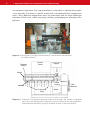
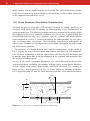
All single-screw extruders have several common characteristics, as shown in
Figs. 1.1 and 1.2. The main sections of the extruder include the barrel, a screw that
fits inside the barrel, a motor-drive system for rotating the screw, and a control
system for the barrel heaters and motor speed. Many innovations on the construction of these components have been developed by machine suppliers over the
years. A hopper is attached to the barrel at the entrance end of the screw and the
resin is either gravity-fed (flood-fed) into the feed section of the screw or metered
(starve-fed) through the hopper to the screw flights. The resin can be in either a
solid particle form or molten. If the resin feedstock is in the solid form, typically
pellets (or powders), the extruder screw must first convey the pellets away from
the feed opening, melt the resin, and then pump and pressurize it for a down-