1
Bulletin 71.1:67C
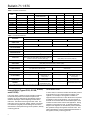
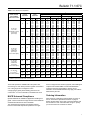
Table 1. Outlet Pressure Ranges and Control Spring Data
TYPE
67C, 67CR,
67CF, and 67CFR
67CS, 67CSR,
67CFS, and 67CFSR
CONTROL SPRING DATA
OUTLET PRESSURE RANGES
Color
Material
Part Number
0 to 1.4
0 to 2.4
0 to 4.1
0 to 8.6
Green stripe
Silver
Blue stripe
Red stripe
Music Wire
0 to 35
0 to 60
0 to 125
0 to 2.4
0 to 4.1
0 to 8.6
Silver stripe
Blue
Red
0 to 20
0 to 35
0 to 60
0 to 125
0 to 150
0 to 1.3
0 to 2.4
0 to 4.1
0 to 8.6
0 to 10.3
Green
Silver stripe
Blue
Red
Black
psig
bar
0 to 20
0 to 35
0 to 60
0 to 125
Wire Diameter
Free Length
Inch
mm
Inch
mm
GE07809T012
T14059T0012
T14058T0012
T14060T0012
0.135
0.156
0.170
0.207
3.43
3.96
4.32
5.26
1.43
1.43
1.43
1.43
36.2
36.2
36.2
36.2
Inconel®
T14113T0012
T14114T0012
T14115T0012
0.156
0.172
0.207
3.96
4.37
5.26
1.43
1.43
1.43
36.2
36.2
36.2
Inconel®
10C1729X012
T14113T0012
T14114T0012
T14115T0012
10C1730X012
0.135
0.156
0.172
0.207
0.250
3.43
3.96
4.37
5.26
6.35
1.50
1.43
1.43
1.43
1.77
38.1
36.2
36.2
36.2
44.9
Inconel® is a marked own by Special Metals Corporation.
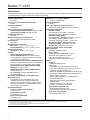
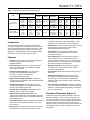
Introduction
for reliable shutoff with no discernible leakage. These
regulators are recommended for conserving plant air.
The 67C Series regulators are typically used to provide
constantly controlled, reduced pressures to pneumatic and
electro-pneumatic controllers and other instruments. These
direct-operated regulators are suitable for most air or gas
applications. Other applications include providing reduced
pressures to air chucks, air jets, and spray guns.
• Smart Bleed™—Opens to exhaust downstream pressure
when inlet pressure drops below outlet pressure.
Recommended for dead-end service.
Features
• Compact—The 67C Series regulators are engineered
for outstanding performance in a compact,
lightweight package.
• Ease of Maintenance—No special tools required to
perform maintenance, and all maintenance can be
performed with the regulator in the line. Filter elements
are easily replaced. The one-piece valve plug cartridge
allows easy inspection and replacement.
• Panel Mounting—Panel mount construction includes
spring case with 1/4 NPT vent, handwheel adjusting
screw, and mounting nut.
• Rugged Construction—The 67C Series regulators
are engineered for longer service life with minimal
maintenance requirements.
• Instrument Supply Regulator—The Types 67CF,
67CFR, 67CFS, and 67CFSR provide a clean
air supply to a variety of pneumatic and
electro-pneumatic instrumentation.
• Second Outlet—Body side outlet for pressure gauge or
other uses.
• Digital Instrument Supply Regulator—Designed to
meet the accuracy, repeatability, and hysteresis demands
of digital instrumentation.
• Pilot Supply Regulator—Improves the accuracy of
two-path control regulators by reducing inlet sensitivity
caused by fluctuating inlet pressures.
• Sour Gas Service Capability—NACE MR0175 and
MR0103 compliant construction available.
• Optional Stainless Steel Construction—The
Types 67CS, 67CSR, 67CFS, and 67CFSR provide high
resistance to corrosion, which is especially beneficial for
offshore applications.
• Full Usable Capacity—Fisher® regulators are laboratory
tested. 100% of the published capacities can be used
with confidence.
• Internal Relief—The Types 67CR, 67CSR, 67CFR, and
67CFSR have an internal relief valve with a soft seat
• Integral Filter—The Types 67CF, 67CFR, 67CFS,
and 67CFSR have an integral filter ensuring clean
downstream air supply.
• Powder Paint Coating—Types 67C, 67CR, 67CF,
and 67CFR are powder paint coated, offering impact,
abrasion, and corrosion resistance. Stainless steel
regulators (Types 67CS, 67CSR, 67CFS, and 67CFSR)
are not painted.
• Corrosion Resistant Fasteners—Bolting and adjusting
screw are double zinc-chromated for enhanced corrosion
resistance. Optional stainless steel bolting and adjusting
screw are also available.
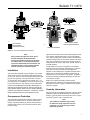
Principle of Operation (Figure 2)
Downstream pressure is registered internally on the lower
side of the diaphragm. When the downstream pressure is
at or above the set pressure, the valve plug is held against
the orifice and there is no flow through the regulator. When
demand increases, downstream pressure drops slightly
allowing the spring to extend, moving the stem down and the
valve plug away from the orifice. This allows flow through
the regulator.
3