1
Section 5: Troubleshooting Procedures
Reference Manual
00809-0700-4530, Rev AA
September 2013
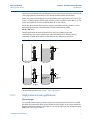
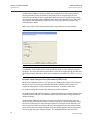
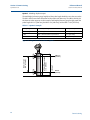
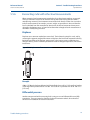
Incorrect reading due to bent probe or probe contacting the
nozzle wall
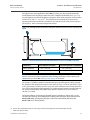
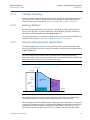
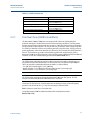
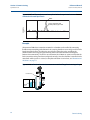
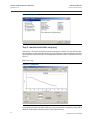
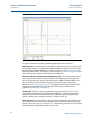
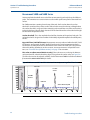
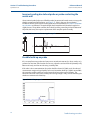
A bent, twisted probe (in the case of flexible probes) in contact with metal creates a strong echo
that the measurement will lock onto, see Figure 5-11. If this is the case, the mechanical
installation will need to be redone ensuring that the recommendations in Section 2: Installation
considerations are followed. The probe length should match the tank/chamber length or be
slightly shorter. The problem can often be resolved by adding a centering disk at the bottom of
the probe, but it may also require a replacement of the complete probe assembly.
Figure 5-11. Measurement data using a bent probe
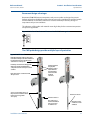
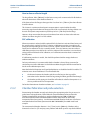
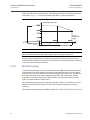
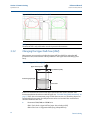
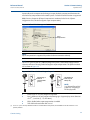
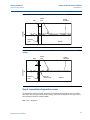
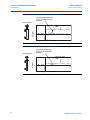
Possible build-up on probe
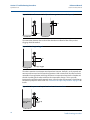
If it is a normal but strong echo noise from process or tank environment (i.e. inlets, nozzle, etc.),
perform the Trim Near Zone function. If necessary, adjust the surface threshold (manually or by
Measure & Learn), and also consider using a coaxial probe.
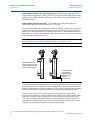
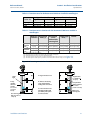
If the echo is due to contamination, the probe should be cleaned. If SQM is used, the values of
measurement margin and signal quality can be used to monitor build-up. If SQM is not available,
the secondary variable can be set to signal strength to foresee the need of cleaning. The
threshold can also be raised if the surface peak is strong enough. Finally, consider insulating the
chamber to minimize risk of build-up.
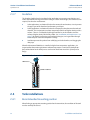
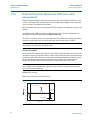
Figure 5-12. Build-up on probe
72
Troubleshooting procedures