1
Identifying Purposes and Characteristics of Memory
41
Single- and Double-Sided Memory
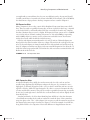
Ask just about anyone who doesn’t manufacture memory for a living what the terms singlesided memory and double-sided memory mean, and you’ll be treated to a blank stare or
a short diatribe on how some memory modules have chips on one side, while others have
chips on both sides. In fact, these terms have nothing to do with the physical attachment of
chips to the modules. Either style can have chips on one or both sides of the module.
Double-sided memory is essentially treated by the system as two separate memory
modules. Motherboards that support such memory have memory controllers that must
switch between the two “sides” of the modules and, at any particular moment, can only
access the side they have switched to. For the state-of-the-art memory at the time, doublesided memory allows more memory to be inserted into a computer using half the physical
space of single-sided memory, which requires no switching by the memory controller.
Single- and Dual-Channel Memory
Standard memory controllers manage access to memory in chunks of the same size as the
FSB’s data width. This is considered communicating over a single channel. Most modern
processors have a 64-bit system data bus. This means a standard memory controller can
transfer exactly 64 bits of information at a time. Communicating over a single channel is a
bottleneck in an environment where the CPU and memory can both operate faster than the
conduit between them. Up to a point, every channel added in parallel between the CPU and
RAM serves to ease this constriction.
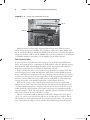
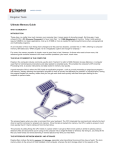
Memory controllers that support or require dual-channel memory implementation were
developed in an effort to alleviate the bottleneck between the CPU and RAM. Dual-channel
memory is the memory controller’s coordination of two memory banks to work as a synchronized set during communication with the CPU, doubling the specified system bus width, from
the memory’s perspective. Because today’s processors largely have 64-bit external data buses,
and because one stick of memory satisfies this bus width, there is a 1:1 ratio between banks
and modules. This means that implementing dual-channel memory in today’s most popular
computer systems generally requires that pairs of memory modules be installed at a time.
Note, however, that it’s the motherboard, not the memory that implements dual-channel
memory (more on this in a moment). Single-channel memory, in contrast, is the classic memory model that dictates only that a complete bank be satisfied whenever memory is initially
installed or added. One bank supplies only half the width of the effective bus created by dualchannel support, which, by definition, pairs two banks at a time.
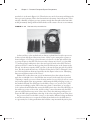
Because of the special tricks that are played with memory subsystems to improve overall system performance, care must be taken during the installation of disparate memory
modules. In the worst case, the computer will cease to function when modules of different
speeds, different capacities, or different numbers of sides are placed together in slots of
the same channel. If all of these parameters are identical, there should be no problem with
pairing modules. Nevertheless, problems could still occur when modules from two different manufacturers or certain unsupported manufacturers are installed, all other parameters being the same. Technical support or documentation from the manufacturer of your
motherboard should be able to help with such issues.
86498book.indb 41
7/22/09 5:37:41 AM