1
WHAT IS DESIGN?
There’s a reason the company or organization is implementing VMware vSphere. That reason,
naturally, varies from customer to customer and organization to organization.
Here are some example reasons taken from our own experience in the virtualization industry:
Consolidation The company or organization has too many physical servers and needs to
reduce the number of physical servers. The need to reduce the number of physical servers can
be driven by any number of reasons, including a need to reduce data-center space usage, a
need to cut power and cooling costs, or an attempt to reduce hardware refresh costs.
New Application Rollout The company or organization is deploying a new application
or a new service in its data center, and it has chosen to use virtualization as the vehicle to
accomplish that deployment. This may be a deployment of a new version of an application;
for example, a company currently using Exchange 2007 may decide to roll out Exchange 2010
in a virtualized environment on VMware vSphere. As another example, a company deploying SAP may choose to do on VMware vSphere. The reasons for choosing to deploy on a
virtualized environment are too numerous to list here, but they can include increased utilization, simplified deployment, and better support for a disaster recovery/business continuity
(DR/BC) solution.
Disaster Recovery/Business Continuity (DR/BC) The company or organization is in the
midst of developing or enhancing its DR/BC solution and has chosen to use virtualization
as a key component of that solution. Perhaps the company is using array-based replication
and wishes to use VMware vSphere and VMware Site Recovery Manager (SRM) to provide a
more automated DR/BC solution. The choice to use virtualization as a component of a DR/
BC solution is almost always a financial one; the company or organization wishes to reduce
the amount of downtime (thus minimizing losses due to downtime) or reduce the cost of
implementing the solution.
Virtual Desktop Infrastructure The company or organization wishes to deploy a virtual
desktop infrastructure (VDI) in order to gain desktop mobility, a better remote-access solution, increased security, or reduced desktop-management costs. Whatever the motivation, the
reason for the VMware vSphere environment is to support that VDI deployment.
As you can see, the reasons for adopting virtualization are as varied as the companies and
organizations. There is no one reason a company will adopt virtualization, but there will be a
reason. There will often be multiple reasons. These reasons become the basis for the functional
requirements of the design. The reasons are the things the design must do. Functional requirements formalize the reasons why the company or organization is adopting VMware vSphere
and turn them into actionable items that you’ll use to drive all the other decisions in the design.
Think about some of the examples we just provided. Does the organization plan to virtualize
a new rollout of Microsoft Exchange Server 2010? If so, then the VMware vSphere design had
better accommodate that functional requirement. The design must specifically accommodate
Microsoft Exchange Server 2010 and its configuration needs, supportability requirements, and
resource constraints. If you fail to properly account for the fact that Microsoft Exchange Server
2010 will run in this virtualized environment, then you’ve failed to consider one of the design’s
functional requirements — and, in all likelihood, the implementation will be a failure. The
design will fail to do the thing the company needs it to do: run Microsoft Exchange Server 2010.
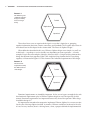
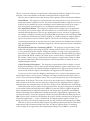
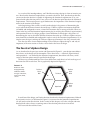
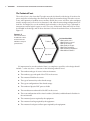
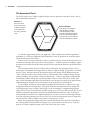
With this in mind, you can look back at Figure 1.2 and better understand how the functional
requirements both surround and unify the facets of VMware vSphere design. Continuing
in our example of an organization that is deploying Exchange Server 2010 in a virtualized
|
3