1
Knight c01.tex
V2 - 09/30/2008
Chapter 1: SQL Server 2008 Architecture
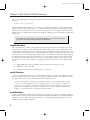
Ideally, for regulatory reasons and for stability, the DBA’s backup DBA should install the change into
production. That way, you can ensure that the DBA who installed the script didn’t make ad hoc changes
in order to make the change work. We cover much more about this change-management process in
Chapter 10.
The only role of a Hybrid DBA that’s questionable is development of stored procedures. In most organizations where we see this role, the Hybrid DBA does not develop stored procedures. Instead, he or she
creates difficult stored procedures or tunes the ones causing issues. The developer working on the application develops his or her own stored procedures and then provides them to the Hybrid DBA to package
and proof. The main reason for this is that the DBA is too taxed for time, working on other functions of
the database.
New Things You Need to Learn
The best of us continue to learn new skills and keep up with the changing face of software. It is the business we are in. We must continue to grow and learn or risk becoming obsolete. Each new release of SQL
Server since 7.0 has required DBAs to know more things that were traditional concerns of developers. As
Microsoft puts more and more on the SQL Server CD, and integrates SQL Server with other development
environments, programs, and tools, the breadth of our skills must also grow. Here are some reminders
of items that warrant your attention:
❑
Resource Governor allows you to manage workload by setting resource limits. New in SQL
Server 2008, knowledge of this feature is a must for DBAs.
❑
Certificates and Kerberos have been used in SQL Server since SQL 2005. While you do
not need to be an expert, you must spend some time getting acquainted with how these
things work. Kerberos will become especially important if your site uses Reporting Services
(SSRS) and your Reporting Services database is on a separate server than Reporting Services
Web Service.
❑
CLR Integration enables you to use .NET programming in your stored procedures, triggers,
and functions. It also means you need to learn a .NET programming language, or at least the
basics of one. You should become acclimated to a .NET programming language such as C#
or VB.NET to remain effective. For example, if you are a DBA trying to debug a performance
problem with a CLR stored procedure, then you need to know the language the stored
procedure is written in to understand the performance problem. Features such as Integration Services and Reporting Services are very much tied to expressions, which are variants
of VB.NET.
❑
You need to learn something about XML, including some XPath, and XQuery. These features,
introduced in SQL Server 2005, are now getting use in some implementations.
❑
Get some practical experience on database mirroring.
❑
Of course, you should learn about SSRS, SSIS, and SSAS, even if your shop does not currently
use those features.
Beginning with SQL Server 2005 and continuing for SQL Server 2008, these products require a leap
forward in the knowledge a DBA must have to be effective. If you want to be a leader, then you must
stay ahead of the game. We’ll help you get it done.
4
6:52am
Page 4