1
Data Sheet
Application Services
As organizations continue to centralize and consolidate their branch IT infrastructure in an effort to reduce cost and
complexity in the branch office, they are challenged to provide adequate user experience, ensure continuous service
availability, and deliver business-relevant applications when and where they are needed. To address these
challenges, the Cisco 1941 Series provides the ability to host Cisco, 3rd party, and custom applications on Cisco
Services Ready Engine (SRE) module that seamlessly integrate into the router. The module has its own processor,
network interface, and memory that operate independently of the host router resources, helping to ensure maximum
concurrent routing and application performance while reducing physical space requirements, lowering power
consumption, and consolidating management.
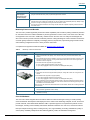
Cisco Services Ready Engine
The Cisco Services Ready Engine solution is available in a Internal Service Module (ISM) form-factor. The Internal
Service Module hardware offers up to a seven times performance improvement over the previous-generation
Advanced Integration Modules and provides a x86 processor. The Cisco SRE module enables on-demand
provisioning of branch-office applications on the Cisco 1900 Series platforms so that you can deploy the right
application, at the right time, in the right place. The hardware and software decoupling provided by the service-ready
deployment model enables applications to be provisioned on the module at the time of its installation or remotely
anytime thereafter. Supported solutions include Cisco Application Extension Platform (AXP), Cisco Wireless LAN
Controller (WLC), and other applications under development. The Service Ready Engine enables organizations of
various sizes to future-proof their network by allowing them to quickly deploy new branch-office applications without
deploying new hardware, reducing the cost of rolling out branch-office services.
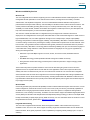
Managing Your Integrated Services Routers
Network Management applications are instrumental in lowering Operating Expenditures (OPEX) while improving
network availability by simplifying and automating many of the day-to-day tasks associated with managing an end-toend network. “Day-one-device-support” provides immediate manageability support for the Integrated Services Router
enabling quick and easy deployment, monitoring and troubleshooting from Cisco and third party applications.
Organizations rely on Cisco, third-party and in-house developed network management applications to achieve their
Opex and productivity goals. Underpinning those applications are the embedded management features available in
every ISR. The new ISRs continue a tradition of broad and deep manageability features within the devices. Features
such as IPSLA, EEM, Netflow, allow you to know what's going on in your network at all times. These features along
with SNMP and SYSLOG support enable your organization’s management applications.
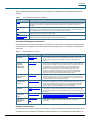
Refer to Tables 4, 5 and 6 for details on IOS, Network Management and Manageability support on Cisco 1941 Series
Integrated Services Routers.
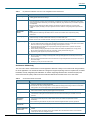
Table 4.
Cisco 1941 with Cisco IOS Software Feature and Protocol High-Level Support
Protocols
IPv4, IPv6, static routes, Open Shortest Path First (OSPF), Enhanced IGRP (EIGRP), Border Gateway Protocol (BGP), BGP
Router Reflector, Intermediate System-to-Intermediate System (IS-IS), Multicast Internet Group Management Protocol (IGMPv3)
Protocol Independent Multicast sparse mode (PIM SM), PIM Source Specific Multicast (SSM), Distance Vector Multicast Routing
Protocol (DVMRP), IPSec, Generic Routing Encapsulation (GRE), Bi-Directional Forwarding Detection (BVD), IPv4-to-IPv6
Multicast, MPLS, L2TPv3, 802.1ag, 802.3ah, L2 and L3 VPN
Encapsulations
Ethernet, 802.1q VLAN, Point-to-Point Protocol (PPP), Multilink Point-to-Point Protocol (MLPPP), Frame Relay, Multilink Frame
Relay (MLFR) (FR.15 and FR.16), High-Level Data Link Control (HDLC), Serial (RS-232, RS-449, X.21, V.35, and EIA-530),
Point-to-Point Protocol over Ethernet (PPPoE), and ATM
Traffic
management
QoS, Class-Based Weighted Fair Queuing (CBWFQ), Weighted Random Early Detection (WRED), Hierarchical QoS, PolicyBased Routing (PBR), Performance Routing (PfR), and Network-Based Advanced Routing (NBAR)
Note:
For a more comprehensive list of features supported in Cisco IOS software refer to the Feature Navigator
tool at: http://www.cisco.com/go/fn.
© 2009 Cisco Systems, Inc. All rights reserved. This document is Cisco Public Information.
Page 6 of 12