1
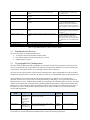
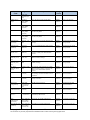
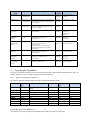
(r,w,d) SSL VPN (TLSv1.0) (r,w,d) SSH v2 (r, w, d) IPsec VPN (r, w, d) preshared keys and algorithms to be used for each IP range or allow plaintext packets to be set from specified IP address. Configure SSL VPN parameters, provide entry and output of CSPs. Configure SSH v2 parameter, provide entry and output of CSPs. Configure IPsec VPN parameters, provide entry and output of CSPs. GetVPN (GDOI) (r, w, d) Configure GetVPN parameters, provide entry and output of CSPs. Wireless Functions (r, w, d) Configure wireless parameters, provide entry and output of CSPs. Self-Tests (r) User services (r,w,d) Zeroization (d) Execute the FIPS 140 start-up tests on demand The Crypto Officer has access to all User services. Zeroize cryptographic keys Authentication key, IKE Encryption Key, IPSec authentication keys, IPSec traffic keys, Enable secret, TLS pre-master secret, TLS Traffic Keys SSH Traffic Keys skeyid, skeyid_d, IKE session encryption key, IKE session authentication key, ISAKMP pre-shared, IKE authentication private Key, IKE authentication public key, IPSec encryption key, IPSec authentication key GDOI key encryption key (KEK), GDOI traffic encryption key (TEK), GDOI TEK integrity key 802.11i Pre-shared Key (PSK), 802.11i Pairwise Master Key (PMK), 802.11i Pairwise Transient Key (PTK), 802.11i Temporal Key (TK), 802.11i Group Master Key (GMK), 802.11i Group Temporal Key (GTK) N/A Password All CSPs Table 5 - Crypto Officer Services (r = read w = write d = delete) 2.3 Unauthenticated Services The services available to unauthenticated users are: Viewing the status output from the module’s LEDs Powering the module on and off using the power switch Sending packets in bypass 2.4 Cryptographic Key Management The router securely administers both cryptographic keys and other critical security parameters such as passwords. All keys are protected by the Crypto Officer role login password-protection, and these keys can be zeroized by the Crypto Officer. Zeroization consists of overwriting the memory that stored the key. The router is in the approved mode of operation only when FIPS 140-2 approved algorithms are used (except DH and RSA key transport which are allowed in the approved mode for key establishment despite being non-approved). All pre-shared keys are associated with the CO role that created the keys, and the CO role is protected by a password. Therefore, the CO password is associated with all the pre-shared keys. The Crypto Officer needs to be authenticated to store keys. All Diffie-Hellman (DH) keys agreed upon for individual tunnels are directly associated with that specific tunnel only via the Internet Key Exchange (IKE)/Group Domain of Interpretation (GDOI). RSA Public keys are entered into the modules using digital certificates which contain relevant data such as the name of the public key's owner, which associates the key with the correct entity. All other keys are associated with the user/role that entered them. Key/CSP Name RNG Seed RNG Seed Key Algorithm ANSI X9.31 Appendix A.2.4 Using the 2-Key Triple-DES Algorithm (128bits) ANSI X9.31 Appendix A.2.4 Using the 2-Key Description Storage Location Zeroization Method This is the seed for X9.31 RNG. Used by the AP portion of the module SDRAM (plaintext) power cycle the device This is the seed key for X9.31 RNG. Used by the AP portion of the module SDRAM (plaintext) power cycle the device © Copyright 2014 Cisco Systems, Inc. 10 This document may be freely reproduced and distributed whole and intact including this Copyright Notice.