1
Features and Benefits
Chassis-Class Availability
The EX4200 line of Ethernet switches deliver the same HA
Graceful Route
Engine Switchover
(GRES) for hitless
failovers
Master RE
Backup RE
functionality and support many of the same failover capabilities
as other Juniper chassis-based systems.
Each EX4200 switch is capable of functioning as a Route Engine.
When two or more EX4200 switches are interconnected, they
share a single control plane among all Virtual Chassis member
EX4200
switches. When two EX4200 switches are interconnected, Junos
OS automatically initiates an election process to assign a master
(active) and backup (hot-standby) Route Engine. An integrated
Layer 2 and Layer 3 Graceful Route Engine Switchover (GRES)
feature maintains uninterrupted access to applications, services
and IP communications in the unlikely event of a primary RE failure.
When more than two switches are interconnected in a Virtual
Chassis configuration, the remaining switch elements act as line
cards and are available to assume the backup RE position should the
designated master fail. Master, backup and line card priority status
can be assigned by the network operations team to dictate the order
of ascension; this N+1 RE redundancy, coupled with the GRES and, in
the future, the nonstop routing (NSR) and nonstop bridging (NSB)
capabilities of the Junos OS, assures a smooth transfer of control
plane functions following unexpected failures.
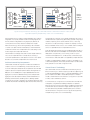
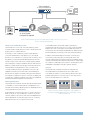
Figure 2: Support for Graceful Route Engine Switchover (GRES)
ensures a smooth and seamless transfer of control plane functions
following a master Route Engine failure.
• Redundant power supplies: The EX4200 line of Ethernet
switches support internal redundant, load-sharing, hotswappable and field-replaceable AC and DC power supplies to
maintain uninterrupted operations. Thanks to their compact
footprint, the EX4200 requires significantly less power than
chassis-based switches delivering equivalent port densities.
• Hot-swappable fan tray with multiple blowers: The EX4200
includes a hot-swappable, field-replaceable fan tray with three
blowers, providing sufficient cooling even if one of the blowers
were to fail.
• Redundant Trunk Group (RTG): To avoid the complexities of
The EX4200 implements the same slot/module/port numbering
the Spanning Tree Protocol (STP) without sacrificing network
schema as other Juniper Networks chassis-based products when
resiliency, the EX4200 employs redundant trunk groups to
numbering Virtual Chassis ports, providing true chassis-like
provide the necessary port redundancy and simplify switch
operations. By utilizing a consistent operating system and a single
configuration.
configuration file, all switches in a Virtual Chassis configuration
• Cross-member link aggregation: Cross-member link
are treated as a single device, simplifying overall system
aggregation allows redundant link aggregation connections
maintenance and management.
between devices in a single Virtual Chassis configuration,
Individually, the EX4200 offers a number of HA features that are
typically associated with modular chassis-based switches. When
providing an additional level of reliability and availability.
• Carrier-class hardware: The EX4200 leverages a purpose-built
combined with the field-proven Junos OS and L2/L3 failover
packet forwarding engine ASIC, the EX-PFE, which integrates
capabilities, these features provide the EX4200 with true carrier-
much of the same intellectual property used in Juniper
class reliability.
Networks carrier routers. As a result, the EX4200 delivers the
same predictable, scalable functionality found in the world’s
largest networks.
3