1
Data Sheet
Features and Benefits
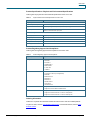
Table 1 lists the features and benefits of the Cisco 7201.
Table 1.
Features and Benefits of Cisco 7201
Feature
Performance
Benefit
● Offers up to 2 million packets per second (2Mpps) in Cisco Express Forwarding
switching
● Offers up to twice the performance compared to Cisco 7301
● Dramatically increases the performance and scalability of the Cisco 7200VXR Series
in WAN and MAN applications for both enterprise and service providers
Modularity
● Enables maximum investment protection through the ability to upgrade processors
incrementally
Single Cisco 7000 Family Port
Adapter Slot
● Offers backward compatibility with existing port adapters (with a few exceptions)
● Maximizes investment protection and flexibility by allowing customers to use existing
port adapters, also simplifying sparing
Note: Only a few end-of-sale port adapters are not supported with the Cisco 7201; details
follow.
Compact Form Factor and Low
Power Consumption (85 watts)
● Uniquely positioned as one of the fastest 1RU routers in the industry today; customers
can maximize router performance where space is constrained
● “Rack and stack” allows customers to maximize the use of space in expensive Internet
service provider (ISP) data centers
● Ideal for a dedicated security or quality-of-service (QoS) appliance at the edge of
enterprise networks
Support for Cisco IOS Software
● Supports a wide range of IP and non-IP network services, including QoS, MPLS,
broadband aggregation, integrated security, encryption, voice, and more
Four built-in GE Ports Directly
on the Chassis
● Maximizes LAN connectivity and performance without taking up slot capacity
● High-speed LAN interfaces no longer have to share a PCI bus with port adapters
● The first two ports provide either RJ45 copper or SFP optical connectivity; the other
two ports provide only SFP optical connectivity because of space constraint. The first
two ports can also be configured as 10/100 (Ethernet/FE) when RJ45 copper interface
is used. (refer to Figure 2)
1 GB of DRAM Default Memory,
Upgradeable to 2 GB of DRAM
● Supports more routes and routing tables
● Supports more MPLS virtual routing and forwarding instances (VRFs)
● Supports more sessions for broadband aggregation
● Enables higher scalability on features such as NetFlow, Network Address Translation
(NAT), access control lists (ACLs), and more Cisco IOS Software
● Supports a wide range of IP and non-IP network services, including QoS, MPLS,
broadband aggregation, integrated security, encryption, voice, and more
Built-in I/O function (Compact
Flash Memory, Console Port,
Auxiliary Port, and Boot Flash
Memory)
● Reduces costs
Dedicated Management for 10/100-Mbps Ethernet
● Reduces costs and protects chassis port density
Digital Diagnostics on SFP
Interfaces
● Provides a powerful tool that monitors many manageable parameters, including optical
transmit and receive power, voltage and temperature measurement, and factory
parameters
Time Domain Reflectometry
(TDR) on Copper Interfaces
● Provides an effective method of isolating fault at the remote end of the copper wire by
monitoring reflected pulsed signals
One USB port
● Supports v1.1 and v2.0 (12-Mbps maximum speed)
● Provides a large, removable storage for files
● Stores security e-tokens for VPN applications
Redundant Power Supply with
Field-Replaceable Unit (FRU)
Capability
● Improved reliability
Front-to-Back Airflow
● Four fan intakes
● Efficient heat dissipation
All contents are Copyright © 1992–2007 Cisco Systems, Inc. All rights reserved. This document is Cisco Public Information.
Page 3 of 10