1
Technical white paper
Adobe Flex 2
®
™
While few would question the benefits that Internet-based applications have brought to businesses
and consumers alike, the actual experience of interacting with many web-based applications
leaves much to be desired, especially when compared with the richness and usability of the best
desktop applications.
For consumer-oriented applications, such as e-commerce, the web’s page-based model and lack
of client-side intelligence can make even relatively simple transactions confusing and error prone. As
a result, online businesses are losing millions of dollars to abandoned shopping carts or costly
customer service calls.
For business applications, the problem is particularly acute. While the web deployment model
has allowed IT organizations to reduce the cost of software deployment, it has also created a
community of underserved business users that long for a return to the usability and responsiveness
of desktop and client/server applications. As a result, businesses are losing millions of dollars per
year due to low productivity or poor decisions.
Fortunately, after long focusing on the technical challenges of web-enabling their application
infrastructure, forward-looking IT professionals are now turning their attention to design patterns
and technologies that can improve the client side of the equation. As a result, we are now seeing
widespread deployment of rich Internet applications (RIAs), a new class of applications that
combines the responsiveness and interactivity of desktop applications with the broad reach and
ease of distribution of the web.
RIAs can drive increased return on investment (ROI) by simplifying and improving the user
interaction—enabling users to find information more easily, complete tasks quickly and
accurately, and use rich data visualization to make better decisions. Before realizing these
benefits, however, IT professionals must navigate through a new set of technologies as well as
understand the architectural and developer skill requirements implied by the move toward
RIA-style applications.
This technical white paper discusses both the short-term and long-term requirements of RIAs
and discusses how the Adobe Flex 2 product family helps IT organizations take advantage of
existing skills and infrastructure to efficiently deliver a broad range of RIAs that can scale from
simple marketing applications to mission-critical enterprise applications.
The evolution of rich Internet applications
Macromedia (now part of Adobe) introduced the term rich Internet application in 2001 to
describe a new kind of Internet-based application being delivered by the vanguard of the web
development community. RIAs combine best practices in user interaction design—for example,
avoiding page refreshes, expanding information in place, and using interactivity and video to
guide or train users—with sophisticated use of web-based technologies such as Macromedia® Flash®
from Adobe, HTML, and JavaScript to deliver a better user experience.
Since then, the interest in RIAs has exploded. While consumer-facing sites have been the most
aggressive adopters of RIA technology, many enterprises are now moving to apply that technology to
internal and external business applications as well. For example, SAP has made improvement of the user
experience using RIAs a major element of its 2006 product roadmap.
RIAs are more than just “eye candy”; rather, they provide measurable value to the enterprise.
According to leading researchers, adoption of RIA technology is accelerating. Forrester Research
foresees “a significant swing in 2006 toward the thin client model for enterprise application
development and deployment,”1 while Gartner believes that by 2010 over 60% of new projects
will include RIA technology2.
As enterprises move to develop and deploy RIAs, however, they are finding that delivering on the
vision requires two important ingredients:
•A new class of client runtime that can support the range of needs inherent in rich Internet
business applications
•Tools and technology that can provide a productive environment for building, maintaining,
and managing these applications throughout their lifecycle
The need for a service-oriented client
Over the past five years, IT organizations have made significant investments in modernizing their
back-end systems to take advantage of service-oriented architecture (SOA). By exposing core business
systems (and the processes they embody) as a set of services, IT organizations hope to become more
agile as well as reduce the cost of system maintenance or updates. As a result, many organizations
can now make business processes more efficient and implement new business processes that
integrate existing systems through web services or an enterprise service bus.
While the move to SOA has steadily improved the efficiency and stability of back-end applications,
web browsers—the main client-side application runtime—have not advanced beyond their
original role as document browsers. To realize the full benefits of a SOA, developers need a richer set
of technical capabilities to modernize the client-side components of their applications. This new set of
capabilities will provide a service-oriented client (SOC)—a runtime environment that can deliver
not only the enhanced usability promised by RIAs but also reliable and secure connectivity to
back-end systems.
While the full set of services required for SOCs will continue to evolve as RIAs become more
commonplace, at a minimum organizations should seek the following capabilities:
•High-performance, cross-platform runtime—Business applications must handle large
amounts of data and support complex client-side business logic and data processing. As a
result, the SOC must be able to manipulate large amounts of data in memory and update the
user interface without a user-perceivable degradation in performance.
•Integrated support for text, graphics, animation, and audio/video—The most usable applications
combine multiple modes of presentation to deliver information more effectively. The SOC must
provide an integrated programming model that allows developers to control all of these modes
within their application.
“The Rise of Rich Internet Applications,” Forrester Research, April 10, 2005.
“Rich Internet Applications Are the Next Evolution of the Web,” Gartner, May 5, 2005.
1
2
Adobe Flex 2
•Enterprise data integration—The request/response model is sufficient for website browsing,
but many applications require optimized high-performance data transfer as well as additional
modes of interaction, including publish/subscribe messaging and the ability to push data or
alerts from the server to the client.
•Support for disconnected computing—While wireless broadband has increased connectivity, business
applications need to continue functioning when the network connection is lost temporarily, and many
other applications must enable users to work offline and resynchronize their work when they
reconnect.
•Security and reliability—Before organizations deliver critical applications using RIA technologies,
they must be confident that the applications will be available when needed. Moreover, the runtime
must ensure that data can be transferred securely, and the client “sandbox” must prevent users or
third-party applications from accessing sensitive information without proper authorization.
While only some applications will require all of these capabilities, IT organizations that want to
deploy RIA technology as a strategic platform—or even just minimize the number of one-off
solutions deployed in their organization—should adopt client technology that can provide the
full range of capabilities required by the SOC.
RIA development model
Of course, to adopt RIAs, organizations need technology and tools that make development and
delivery efficient. Moreover, the new applications must extend existing investments in skills,
processes, applications, and infrastructure.
To be successful within today’s enterprise IT organization, RIA technology solutions must:
•Provide a familiar programming model—Application developers are constantly under
pressure to deliver more with less. The RIA development environment must leverage existing
skills and best practices, including the use of object-oriented languages for business logic and
tag-based, declarative models for user interface layout.
•Leverage existing architecture—Organizations have invested heavily in application server
technology and SOAs. Using and complying with this infrastructure is also a requirement
for most organizations.
•Support standard protocols and application programming interfaces (APIs)—One of the
many positive results of the web has been the adoption of a broad spectrum of standards across
the entire technology stack. This includes, but is not limited to, industry standards, such as
HTML/HTTP(S), XML, Simple Object Access Protocol (SOAP)/web services, cascading style
sheets (CSS), and Scalable Vector Graphics (SVG) as well as Java Platform, Enterprise Edition
(Java EE)—formerly known as J2EE—and Microsoft .NET. Incorporating these standards,
where appropriate, is a requirement for most organizations.
•Follow common key design patterns—To increase both quality and modularity, development
organizations are increasingly adopting common patterns like model-view-controller (MVC)
as standard architectures for their applications. The RIA development models should build on
this store of best practices and developer knowledge.
•Integrate with existing processes—Development organizations have adopted source code
control systems, automated testing suites, and other application lifecycle tools to increase
efficiency and quality and reduce maintenance costs. An RIA development solution must fit
into these existing processes and integrate with the tools already at use within the organization.
•Provide rich tooling—Developers spend a great deal of time coding and debugging application logic.
Beyond an efficient development model, an RIA solution must include tools that can facilitate learning,
automate common tasks, and reduce the amount of time developers spend finding and fixing bugs. At
the same time, the development model must enable developers to continue using their existing editors
for core code writing tasks.
Adobe Flex 2
Introducing Adobe Flex
The Adobe Flex product line is the most comprehensive solution for delivering RIAs across the
enterprise and over the web. Designed to help developers and development organizations meet
the challenges presented by RIAs, Flex is already being used by hundreds of organizations to
deliver interactive data dashboards, customer and employee self-service applications, online product
selectors and configurators, and business-to-business applications.
The Flex product line provides a highly productive programming model (Flex framework),
integrated Eclipse-based development tools (Flex Builder™), and robust data integration services
(Flex Data Services) that enable organizations to rapidly deliver solutions that dramatically
improve user productivity and increase online revenues, while integrating with existing
applications and websites.
Applications delivered with Flex offer a better experience because they take advantage of the
browser and Flash Player runtime. Installed on over 97% of Internet-connected PCs, Flash Player
provides a consistent, cross-platform runtime that combines a high-performance virtual machine
with integrated support for multilingual text display, printing, data manipulation, motion, and
multimedia. On top of these capabilities, the Flex framework layers a rich set of user interface
components and design principles that encapsulate best practices in interaction design and usability.
Flex and Flash Player also provide the robust connectivity required in the SOC. Flex provides
client-side service components that enable applications to interact with any remote server via
SOAP web services, REST services, or raw HTTP or custom socket-based protocols. For more
sophisticated integration needs, Flex Data Services provides additional support for publish/
subscribe messaging, real-time streaming data, and direct integration with existing server-side
Java™ objects as well as other enterprise back-end applications including messaging, security, and
transaction management.
Finally, Flex provides a highly productive development model that easily integrates with existing
processes and is based on standards and best practices that have emerged over the last ten years
of Internet development. The Flex development model uses XML for user interface design and
layout and an implementation of ECMAScript (that is, JavaScript) for client logic. The Flex
Builder integrated development environment (IDE) provides a robust set of coding, debugging,
and visual user interface layout tools that shorten the learning curve for new developers and
easily integrate with existing source code management systems. In addition, Flex provides
integrated support for unit testing and automated functional testing tools.
Flex and the Adobe Engagement Platform
With the combination of Adobe and Macromedia, Adobe has brought together the best-in-class
tools, services, and clients to dramatically reduce the cost and complexity of developing
engaging web applications. By combining these powerful technologies, Adobe is delivering
an industry-defining development platform for creating applications that dramatically improve
how businesses engage with people, processes, and information.
Adobe Flex 2
Figure 1: The Adobe Engagement Platform architecture.
The Adobe Engagement Platform comprises:
•Universal client technology—By combining the strengths of ubiquitous Flash Player with
Adobe Reader® software, HTML, and JavaScript, developers can deliver a predictable,
high-quality application experience across browsers, desktops, and devices.
•Programming model—The Flex development model (MXML and ActionScript) plays a central
role in the platform. By providing a versatile and robust programming model, Flex enables
organizations to efficiently deliver RIAs that take advantage of the universal client technology.
•Development and design tools.—With products like Adobe Photoshop®, Dreamweaver®, Flash
Professional, and Illustrator®, Adobe is a recognized leader in the creative tools market. Through
integration with Flex Builder and third-party development tools, Adobe is enabling designers
and developers to work together to deliver more engaging experiences.
•Server framework—Adobe server technologies build on existing infrastructure standards like
Java EE and .NET, while providing services that simplify integration and extend the capabilities
available to rich clients. Beyond the services provided by Flex Data Services, Flash Media Server
enables applications to integrate two-way audio and video streaming, while Adobe LiveCycle®
software provides services for business process management, document generation, and
information assurance.
The goal of the Adobe Engagement Platform is to blend the strengths of Adobe technologies and
open standards to provide a versatile foundation for extending the reach of information, processes,
and services to customers, partners, and employees anytime, anywhere, and in any medium.
By providing a comprehensive yet open solution for RIA development, Flex enables organizations
to extend their existing investments in application logic, infrastructure, and SOA while realizing
the benefits that RIAs can deliver for end users, customers, or partners.
The following sections provide a more in-depth overview of the Flex product line.
Adobe Flex 2
Flex product line overview
As shown in Figure 2, the Flex product family comprises four separate products:
•Flex Software Development Kit (SDK)—The core component library, development languages,
and compiler for Flex applications
•Flex Builder IDE—An Eclipse-based development environment that includes code editors,
visual layout tools, project management tools, and an integrated debugger
•Flex Data Services—A Java server-based application that enables high-performance data
transfer, cross-tier data synchronization and conflict management, and real-time data
messaging
•Flex Charting—A library of extensible charting components that enables rapid construction of
data visualization applications
Figure 2: Members of the Flex product line.
Flash Player
No discussion of the Flex product would be complete without mentioning Flash Player. Flex
applications are deployed as compiled bytecode that is executed within the Flash Player runtime.
Installed on over 97% of Internet-connected PCs, Flash Player provides a consistent runtime
environment that works across browsers and operating systems, enabling Flex applications to
deliver much greater cross-platform compatibility than other RIA technologies.
Flash Player provides a unique combination of capabilities that developers can use in their applications,
including rich text rendering, powerful graphics APIs, an animation engine, and an integrated
audio/video codec. These capabilities not only contribute to the rich out-of-the-box look and feel
displayed in Flex applications, but they are also available to developers who need to construct
custom components. By taking advantage of the drawing APIs, for instance, developers can quickly
build a custom component that provides a unique visualization needed by their application.
The ActionScript 3 virtual machine provides a high-performance client-side runtime for application
code. When Flex applications are loaded, the just-in-time compiler translates the cross-platform Flash
bytecode into machine code, enabling rapid client-side data processing and efficient memory management.
This type of performance is particularly important for business applications, in which the requirements
for client-side data sorting and business rule execution are more significant.
Adobe Flex 2
Flex runtime architecture
The Flex runtime architecture is closely aligned with the just-in-time deployment model of web
applications. The client portion of a Flex application is deployed as a binary file that contains the
compiled bytecode for the application. Users then deploy this file to a web server just as they
would an HTML file or an image. When the file is requested by a browser, it is downloaded and
the bytecode is executed by the Flash Player runtime.
As illustrated in Figure 3, once started, the application can request additional data or content over the
network via standard HTTP calls (sometimes referred to as REST services) or through web services
(SOAP). Flex clients are server agnostic and can be used in conjunction with any server environment,
including standard web servers and common server scripting environments such as JavaServer
Pages (JSP), Active Server Pages (ASP), ASP.NET, PHP, and ColdFusion®.
Browser
Browser
MXML and
ActionScript
Flash Player
Data
Data
Web
Web Server
Server
XML/HTTP
XML/HTTP
REST
REST
SOAP
SOAP Web
Web Services
Services
Flex Data Services 2
Java
ApplicationServer
Server
J2EEEE
Application
Existing
Existing Applications
Applications and
and Infrastructure
Infrastructure
Figure 3: Flex runtime architecture.
If the Flex client application is used in conjunction with Flex Data Services, the application has
access to additional services. Flex clients can make direct calls to Java objects as well as subscribe
to real-time data feeds, send messages to other clients, and integrate with existing Java Message
Service (JMS) messaging systems. The Flex Data Services application runs on the server within
the Java web container.
Flex development model and application framework
The development process for Flex applications mirrors the process for Java, C#, C++, or other
traditional client development languages. Developers write MXML and ActionScript source code
using the Flex Builder IDE or a standard text editor. As shown in Figure 4, the source code is then
compiled into bytecode by the Flex compiler, resulting in a binary file with the *.swf extension.
Flex Application Framework
MXML
ActionScript
Compile
Flex Class Library
Figure 4: The Flex framework comprises MXML, ActionScript, and the Flex class library.
As shown in Figure 4, the Flex application framework consists of MXML, ActionScript 3.0, and
the Flex class library. Developers use MXML to declaratively define the application user interface
elements and use ActionScript for client logic and procedural control.
Adobe Flex 2
The Flex class library contains Flex components, layout managers, behaviors, and service components.
With the Flex component-based development model, developers can create applications using
prebuilt components, combine prebuilt components into composite components, or create new
components by extending the prebuilt components or their base classes.
The ability to create custom components is one of the most powerful aspects of Flex development.
Like other enterprise runtime environments, Flash Player provides a rich set of services that
developers can use to construct components. These include display APIs for drawing to the
screen, manipulating graphics, and controlling audio or video as well as APIs for accessing
network resources, parsing data, and performing calculations. Combined with the built-in
layout, data binding, and effects classes in the Flex component API, these provide a complete
environment for delivering a wide variety of custom applications.
MXML: The Flex markup language
Like HTML, MXML is a markup language that describes user interfaces that expose content and
functionality. Unlike HTML, MXML provides declarative abstractions for client-tier logic and
bindings between the user interface and application data. MXML helps maximize developer
productivity and application reusability by cleanly separating presentation and business logic.
The following code listing uses MXML to define the user interface for a product catalog application. This
example uses the built-in Panel and DataGrid components as well as an instance of the WebService
class, which sets up a connection between the client application and the catalog web service.
<?xml version=”1.0” encoding=”utf-8”?>
<mx:Application xmlns:mx=”http://www.adobe.com/2006/mxml”
creationComplete=”ws.getList()”>
<mx:Style source=”main.css”/>
<mx:WebService id=”ws” wsdl=”http://mysite.com/services/CatalogWS?wsdl” >
<mx:operation name=”getList”/>
</mx:WebService>
<mx:Panel title=”Product Catalog”>
<mx:DataGrid width=”100%” height=”100%”
dataProvider=”{ws.getList.lastResult}”>
<mx:columns>
<mx:DataGridColumn dataField=”name” headerText=”Name”/>
<mx:DataGridColumn dataField=”price” headerText=”Price”/>
</mx:columns>
</mx:DataGrid>
</mx:Panel>
</mx:Application>
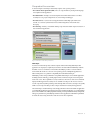
Figure 5 shows the resulting application, including the data retrieved from the web service.
Figure 5: A product catalog created with MXML and populated via a web service.
Adobe Flex 2
ActionScript 3.0
ActionScript is the object-oriented programming language used for Flex development. Like
JavaScript, ActionScript 3.0 is an implementation of ECMAScript, the international standardized
programming language for scripting. However, because it is an implementation of the latest
ECMAScript proposal, ActionScript provides many capabilities not common in the versions of
JavaScript supported by most browsers. At development time, ActionScript 3.0 adds support for
strong typing, interfaces, delegation, namespaces, error handling, and ECMAScript for XML (E4X).
At runtime, the most significant difference between JavaScript and ActionScript is that ActionScript
is just-in-time compiled to native machine code by Flash Player. As a result, it can provide much
higher performance and more efficient memory management than interpreted JavaScript.
Flex developers use ActionScript to write client-side logic, such as event listeners and call-back
functions, or to define custom types for the client application. For example, the following code
shows the definition of the Customer class.
Customer.as
public class Customer {
private var _ id:int;
private var _ firstName:String;
private var _ lastName:String;
private var _ mobilePhone:String;
private var _ officePhone:String;
...
public function get id ():int {
return _ id;
}
…
}
Flex class library
Flex includes a rich class library that contains Flex components (containers and controls), data
binding, behaviors, and other features.
Beyond providing a set of built-in capabilities (described in the following subsections), Flex
components follow a consistent cross-platform experience model based on user interface design best
practices. As a result, developers can deliver professional-looking applications that delight users
without the active involvement of a graphic designer.
Where a custom look and feel is desired, designers can easily customize components through an
extensive set of CSS-based styles. In addition, users can create custom skins using industry-standard
tools such as Photoshop, Illustrator, and Flash Professional. As with built-in styles, custom skin
properties are set using CSS properties.
1 Visual components
The component-based model eases the creation of Flex applications. Developers can use the
prebuilt components included with Flex, extend components to add new properties and
methods, and create new components.
The Flex class library supplies two types of visual components: containers and controls. When
developers build an application using Flex, they describe its user interface with controls and
containers. Controls are user interface components that handle user interactions and display
data that users can manipulate directly through that control. Examples of controls are the
DataGrid and the TreeControl. A container defines a region of the Flash Player drawing
surface and controls the layout for everything in the container, including other containers
and controls. Examples of containers are a data entry Form container, a Box, and a Grid.
Adobe Flex 2
Flex components are extremely flexible and provide developers with a great deal of control over
the component’s appearance, how the component reacts to user interactions, the font and font
size of any text included in the component, the size of the component in the application, and
more. Flex components support the following characteristics:
•Events—Application or user actions that require a component response
•Behaviors—Visible or audible changes to the component triggered by an application or
user action.
•Skins—Symbols that control a component’s appearance
•Styles—Set of characteristics, such as font, font size, and text alignment
•Size—Height and width of a component (all components have a default size)
Developers can control these characteristics at development time through MXML or CSS, or at
runtime through the component’s ActionScript API, including creating or destroying instances
of a component based on application data or user interaction.
2 Service components
The Flex service components and underlying Flash Player enable applications to access data from
a wide variety of resources. The Flex class library includes built-in classes for calling SOAP-based
web services and and for loading XML or other data via HTTP. Developers can also take
advantage of custom protocols by leveraging support for binary sockets in Flash Player or
by loading data from the host browser. Using Flex Data Services, developers can also make
remote API calls to Java objects or subscribe to real-time message queues and data services
(see “Flex Data Services” for more detail).
Once retrieved, data in a Flex application can be managed as a typed variable, an array of objects,
as native XML (using E4X), or as an instance of the Collection class. The Collection class simplifies
development of data-driven applications by automatically keeping track of changes to the data so
that they can be sent to the remote server when the application is ready to synchronize.
Flex also provides a mechanism for binding data objects to visual controls so that the user
interface is automatically updated when the underlying data is changed, either as a result of logic
running on the client or of changes sent from a remote server. Data binding can be set up
declaratively in MXML or programmatically in ActionScript.
3 Flex behaviors
The Flex class library also provides prebuilt behaviors that enable developers to easily add motion
and sound to their application to give users context for their actions. For example, a developer
can use behaviors to cause a dialog box to bounce slightly when it receives focus or animate a userselected item to illustrate the transition from a master view to a detail view.
A behavior is a combination of a trigger paired with an effect. A trigger is an action, such as a mouse
click on a component, or a component becoming visible. These are typically exposed as events.
An effect is a visible change to the component occurring over a period of time, measured in
milliseconds. Examples of built-in Flex effects are fade, move, resize, or pause. Developers can
define their own effects using ActionScript or composite multiple built-in effects together to meet
their application needs. Effects can be applied to individual components or containers.
Adobe Flex 2 10
Other developer tools
Adobe works with third-party application development lifecycle solution providers to help
ensure Flex works with standard tools and processes. Adobe also supports several open source
projects that facilitate Flex development. Some key initiatives include:
•Functional testing—As part of the Flex 2 release, Adobe is working with Mercury Systems to enable
users to create and execute automated testing scripts from within Mercury QuickTest Professional.
•Unit testing—Modeled on the JUnit test framework, Flex Unit is an open source library that
enables developers to create automated unit tests for ActionScript code.
•Performance and load testing—Adobe has collaborated with Mercury and Borland (formerly
Segue) to integrate Flex with their industry-leading load testing tools.
•Cairngorm—Cairngorm is an architectural framework designed and maintained by the Adobe
Developer Center. Available as a free open source project, Cairngorm enhances Flex development
by providing a standard architecture and methodology for handling user gestures on the client and
mapping them to business logic and server interactions through a centralized client controller.
For more information on any of these projects, visit the Flex Developer Center at
www.adobe.com/devnet/flex.
Flex Data Services
Flex Data Services extends the capabilities of the Flex client framework by providing additional
services for managing data transfer and integrating with existing applications and infrastructure.
As illustrated in Figure 6, Flex Data Services fits into an organization’s existing deployment
environment. It is implemented as a Java web application and can be deployed on standard Java
application servers, including IBM WebSphere, BEA WebLogic, Adobe JRun, JBoss, Tomcat, and
others.
Flex 2 in the enterprise architecture
Browser/
Flash Player
Flex framework
User interface components and client-side logic
Application and data connectivity
SOAP
App
server
HTTP/S
AMF
Flex Data Services
Data management and messaging
Open adapter architecture
Business tier
EJB, POJO
Integration tier
Connectors to data and legacy systems
Resource tier
DBMS
LDAP
RTMP/S
CRM/ERP Web services
Figure 6: Flex is designed to integrate cleanly with the existing infrastructure.
The services provided by Flex Data Services integrate with the existing security profiles defined
within the Java application server. Flex Data Services can be deployed using standard deployment
tools provided with the server and can integrate with application server clustering features to
enable highly available applications. In addition, applications built with Flex Data Services can
access existing server-side session data and application logic using standard Java APIs.
Adobe Flex 2 11
Figure 7 shows a high-level overview of the services provided by Flex Data Services. When working
with Flex Data Services, developers define a set of “destinations” using XML configuration files. These
definitions are used by the built-in service adapters provided as part of the Flex Data Services
application. These include low-level adapters to connect to Java objects (data access objects), JMS
topics/queues, or ColdFusion components (CFCs) as well as higher level adapters for common
persistence solutions such as Hibernate, Enterprise JavaBeans (EJB), and Spring. The Flex Data
Services adapter architecture is open and customizable, allowing connectivity to any back-end
data system or application.
Flex Data Services 2 capabilities
Data management
RPC services
Web services
Data sync
Messaging
Collaboration
HTTP service
OCC
Publish/subscribe
Remote object
Paging
Data push
Runtime
compiler
Service adapters
Java™
JMS
Hibernate
ColdFusion®
Custom…
Figure 7: Flex Data Services 2 capabilities.
Once the appropriate destinations have been configured, the Flex developer can access them
through a set of client APIs, either in MXML or ActionScript.
Flex Message Service
All of the data services mentioned previously use the Flex Data Services server message bus for
high-performance data communication and reliability between the Flex client and the server. All
service calls are routed through the message service, including remote procedure call (RPC) calls.
As a result, calls made from within Flex applications are automatically queued when the network is
unavailable, providing a higher level of reliability and the foundation for offline applications. Similar
to a JMS-based messaging system, the Flex Message Service provides developers with complete control
over quality of service, including configuration parameters for reliable message delivery and time to
live, load balancing and clustering, and the ability to set up multiple failover channels per destination.
The Flex Message Service is optimized for communication between Flex clients and Flex Data
Services servers. It is not designed to replace existing messaging systems but rather to extend
those systems to allow thin clients to participate in existing enterprise messaging applications.
The message service integrates with existing messaging systems through a set of adapters. A JMS
adapter is available out of the box. Third-party vendors and developers can also develop their
own adapters for messaging systems that don’t support JMS.
The addition of messaging to Flex applications enables whole new classes of web applications. Real-time
data feeds that integrate with JMS or other messaging technologies can provide highly accurate
stock prices for a rich trader desktop or monitoring dashboard, and asynchronous communications
can be pushed to a Flex application without a client request. The Flex Message Service supports
collaborative applications that include peer-to-peer chat, gaming, or in-context co-browsing. All of
these applications can be deployed using a thin client and the web deployment model.
RPC Services
Flex RPC Services include the Remoting Service and proxies for managing HTTP and SOAP
requests. The Remoting Service provides native connectivity between Flex clients and remote
server-side Java objects. As a result, Flex applications can easily integrate with existing application logic, including the Java session object. The Remoting Service handles data marshaling
Adobe Flex 2 12
between Java and ActionScript automatically and integrates with existing security profiles to
handle user authentication and authorization. In addition, because data is transferred in a binary
format, the Remoting Service can significantly increase performance in applications where large
amounts of data need to be transferred from client to server.
The Proxy Service fulfills two functions. First, it enables communication between the Flex client
and domains it cannot access directly, due to security restrictions.3 By proxying requests from the
application’s domain, the Proxy Service enables developers to integrate multiple services with a single
Flex application as well as reduce the opportunity for malicious discovery of security credentials
used to access applications exposed as web or HTTP services. In addition, because services are
accessed via developer-configured names, the Proxy Service also provides a layer of abstraction
between the Flex client and the back-end service, enabling the underlying implementation or
Uniform Resource Identifier (URI) to change without requiring modifications to the Flex client.
Data Management Service
The Data Management Service is designed to address one of the unique challenges posed by RIAs.
In traditional page-centric HTML applications, the client is mostly used as a data capture and
display device. The client doesn’t own a version of the data, except perhaps to edit a particular record,
and even in that case, changes are quickly sent to the server for verification. The data synchronization
(or persistence) process is limited to synchronizing data that exists in middle-tier applications
with data that is stored in a back-end data system (RDBMS, mainframe, and so forth).
With RIAs, however, the application client can own its own copy of the data. With a more
complete data model, applications become more responsive since functions like sorting or
filtering can be performed locally. However, having a local copy of the data introduces several
issues that must be addressed. The application must synchronize and manage data conflicts
between the client and the server, especially when application data is constantly changing, as
well as optimize data download and bandwidth utilization in applications with large data sets.
The Data Management Service greatly facilitates the process of synchronizing or persisting data
between the client tier and the middle tier. It can also integrate with existing persistence solutions
(such as Hibernate) to provide an end-to-end persistence solution. The Data Management Service
represents an evolution towards data orientation in which the programming model is centered
on data and objects instead of focusing on method invocations, dramatically improving developer
productivity.
Using the DataService API, developers can automatically synchronize data changes (creates,
reads, updates, and deletes) between all clients using the managed data object as well as with
the back-end data system via the Flex Data Services server. The Data Management Service also
offers developers the ability to manually control when and how data updates are sent from
client to server. If any conflicts arise, the Data Management Service raises an exception, and
the developer can use the conflict resolution API to handle it appropriately, allowing client
updates to overwrite server updates and vice versa.
The high-level data management API dramatically reduces the amount of code that developers
have to write, debug, and maintain. Not only does it relieve developers of complex synchronization
code, but data objects using the Data Management Service are automatically enabled to use data
paging to maximize client-side application performance and optimize bandwidth utilization. As
a result, developers can focus their efforts on implementing business logic, rather than on low-level
data marshaling or cursor management.
Moreover, because the Data Management Service uses the underlying message service, changes
can also be pushed to other clients that are subscribed to the same destination. This can be extremely
useful for applications in which decisions depend on having the most up-to-date copy of the data,
such as a customer relationship management or inventory tracking application. The Data
Management Service can also be used to create collaboration-enabled applications in which
multiple clients work simultaneously on a common data set.
3
oth Flash Player and the browser’s JavaScript runtime restrict the ability of downloaded code to access network
B
resources. The sandbox only allows code to access resources on the same domain from which it was loaded, thereby
preventing malicious code from accessing a user’s internal network resources. For more information on the Flash Player
sandbox security model, visit the Adobe Security Center at www.adobe.com/devnet/security.
Adobe Flex 2 13
Runtime compilers
Flex Data Services also provides a runtime compiler. As with JSPs, an MXML file can be
compiled dynamically when its URI is requested. While primarily employed for iterative
development, this capability can also be used to dynamically generate application code at runtime
and provide a just-in-time compiled version of the application. As with other dynamically
compiled pages, like JSP, the initial compilation of an MXML page can take a few seconds.
However, the resulting bytecode is cached by the server so that subsequent requests do not
require recompilation (provided the underlying MXML file has not changed).
Flex Builder
Flex Builder is the Adobe IDE for Flex development. It is built on the open source Eclipse tools
platform4 and can be used either as a standalone product or as a set of plug-ins within an existing
Eclipse installation.
As discussed previously, Flex development can be done with any text editor, but Flex Builder
enables developers to learn Flex quickly and continue working productively by providing a rich
set of code editors, a drag-and-drop user interface assembly, and a powerful interactive debugger.
Code editing
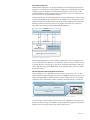
Flex Builder provides built-in code editors for MXML, ActionScript, and CSS. In addition to
code hinting for built-in Flex tags and classes, Flex Builder provides statement completion and
type checking for custom classes and libraries. The built-in incremental compiler also flags
syntax errors and type mismatches as developers work, enabling them to quickly fix mistakes
and move on, rather than spending valuable time trying to hunt down problems after the fact.
Figure 8: Flex Builder source editor.
Visual layout and skinning
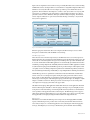
The Flex Builder design view enables developers to quickly assemble and preview Flex application
interfaces. Developers can add custom or built-in components by dragging them from the component
view and then take advantage of snapping and alignment tools to arrange them in the user
interface. They can also make changes directly in the code and quickly switch to design view for
a high-fidelity preview of the compiled application. Flex Builder supports all of the layout models
available in MXML, including the box model, absolute positioning, and constraint-based layout.
Flex Builder also makes it easier to customize the appearance of an application. Property editors
enable developers to quickly set the most commonly used properties and preview the results in
design view. In addition, users can easily import graphical assets created in professional design
tools such as Flash or Photoshop for use as icons or skins in Flex applications.
4
Eclipse is an open source platform for developing tools. The project is managed by the Eclipse Foundation, an international consortium of software vendors (including Adobe) that contribute to the Eclipse projects and set the direction of
the core platform. Besides being the most popular Java IDE on the market, the Eclipse tools platform is also used as the
foundation for products from IBM, SAP, Sybase, and Actuate, among others.
Adobe Flex 2 14
Figure 9: Flex Builder design view.
Interactive debugging
The Flex Builder integrated debugger enables developers to quickly track down and resolve problems
in their applications. The debugging perspective allows them to set breakpoints, inspect variables
and expressions, change values, and monitor trace messages. Applications can be debugged in
standalone Flash Player or in any browser that has Debug Flash Player installed, including remote
machines running a different operating system.
Also, because Flex Builder is built on Eclipse, developers can debug Java and Flex applications
side by side using the Eclipse Java debugger together with the Flex ActionScript debugger.
Extensibility
Because Flex Builder is built on the Eclipse platform, developers can easily take advantage of
hundreds of commercial and open source plug-ins available for Eclipse to provide additional
functionality. For example, plug-ins are available for all of the leading source control systems,
as well as common programming languages like C#, C++, and Java, and many of the lifecycle
tool vendors are now delivering tools as Eclipse plug-ins.
Flex Builder also provides an extensibility API, enabling organizations to build custom actions
that automate team tasks (such as integrating with an automated test suite) or to build custom
plug-ins. Developers can share plug-ins for Flex Builder through the Flex Developer Center at
www.adobe.com/devnet/flex.
Flex target applications
While countless types of applications can be enhanced through RIA technology, Flex is particularly
well suited for applications with a distinct set of characteristics, including those that:
•Automate a multistep process, particularly where the steps are nonlinear or recursive
•Combine graphical or multimedia content with data and application logic, particularly where
users must interact with data or media locally
•Require server push or access to real-time streaming data, such as operational data or stock
quote information
•Must operate in a disconnected fashion, for either short or extended periods of time
•Can benefit from complex client-side validation, such as logic that depends on previous user
entries or sophisticated validation logic
•Involve large data sets, particularly where client-side data manipulation is important
While many applications embody some or all of these characteristics, they manifest themselves
most frequently in the following use cases.
Adobe Flex 2 15
Interactive data visualization
Interactive dashboards are designed to allow users to quickly assess a situation through data
visualization, enabling better decision-making and more rapid responses to business change. The
extensible charting components available with Flex enable developers to assemble everything from
conventional pie and bar charts to highly customized data visualization solutions. Moreover,
because the charts are drawn locally using Flash Player’s built-in vector graphics rendering
features, users can quickly customize the chart or filter the data set to investigate a trend or drill
down into a particular detail.
For example, SAP is using Flex as the user interface technology for a new line of analytics
applications being delivered to customers in 2006. These applications provide a rich visual
interface with SAP Business Warehouse data, enabling business users to analyze trends, monitor
operational status, and make better decisions.
Figure 10: An example of an SAP analytics dashboard.
When linked with the data service architecture, Flex can enable a new class of data visualization
solution. Rich, multidimensional charts can be bound to real-time data feeds so users always see
the latest information. In addition, developers can use the Flex Message Service to enable real-time
collaboration between users analyzing the same data set.
Product configuration and selection
E-commerce continues to grow in both the business-to-consumer and business-to-business
sectors. However, as the number and complexity of products being sold online increase,
customers need additional tools to help them quickly locate the product or service they want and
configure it to their particular needs.
Flex based applications can help users sort through hundreds or even thousands of available
products by enabling client-side data filtering and by providing immediate visual feedback based
on their input. In addition, with native support for graphics rendering and manipulation, Flex
and Flash Player enable organizations to deliver product configurators that show users a visual
representation of the options they have chosen.
Adobe Flex 2 16
For example, Harley Davidson is using Flex to allow customers to configure their own motorcycle
online. As users select a model, options, and colors, they can immediately preview the bike’s
appearance and the total cost of their selections.
Figure 11: Harley Davidson motorcycle configurator built in Flex.
Process integration
As businesses expose more of their core business processes through services, there are more
opportunities to deliver composite applications that present information or tasks in a role-specific
or task-specific user interface. By combining native support for SOA with the ability to deliver
a desktop-like experience in the browser, Flex is particularly well suited to these process
integration applications.
An RIA created using Flex can combine data from multiple back-end systems into a single, integrated
user interface that automates employee “onboarding” or helps customer service representatives
navigate through information stored in disparate customer databases.
For example, Centive has used Flex as the user interface for its sales incentive management system,
giving salespeople a cross-platform, easy-to-use application that allows them to easily track
commissions through a set of rich visualizations.
Guided self-service
Guided self-service applications give users relevant information in the context of the transactions
they are trying to complete. They can also provide in-context prompting through audio and video
integration, allowing for just-in-time delivery of multimedia help or real-time collaboration
between customers and representatives.
For example, a guided self-service application can walk a customer through processes such as bill
pay or new account enrollment in an online banking application, new service selection for cable
or phone customers, and quote generation. This increases the effectiveness and ROI in online
customer self-service infrastructure and reduces the need for customers to engage a call center
representative to answer a question or solve a problem. When customers need help, they can click
a button to view multimedia help in the context of the application or contact a representative
through a chat conversation. They can then watch the representative’s mouse driving the
Adobe Flex 2 17
application onscreen and solving the problem immediately. These customer interactions not only
save money on customer service operations, but they also increase revenues due to lower process
abandonment rates.
Internally, guided self-service applications can help employees sign up for or modify their
benefits enrollments. They can also help customer service representatives navigate through
complex service offerings or the latest specials they can present to customers.
Flex and other technologies
Flex and Ajax
Ajax is an acronym that stands for Asynchronous JavaScript and XML. The term was coined to
describe the use of browser technologies to deliver RIAs. Ajax is associated with a set of application
design patterns as well as a variety of open source projects and commercial products.
Flex and Ajax both promote an architecture that enables applications to take greater advantage of the
client runtime to provide richer application functionality. As a result, the approaches used to expose
business logic to Ajax clients (web services, REST APIs, and so on) are similar to those used in
Flex applications.
While it is possible to develop rich clients using only client-side JavaScript and HTML (as many
Ajax vendors promote), Flash Player provides additional capabilities not available in HTML,
including a high-performance, just-in-time compiled execution engine, integrated APIs for
graphics manipulation and vector drawing, and the robust, real-time messaging and integration
services provided by Flex Data Services.
Also, because Flash Player is integrated with the browser runtime environment, developers can
easily deliver applications that combine user interface logic written in JavaScript with components or
entire applications written in Flex. For example, Google is taking advantage of both JavaScript
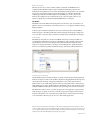
and Flash as part of its Google Finance site. As shown in Figure 12, the application uses common
Ajax techniques to update news stories and highlight news items, while the interactive chart
takes advantage of the Flash Player runtime to draw a rich data visualization and show the
connections between breaking news and changing stock price.
Figure 12: Google Finance combines the strengths of Ajax and the Flash runtime.
Basic interoperability between the Flash Player virtual machine and the browser’s JavaScript
engine and document object model is provided through the Flash Player External API, which
enables bidirectional communication between JavaScript and ActionScript. To further facilitate
this type of development, Adobe has released the Flex-Ajax Bridge (FABridge) library, which
automatically exposes the public data and methods within a Flex application to the JavaScript
engine and vice versa. This enables developers to easily integrate Flex applications with existing
sites as well as to deliver new applications that combine Ajax libraries such as Yahoo Widgets with
applications or components created in Flex.
For more information on the FABridge, visit Adobe Labs (http://labs.adobe.com/wiki/index.php/
Flex_Framework:FABridge).
Adobe Flex 2 18
Flex and portals
Portals facilitate the aggregation of web content and applications in an integrated user interface.
While many portlets are rendered in HTML, developers can use Flex to render the user interface
of portlets and greatly improve the user experience within a portal. In addition, using Flex Data
Services, developers can integrate the Flex application with existing security profiles and
business logic running in the portal environment or within other applications running at the
server tier.
JSR 168 created a common method to expose web applications as portlets so that they can be easily
aggregated into a portal. Much of the pain of aggregating disparate web applications lies in
dealing with application state. Flex applications avoid this pain because the state of a Flex
application primarily lives on the client. This also simplifies the process of exposing Flex
applications as remote portlets.
To integrate Flex with a portal environment, developers will generally create a JSP, HTML, and/or
Web Services for Remote Portlets (WSRP) wrapper that includes the compiled Flex application.
When the portlet is requested, the compiled Flex application is delivered to the user and included
in the portal page. Either the Flex application can run as a small window within a page that
contains multiple portlets, or it can be launched as a full-screen application once the user selects
it from the navigation bar.
The original portlet spec (JSR 168) was primarily about aggregation, but it failed to address issues
like interportlet communication, which becomes particularly relevant to rich client applications
built with Flex or Ajax. While there are no issues with using the existing WSRP standard for
remote Flex portlets or with using existing vendor-specific interportlet communication APIs inside
Flex applications, JSR 286 was begun to standardize interportlet communication and to remedy
other shortcomings of JSR 168. Adobe is participating in JSR 286 as an expert group member to
help ensure better support for client-side state and asynchronous requests.
For more information on using Flex in a portal environment, visit www.adobe.com/devnet/flex/
articles/flex_portals.html.
Flex and the Microsoft .NET platform
Flex applications can deliver a rich user interface for back-end systems implemented on Microsoft’s
.NET platform. Since application clients built in Flex are server agnostic, they can communicate
with web services or HTTP services built with ASP.NET or C# just as easily as they can with
systems implemented in Java, ColdFusion, or other technologies.
Additionally, while Flex Data Services is implemented in Java, it can be deployed with a .NET
environment. As illustrated in Figure 13, the destinations exposed by Flex Data Services can be
composed from multiple services built in .NET technologies.
User
App
Server
Flex Application Client
Flex Data Services
SOAP
SOAP
XML/
XML/
REST
REST
COM
COM
Adapter
Adapter
.NET
.NET Objects/Services
Objects/Services
Resource
Tier
Figure 13: Flex in a .NET environment.
Adobe Flex 2 19
Moreover, using third-party adapters such as J-Integra for .NET, developers can easily expose
.NET objects or APIs as services within a Flex environment.
By providing a cross-platform runtime environment for rich clients, Adobe Flex complements
the Microsoft .NET architecture, enabling customers with heavy investments in Microsoft
systems to reach beyond those platforms and deliver applications that provide a high degree of
performance and usability, regardless of the operating system on the client.
Additional resources
Developer resources
In addition to extensive product documentation, Adobe provides a rich set of developer
resources to support Flex development. These are accessible from:
• Flex Developer Center: www.adobe.com/devnet/flex
• Flex Support Center: www.adobe.com/support/flex
• Adobe Online Forums: www.adobe.com/support/forums
Security
For detailed information on security in Flex applications, consult the Security Topic Center at
www.adobe.com/devnet/security.
Case studies and sample applications
To read about companies that have deployed Flex applications, visit www.adobe.com/products/
flex/customers.
Better by Adobe.™
Adobe Systems Incorporated
345 Park Avenue
San Jose, CA 95110-2704
USA
www.adobe.com
Adobe, the Adobe logo, ColdFusion, Dreamweaver, Flash, Flex, Flex Builder, Illustrator, LiveCycle, Macromedia, Photoshop, Reader, and “Better by Adobe”
are either registered trademarks or trademarks of Adobe Systems Incorporated in the United States and/or other countries. Java is a trademark or registered
trademark of Sun Microsystems, Inc. in the United States and other countries. All other trademarks are the property of their respective owners.
© 2006 Adobe Systems Incorporated. All rights reserved. Printed in the USA.
95006794  6/06