1
2 AN INTRODUCTION TO RAID
2.1 RAID VOLUMES
RAID technology allows one or more disks to be combined into a logical volume which provides greater
performance and/or protection than standard disk drives. These volumes, also known as RAID Groups, appear
like regular disk drives to the operating system and can be partitioned, formatted and used just like any other
normal disk. The complexity of the RAID is hidden within the driver.
There are several different methods of combining disks, each with its own advantages and disadvantages. Each
method is referred to as a RAID “level” such as RAID 1, or RAID 5. The details of each level are summarized
below and detailed in the following sections.
RAID LEVEL
0
CONFIGURED AS
Striped
ADVANTAGES
Excellent performance, low cost
DISADVANTAGES
No data protection
1
Mirrored
Excellent data protection
High cost
10
Mirrored Striped
High performance, excellent data
protection.
High cost.
5
Parity RAID
Good data protection, good value
Some performance degradation
for writes.
Combination
Concatenated
Good performance, low cost, large
Volume size
No data protection
Single Drive / Segment
Contiguous
Same as single disk
Same as single disk
2.2 SEGMENTING DISKS
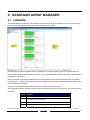
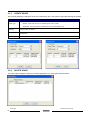
For increased versatility, the SATARAID5 software allows individual disks to be divided into smaller segments
which can then be combined into different volumes. As an example, if a user has one set of data that must
be protected at all costs, another set of data which should be protected at reasonable cost and another set
that
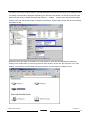
doesn’t need any protection at all; the user can divide three disks into sections as shown in Figure 1.
The yellow
regions define the high security volume, the greem section is the middle security volume and the light blue shows
the unprotected area.
Figure 1:
DAS501t User’s Manual
Dividing Disks into Members
Ver.071016
7