1
JBL 1394 Manual
7/17/98 11:49 AM
Page 23
wires connected directly to the chassis
of the head unit. The trickiest grounding
task is created when some components
of this type are mixed with other components using isolated supplies. For this
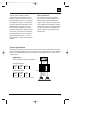
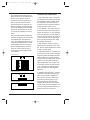
type of system, the following grounding
scheme will usually work:
must cross, they should cross at right
angles. If you suspect that power line
noise is being induced in the signal
leads, you can repeat the test for
source noise described previously, but
perform the test at the amplifier end of
the signal cables.
1. Connect the head unit chassis to a
solid vehicle ground using a short,
heavy gauge wire (>AWG10). Do not
connect this to the vehicle’s wiring
harness, but go directly to a metal
part of the vehicle.
Other Noise Sources – Common noise
problems will be solved by proper
grounding and power supply connections. However, there are many noise
suppression devices (such as spark
plug and coil lead suppressers and
rotor and coil bypass capacitors) available at auto parts or car stereo stores.
There are also noise suppressers that
can be connected directly to the alternator that are effective in some situations. The use of any such suppressors
should be discussed with a JBL authorized installation specialist. Certain
vehicles are particularly “noisy,” especially models that have solid state ignition systems or that have non-metal
bodies. Such vehicles may require electrical noise suppression devices which
are not normally needed.
2. Connect all non-isolated signalprocessor grounds directly to the
head unit chassis at the same point.
Run each wire individually. Due to
wire resistance connecting multiple
wires to a single wire, then running
the single wire to the head unit, is not
the same!
3. Connect all amplifier and isolated
signal processor grounds directly to
the vehicle chassis at the same point
as each other, but not necessarily to
the same point as the head unit.
Power-line Noise – The built-in power
supply filter of the amplifier makes
external filters unnecessary. In some
cases, power supply noise can enter
the system through the head unit power
supply or the supply of an equalizer or
other signal processor. Putting a filter
on the head unit or signal processor
power supply input may then be helpful.
Power wires carrying high currents may
induce noise in nearby signal wires.
Make sure that power wires and signal
wires do not run together for long distances. When power and signal leads
Antenna – A common noise problem is
generated by a “ground loop” produced
by the antenna shielded cable being
grounded at both the antenna mounting
point and at the head unit input. In this
instance, insulate the antenna ground
from the chassis of the vehicle at the
antenna mounting point so the antenna
shield is grounded only at the radio’s
antenna input. Commercial antenna
ground-loop isolators are also available.
Switching Noise – The GTS100 has a
highly developed switching power supply which generates some RF interfer-
23