1
Signamax 065-7931 16-Port 10/100/1000BaseT/TX WebSmart Switch
3-3. Flow Control
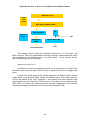
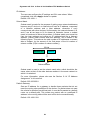
Flow control is a mechanism used to tell the source device to stop sending
frames for a specified period of time designated by the target device until the
PAUSE time expires. This is accomplished by sending a PAUSE frame from the
target device to the source device. When the target is not busy and the PAUSE time
is expired, it will send another PAUSE frame with zero time-to-wait to the source
device. After the source device receives the PAUSE frame, it will again transmit
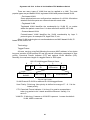
frames immediately. PAUSE frame is identical to the form of the MAC frame with a
pause-time value and with a special destination MAC address 01-80-C2-00-00-01.
Per the specification, the PAUSE operation can not be used to inhibit the
transmission of MAC control frames.
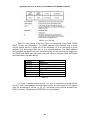
Normally, in 10 Mbps and 100 Mbps Ethernet, only symmetric flow control is
supported. However, some switches (e.g., the 065-7931 Gigabit WebSmart Switch)
support not only symmetric but asymmetric flow controls for special applications. In
Gigabit Ethernet, both symmetric flow control and asymmetric flow control are
supported. Asymmetric flow control only allows transmitting a PAUSE frame in one
way from one side, and the other side is not allowed to transmit but can only
receipt-and-discard the flow control information. Symmetric flow control allows both
two ports to transmit PAUSE frames to each other simultaneously.
Inter-frame Gap time
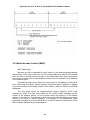
After the end of a transmission, if a network node is ready to transmit data
out and if there is no carrier signal on the medium at that time, the device will wait
for a period of time known as an inter-frame gap time to have the medium clear and
stabilized as well as to have the jobs ready, such as adjusting buffer counter,
updating counter and so on, in the receiver site. Once the inter-frame gap time
expires after the de-assertion of carrier sense, the MAC transmits data. In IEEE
802.3 specification, this is 96 bit times or more.
Collision
Collision happens only in half-duplex operation. When two or more network
nodes transmit frames at approximately the same time, a collision always occurs
and interferes with each other. This results the carrier signal becoming distorted and
un-discriminated. MAC devices can detect, through the physical layer, the distortion
of the carrier signal. When a collision is detected during a frame transmission, the
transmission will not stop immediately but, instead, continues transmitting until the
rest of the bits specified by the jamSize parameter are completely transmitted. This
guarantees the duration of the collision is long enough to have all involved devices
able to detect the collision. This is referred to as Jamming. After the jamming pattern
is sent, the MAC stops transmitting the rest of the data queued in the buffer and
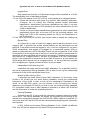
waits for a random period of time, known as backoff time, with the following formula.
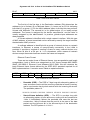
When backoff time expires, the device goes back to the state of attempting to
transmit the frame. The backoff time is determined by the formula below. When the
times of collision are increased, the backoff time gets longer until the number of
collisions exceeds 16. If this happens, the frame will be discarded and the backoff
time will also be reset.
where
k = min (n, 10)
32