1
Music
loudspeakers, the less you can turn them
up before feedback occurs. Multiple open
Educators
microphones will further increase the
chances for feedback. In addition, distant
microphones will pick up more ambient
sound, making the actors sound farther
away, when compared to close-miked actors. If you choose to use overhead microphones, pay close attention to where the actors are standing when they speak. If the
actors are always as close to the microphones as possible, sound quality will improve.
Turning down unused microphones will also help.
Guide
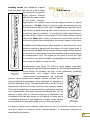
For downstage areas, or runways where it is not practical to hang an overhead
microphone, boundary microphones are often used. These small, flat microphones
are usually placed at the edge of stage, where they will be out of the actors way.
Boundary microphones are not magic; they are subject to the same limitations as
overhead microphones, with the additional issue of stage vibration pick-up.
Overhead and boundary microphones that you may see in a Broadway production
are not necessarily used for sound reinforcement; many times they are used for
hearing assist, backstage cues, or recording.
One final note on microphones: shotgun microphones are never used for sound
reinforcement! The shotgun microphone was designed for film and video production
work, where the microphone signals are going straight to tape. It does not "focus" on
the sound coming from the stage, nor does it filter out unwanted sounds. A shotgun
placed at the back of the hall will pick up everything that happens between the
microphone and the stage.
Acoustics
Another issue that can plague amateur theater is poor acoustics. The typical "cafegymna-torium" that is used for many school and church theatrical productions is,
acoustically speaking, the worst possible place for sound reinforcement. These rooms
tend to be extremely "echo-y", which limits intelligibility (the ability to understand what is
being said) and decreases gain before feedback (how loud you can turn up the sound
system). Professional productions are done in quiet, non-reflective, controlled environments that are optimized for theater sound. Many theaters also employ a distributed
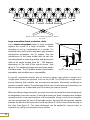
sound system, which uses many speakers placed throughout the venue that are divided into "zones". Each zone is fed a varying amount of signal, depending on how far they
are from the stage. Loudspeakers nearest the stage get very little, if any, signal, while
those at the back get proportionally more. This also allows the overall volume level to
be lower, which improves intelligibility in a poor acoustic environment.
23