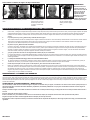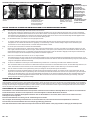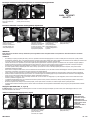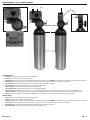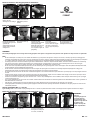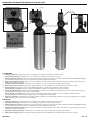
1
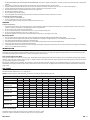
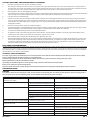
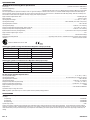
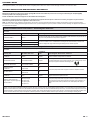
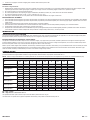
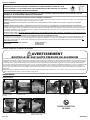
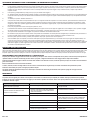
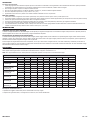
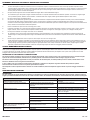
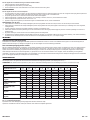
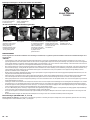
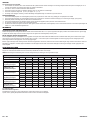
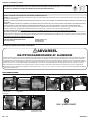
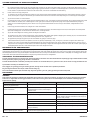
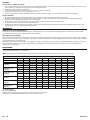
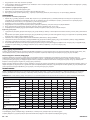
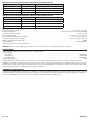
1.DO NOT SMOKE WHILE USING YOUR DEVILBISS OXYGEN EQUIPMENT. Keep matches, cigarettes, burning tobacco, or candles away from the area where the system is being stored or operated. 2. Avoid creation of any spark near oxygen equipment. This includes sparks from static electricity created by any type of friction. 3.Keep the equipment at least seven feet away from radios, television sets, window air conditioners, fans, electric razors, hair dryers, and all other electrical appliances. 4. Keep the equipment at least five feet away from heat sources, electric or gas heaters of any kind, fireplaces, or stoves. 5. Keep all flammable materials or petroleum-based products away from the equipment. 6.Never attempt to lubricate the equipment. 7.Never use aerosol sprays near the equipment. 8.To avoid strangulation never route Oxygen tubing around the neck. Always read and follow the cannula manufacturer’s instructions. To prevent high concentrations of oxygen: 1. Keep the equipment in a well-ventilated area. 2. Do not carry equipment under a coat or any form of clothing. 3.Turn off oxygen supply by turning the rotary selector to the Off position when not in use. warning To reduce the risk of injury: 1.Keep all units away from children. Do not allow unauthorized or untrained individuals to operate the equipment. Never tamper with or try to repair the equipment yourself. If you have any questions or suspect your equipment is not operating properly, contact your oxygen provider. 2. Do not immerse in liquids or subject device to harsh conditions. 3. Do not use with other equipment (i.e. humidifier, nebulizer, mask, etc.) when in PulseDose delivery mode. 4. Do not use in temperatures greater than 104 F (40 C) or below 14 F (-10 C). 5. Equipment not suitable for use in the presence of a flammable anesthetic mixture with air or with oxygen or nitrous oxide. Physician’s Notes 1.Use only continuous flow iFill oxygen cylinders (535-CF series) with patients who breathe below 6 Breaths Per Minute (BPM) or above 40 BPM. 2.Use only continuous flow iFill oxygen cylinders (535-CF series) with patients who consistently fail to trigger equipment (i.e. mouth breathing with closed soft palates). 3. Verify patient is getting adequate Pa02 or Sa02 levels in PulseDose delivery. 4.Use only standard nasal cannula with PulseDose delivery. Do not use pediatric (low-flow) nasal cannula or mask with PulseDose delivery. 5. A mask or any nasal cannula can be used with continuous flow delivery. 6.The PD1000A series electronic conserving device contains an internally controlled preset 2 LPM continuous flow backup. The service manual describes how to change the cannula fitting to obtain a 3, 4, 5 or 6 LPM continuous flow backup. introduction Indications For Use (PD1000A Series) The DeVilbiss iFill Oxygen Cylinders w/integrated PD1000A are intended as a delivery device for 93% ± 3% oxygen from high-pressure oxygen cylinders. This is an ambulatory device, which allows patients to ambulate longer than they would with a continuous flow regulator on the same cylinder. How Conserving Devices Work Conserving devices extend the use time from a supply of oxygen, thereby offering increased mobility with improved comfort and efficiency. This is accomplished by delivering oxygen only during inhalation – using a short “pulse” or several “pulses” of oxygen -- as opposed to continuous flow systems which deliver oxygen throughout the entire breathing cycle; this conservation can result in your oxygen system lasting two to four times longer. Because oxygen is released only during inhalation, the constant flow of oxygen into the nostrils is eliminated, resulting in a more comfortable treatment for many users. The pulse(s) are almost undetectable, and the humidity in the room air helps maintain a normal level of moisture in the nasal cavity. This greatly reduces the discomfort of dehydration associated with a continuous flow oxygen system. Use Times Because PulseDose responds to each individual’s breathing patterns, the use time will vary for each individual depending on the prescription rate and the breath rate. The following chart shows the theoretical ambulatory ranges based on a 3 to 1 conserving ratio. NOTE–All ambulatory ranges are calculated assuming a breath rate of 20 breaths per minute in PulseDose (PD) mode. Use Times Shown In Hours Delivered Volume cc’s: 16.5 24.75 33 41.25 49.5 66 82.5 99 1 1.5 2 2.5 3 4 5 6 iFill M4 Cylinder 113 Gaseous Liters 1.9 1.3 .9 .7 .6 .5 .4 .3 CF 5.7 3.8 2.9 2.3 1.9 1.4 1.1 .9 PD iFill M6 Cylinder 164 Gaseous Liters 2.7 1.8 1.4 1.1 .9 .7 .6 .4 CF 8.3 5.5 4.1 3.3 2.8 2.1 1.7 1.4 PD iFill ML6 Cylinder 170 Gaseous Liters 2.8 1.9 1.4 1.1 .9 .7 .6 .5 CF 8.6 5.7 4.3 3.4 2.9 2.1 1.7 1.4 PD iFill C Cylinder 240 Gaseous Liters 4.0 2.7 2.0 1.6 1.3 1.0 .8 .7 CF 12.1 8.1 6.1 4.9 4.0 3.0 2.4 2.0 PD 6.9 4.6 3.5 2.8 2.3 1.7 1.4 1.2 CF 21.0 14.0 10.5 8.4 7.0 5.2 4.2 3.5 PD 11.4 7.6 5.7 4.6 3.8 2.8 2.3 1.9 CF 34.4 23.0 17.2 13.8 11.5 8.6 6.9 5.8 PD Flow Rate iFill D Cylinder 415 Gaseous Liters iFill E Cylinder 682 Gaseous Liters MODE CF=Continuous Flow PD=3 to 1 Conserving Device Specifications subject to change without notice. This chart is intended to be used only as a guide. Cylinders vary in gaseous liter capacity by manufacturer which may result in varying use times. SE-535-CYL EN - 3