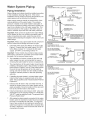
1
Please note the following:
DO NOT install this water heater with iron piping. The
system should be installed only with new piping that
is suitable for potable (drinkable) water such as copper,
CPVC, or polybutylene. DO NOT use PVC water
piping.
Temperature
Relief Valve
and Pressure
DO NOT use any pumps, valves, or fittings that are
not compatible with potable water.
DO NOT use valves that may cause excessive
restriction to water flow. Use full flow ball or gate
valves only.
DO NOT use 50/50 tin-lead solder (or any lead based
solder) in potable water lines. Use 95/5 tin-antimony
or other equivalent material.
DO NOT tamper with the thermostat, heater elements,
electrical connections, or temperature and pressure
relief valve. Tampering voids all warranties. Only
qualified technicians should service these components.
DO NOT use with piping that has been treated with
chromate's, boiler seal, or other chemicals.
DO NOT add any chemicals to the system piping
which will contaminate the potable water supply.
Closed
System/Thermal
Expansion
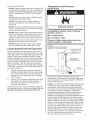
Periodic discharge of the temperature and pressure
relief valve may be due to thermal expansion in a closed
water supply system. The water utility supply meter may
contain a check valve, backfiow preventer or water
pressure reducing valve. This will create a closed water
system. During the heating cycle of the water heater,
the water expands causing pressure inside the water
heater to increase. This may cause the temperature
and pressure relief valve to discharge small quantities
of hot water. To prevent this from happening, there are
two recommendations:
Install a diaphragm-type expansion tank that is
suitable for potable water on the cold water supply
line. The expansion tank must have a minimum
capacity of 1.5 U.S. gallons for every 50 gallons
of stored water.
2.
Install a 125 PSI pressure relief valve in the cold
water supply line. Make sure the discharge of
this valve is directed to an open drain and
protected from freezing.
Contact the local water supplier or plumbing inspector
for information on how to control this situation. Do not
plug the temperature and pressure relief valve.
Explosion
Hazard
If the temperature
and pressure relief valve
is dripping
or leaking, have a licensed
plumber repair it.
Do not plug valve.
Do not remove valve.
Failure to follow these instructions
result in death, or explosion.
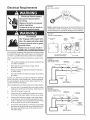
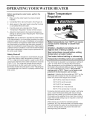
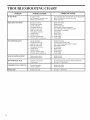
FIGURE
9
TEMPERATURE
RELIEF
VALVE
AND PRESSURE
INSTALLATION
j--
OPTION
_L LOCATII)N
SO_IE
_II)DELS
ONIflt'
DIS(
HAR(;E
DO NOT
DRAIN
can
(_P
LINE
OR
PLUG
P_N
6 INCH
[
DRAIN
For protection against excessive pressures and
temperatures, a temperature and pressure relief valve
must be installed in the opening marked "T & P RELIEF
VALVE" (See Figure 9).
Caution: To reduce the risk of excessive pressures and
temperatures in this water heater, install temperature
and pressure relief protective equipment required by
local codes, but no less than a combination temperature
and pressure relief valve certified by a nationally
recognized testing laboratory that maintains periodic
inspection of the production of listed equipment or
materials, as meeting the requirements for Relief Valves
and Automatic Shutoff Devices for Hot Water Supply
Systems, ANSI Z21.22 - 1986. This valve must be marked
with the maximum set pressure not to exceed the marked
maximum working pressure of the water heater. Install
the valve into an opening provided and marked for this
purpose in the water heater, and orient it or provide
tubing so that any discharge from the valve exits only
within 6 inches above, or at any distance below, the
structural floor, and does not contact any live electrical
part. The discharge opening must not be blocked or
reduced in size under any circumstance.