1
15000181revA CO800/EL/910...qxd
5/6/03
9:41 am
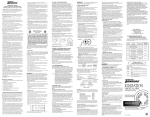
L. What does the Digital LED Display Mean?
FOR MODEL CO910 ONLY:
This model features a Digital LED Display ( Light Emitting
Diode) that will show the level of carbon monoxide present
when there are concentrations of 50 parts per million (ppm)
or greater. See section E for more information on the dangers
of carbon monoxide.
Normal reading
indicating safe
environment
Reading the Digital LED Display
e
CO Concentration (ppm)
60–120 PPM
120–180 PPM
180 PPM and up
less than 45
Other:
Power Up
Malfunction
Display (Accuracy) Indication
± 25%
± 50%
± 75%
---
ERR
Responding to your Digital LED Display
Your unit is constantly monitoring the air and will go into full
alarm if ongoing, hazardous levels of CO are detected. See
section E for the specific times and levels required. Follow the
instructions in section M if the full alarm sounds.
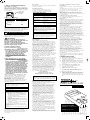
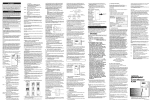
M. What should you do if the ALARM sounds?
If harmful levels of carbon monoxide are detected, your unit
will go into alarm. (The alarm is a repeating pattern of 4 red
LED flashes with beeps followed by a 5 second pause.)
WARNING
Actuation of your CO alarm indicates the
presence of carbon monoxide (CO) which can
KILL YOU. If alarm signal sounds:
Actuation of your CO alarm indicates the
presence of carbon monoxide (CO) which can
KILL YOU. If alarm signal sounds:
1. Operate reset/silence button;
2. Call your emergency services
(
), [fire department or 911];
3. Immediately move to fresh air–outdoors or
by an open door/window. Do a head count to
check that all persons are accounted for. Do
not reenter the premises nor move away
from the open door/window until the
emergency services responders have
arrived, the premises have been aired out,
and your alarm remains in its normal
condition.
4. After following steps 1–3, if your alarm
reactivates within a 24 hour period, repeat
steps 1–3 and call a qualified technician
(
) to investigate for
sources of CO from fuel burning equipment
and appliances, and inspect for proper
operation of this equipment. If problems are
identified during this inspection have the
equipment serviced immediately. Note any
combustion equipment not inspected by the
technician and consult the manufacturers’
instructions, or contact the manufacturers
directly, for more information about CO
safety and this equipment. Make sure that
motor vehicles are not, and have not been,
operating in an attached garage or adjacent
to the residence.
What to do after resetting the unit following an alarm?
A full continuous alarm within six minutes after reset
confirms ongoing presence of harmful levels of carbon
monoxide. If this occurs follow instructions 1-3 above.
What to do after a carbon monoxide problem has
been corrected?
After a carbon monoxide problem has been corrected reset
your alarm by pushing the Test/Reset button as per the
instructions on Section I.
Warning: This device will only alarm if carbon monoxide is
detected. If not responded to, the presence of carbon
monoxide can be fatal. For list of sources of carbon
monoxide, see Sections C and D.
Caution: This unit will only indicate the presence of
carbon monoxide at the sensor. Carbon monoxide may be
present in other areas.
Typical conditions which can result in CO false alarms:
1) Excessive spillage or reverse venting of fuel burning appliances
caused by outdoor ambient conditions, such as:
a) Wind direction and/or velocity, including high gusts of
wind. Heavy air in the vent pipes (cold/humid air with
extended periods between cycles).
b) Negative pressure differential resulting from the use of
exhaust fans.
c) Simultaneous operation of several fuel burning appliances
competing for limited internal air.
d) Vent pipe connections vibrating loose from clothes dryers,
furnaces, or water heaters.
e) Obstructions in or unconventional vent pipe designs which
can amplify the above situations.
2) Extended operation of unvented fuel burning devices (range,
oven, fireplace, etc.).
3) Temperature inversions which can trap exhaust gasses near the
ground.
4) Car idling in an open or closed attached garage, or near a home.
N. Technical Information
Your unit utilizes a proprietary Electronic Sensing
Technology that permits the unit to vary the exposure time
before the alarm sounds based on carbon monoxide
concentrations.
Page 1 (2,1)
Exposure Times
The carbon monoxide concentrations and time standards for
the alarms are as follows:
The Full Alarm Activates
• In 60–240 minutes at exposures of 70 ppm
• Within 10–50 minutes at exposures of 150 ppm
• Within 4–15 minutes at exposures of 400 ppm
Models CO800, CO810 & CO910
Power Supply
120 VAC, 60 Hz, 7W
Dimensions
6.6” x 3.0” x 1.7” (CO910 only)
5.0” x 3.0” x 1.7”
Normal Operating Conditions:
Temperature
4.4°C to 37.8°C (40°F to 100°F)
Relative Humidity
30% to 70%
Alarms
85 db at 10 ft
Lights
Power – green
Full Alarm – flashing red
Trouble - flashing green and red
Warning: This product is intended for use in ordinary indoor
locations of family living units. It is not designed to measure
compliance with Occupational Safety and Health
Administration (OSHA) commercial and industrial standards.
Individuals with medical problems may consider using warning
devices which provide audible and visual signals for carbon
monoxide concentrations under 30 ppm.
Carbon monoxide alarm is designed to detect carbon
monoxide gas from ANY source of combustion. It is
NOT designed to detect smoke, fire or any other gas,
unless the product has been investigated and determined
to comply with the applicable requirements.
O. Warranty Information
Limited Warranty
Dicon Global Inc., which manufactures
American Sensors Carbon Monoxide Alarms, warrants its
product, to the original consumer purchaser, to be free from
defects in material and workmanship under normal use and
service for a period of five (5) years from date of purchase.
Dicon Global Inc. makes no other express
warranty for this Carbon Monoxide Alarm. No agent,
representative, dealer or employee of the Company has the
authority to increase or alter the obligations or limitations of
this warranty. The company’s obligation of this warranty
shall be limited to the repair or replacement of any part of
the alarm which is found to be defective in materials or
workmanship under normal use of service during the five (5)
year period commencing with the date of purchase.
Units in need of repair should be returned to the point of
purchase. Or call 1-800-387-4219 for shipping instructions
and a returned goods authorization number, to return to
Dicon Global Inc. Returned goods must be
shipped prepaid.
The company shall not be obligated to repair or replace units
which are found to be in need of repair because of damage,
unreasonable use, modifications, or alterations occurring
after the date of purchase.
The duration of any implied warranty, including that of
merchantability or fitness for any particular purpose, shall be
limited to five (5) years on the Alarm commencing with the
date of purchase. In no case shall the Company be liable for
any consequential or incidental damages for breach of this or
any other warranty, expressed or implied whatsoever, even if
the loss or damage is caused by the Company’s negligence or
fault. Some provinces do not allow the exclusion or
limitation of incidental or consequential damages, so the
above limitation or exclusion may not apply to you. This
warranty gives you specific legal rights, and you may also
have other rights, which vary from province to province.
Dicon Global Inc.
20 Steelcase Road, Unit 3
Markham, Ontario, Canada L3R 1B2
Using other equipment that consumes or exhausts
household air
If you use exhaust fans, a fireplace or other fuel burning heaters
or stoves:
Run exhaust fans for just a minute or two at a time. Prolonged
use could remove too much air, and it wastes heat.
Do not run power attic vents during the winter or when your
furnace is on.
When your fireplace, coal or wood stove is operating, open a
window and close off warm air registers in the room or install a
fresh air duct directly to the fireplace or stove so that it won’t steal
air from your furnace.
Confining or enclosing gas-fired equipment
If you have partitioned off your furnace and water heater, you
may need additional ventilation.
Danger Signs
Stuffy, stale or smelly air, back drafts and soot from a fireplace
or furnace chimney usually means your home needs more air
for proper combustion and healthy living. For gas-fired
equipment, mostly yellow (rather than clear blue) burner
flames, a pilot light that keeps going out, or a smell of gas
indicate trouble. Turn off the equipment and contact your gas
company emergency service.
Additional Safety Tips
Have your fuel-burning equipment checked periodically for
safety and efficiency by a qualified service technician.
If you are adding a wood or coal burning stove to a home,
make sure that the stove is properly installed and vented.
Check with the Building and Inspections Department of your
local municipality or consult a heating contractor before
installation. If you have already installed a wood or coal stove
without a building permit or inspection, consult your local
municipal building authority. Some “do-it-yourselfers” have
unknowingly created dangerous conditions. Once you file for
a permit, a qualified inspector will check your installation and
explain how to rectify any mistakes.
Do not expose yourself to carbon monoxide through
carelessness. Never operate a gasoline-powered engine in a
confined or enclosed space such as a garage or tool shed.
Never use a kerosene stove or charcoal grill in a confined
space such as a closed garage or recreational van.
On masonry chimneys inspect the clean-out regularly to
ensure that the chimney is free and clear of debris.
Regardless of the fuel your furnace, fireplace or stove uses,
your chimney should be inspected from time to time by a
competent chimney contractor.
Never try to add a “heat reclaimer” or “automatic flue
damper” to your gas furnace or water heater. Gas
installation safety codes prohibit use of these devices as an
add-on to an existing furnace because of the risks of
incorrect installation and mechanical failure.
When using paints, household cleaning supplies or similar
materials, be sure that you’re using them in a well
ventilated area.
Following sensible maintenance and safety procedures in
the home will give you fuel savings without endangering
your health.
Q. COMMONLY ASKED QUESTIONS
Q. What does the alarm sound like?
A. The alarm is a repeating pattern of 4 red LED flashes
with beeps followed by a pause.
Q. Should I locate the unit in a high or low location?
A. Carbon monoxide is virtually the same weight as air
and therefore the alarm protects you in a high or low
location.
Q. Is it normal that the unit is slightly warm?
A. Yes, your alarm may be slightly warm due to a
transformer located inside.
Q. Will this unit detect smoke or fire?
A. No, a carbon monoxide alarm only detects carbon
monoxide. Smoke alarms are still necessary.
Q. How do I test the unit?
A. Push the test/reset button. Do not use car exhaust or
intentionally introduce carbon monoxide through
other methods. These methods are dangerous to you
and the pollutants from car exhaust may damage the
unit.
Important: Not suitable as a smoke alarm or for detecting other
gases. This device is not suitable for installation in a hazardous
location, as defined in the Canadian National Electrical code.
P. Tips for the Homeowner
Energy Conservation and Indoor Air Quality
Two steps that homeowners take to conserve energy may
adversely affect indoor air quality.
Since air leakage can account for as much as 40% of heat
loss, houses are being made more air tight. Reduced air
leakage will contribute to higher concentrations of air
contaminants from indoor sources and can cause draft
reversal in the furnace or fireplace chimney when the
demand for air by fireplaces, furnaces and exhaust fans
exceeds the air supplied by leakage area and supply ducts.
Converting from oil to gas, without taking steps to prevent
chimney deterioration, will increase the risk of chimney
blockage, draft failure and the associated release of
combustion products into the house. Qualified contractors
and inspection by the gas company are recommended.
Dirt and Blockage
Never insulate or try to seal up a draft hood, wind cap or
exhaust vent on any gas appliance (furnace, hot water
heater, range, dryer or space heater). Keep your equipment
area clean. Don’t store anything that could restrict air
circulation close to equipment.
It is absolutely essential to your safety that panels and grills
on the furnace are kept in place and that the fan
compartment door is closed when the furnace is operating.
If you have a gas water heater, make sure that combustion
air openings at the bottom of the tank and the opening
below the draft diverter (on top of the tank next to the
flue duct) remain unblocked.
If you have a gas dryer, the exhaust duct must be vented to
the outside and have a hood at the end. Check that the
exhaust system is not blocked by lint or debris and that the
flapper in the hood moves freely.
For all fuel-burning equipment, make sure that vent hoods
and pipes are not blocked by insulation, leaves or bird nests.
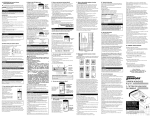
CARBON MONOXIDE ALARM
UR
SSE YDE
RTI OX E
AVEe MONRBON
A
N IDE d de c
X
RBO
O
A
C ON M
M LAR
A
ER
POWATION
ENT
M
ALIM
LAR E
G / A RM
NIN E / ALA
WAR GARD
E EN
MIS
CO800/CO800EL
CO910 120 Volt Plug-In Models
CO810
Hardwire Model
1500- 0181 REV-A