1
Channel Master Operation Manual
3. typedef struct { <lists of types and fields> } VelocityType
4. and so on for every available type.
b. Clear checksum.
c. Look for PD0 ID 0x7F. Add to checksum.
d. Is next byte a 0x7F? Add to checksum.
e. If no, return to step “b”.
f. Else, read next two bytes to determine offset to checksum. Add two
bytes to checksum.
g. Read in X more bytes, where X = offset to checksum - 4. Adding all
bytes to checksum.
h. Read in checksum word.
i. Do checksums equal?
j. If no, return to “b”.
k. For each available data type (the header contains the # of data types), go
to the offset list in header.
1. Create a pointer to type short to the data type at an offset in the list.
2. Check the Type ID.
3. Create a pointer of appropriate type to that location.
4. Repeat for all available data types.
l. Work with data.
m. Return to “b” for next ensemble.
13.4
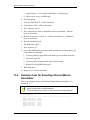
Example Code for Decoding Channel Master
Ensembles
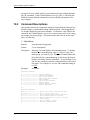
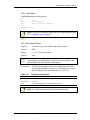
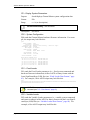
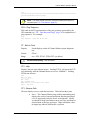
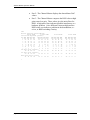
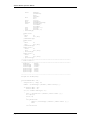
Here is an example of how to decode a Channel Master ensemble. It is
written in “C.”
NOTE. Structures must be “packed”; i.e. Don’t let the compiler add “fill
bytes” to align fields on word boundaries.
This is an example of a section of code, not a full executable program.
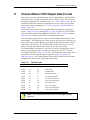
/****************************************************************************/
/* Data ID Words */
/****************************************************************************/
#define
#define
#define
#define
#define
#define
#define
page 110
FLdrSelected
VLdrSelected
VelSelected
CorSelected
AmpSelected
PctSelected
SttSelected
0x0000
0x0080
0x0100
0x0200
0x0300
0x0400
0x0500
RD Instruments