1
Instruction Manual
6 APPENDIX
6.1 Advice on operation
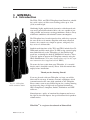
When used correctly, your Tillerpilot can maintain as good a
course on most points of sail as a skilled helmsman, with the
advantage that it never gets distracted. A human can start showing lapses of concentration after as little as 10 mins.
However, there are certain circumstances where a human has
the advantage in being able to anticipate events, which no
autopilot can sense, typically in a heavy following sea. The
following advice should improve efficiency when sailing using
your Tillerpilot:
1. When sailing close to the wind, it is easy to forget to trim
the mainsail, allowing excessive weather helm to build up.
Where a human helmsman can quickly weigh up the situation
and adapt to circumstances, the autopilot will struggle on and
the boat will be sailed less efficiently. Whereas a human normally likes to feel some weather helm, this is not necessary for
the functioning of the Tillerpilot. Power consumption, wear, and
drag will be greatly reduced, if the mainsail is freed or reefed a
little sooner than normal when sailing manually.
2. It is also advisable, when sailing close-hauled, to set a
course a few degrees free of that normally sailed under manual
control, to avoid luffing into the wind.
3. When running dead downwind, a human pilot can see visual
signs warning him if the boat is about to gybe, which the Tillerpilot cannot sense – it is advisable not to sail as close to the
gybe as you may do when sailing manually.
4. When broad reaching or running fast, particularly with quartering waves, a helmsman will naturally apply periodic larger
angles of helm than when beating or sailing slowly. This is the
equivalent of increasing rudder gain, and it may be a good idea
to adjust the Gain on the Tillerpilot. Many people prefer to find
a compromise setting which is used for all sailing, but with
practise it can be optimized for different conditions, e.g. low
for motoring in a calm sea, or high for running fast. If the Gain
is set too low, the boat will go off course, because insufficient
rudder is applied in time; if the Gain is too high, the boat will
overcorrect, increasing power consumption.
5. The Tillerpilot is a highly advanced piece of equipment.
However, it would be a mistake to become complacent. As with
all electronic navigational equipment, it is an aid to navigation
and should not be used as a substitute for conventional navigational practise.
Remember – Maritime Law requires that you keep a good
look out at all times.
E04818 Issue 1.0
25