1
32
4.3
Parameters
The Excitator Module
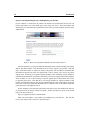
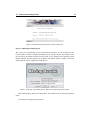
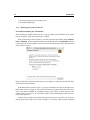
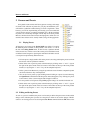
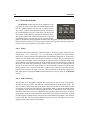
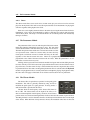
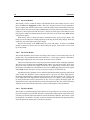
The String module can be played using different types of excitators in order to reproduce different types of instruments and playing techniques. The excitator is selected using the Type drop-down
menu. The choices available are Plectrum, Hammer 1, Hammer2 or
Bow. These different types of excitators share the same front panel
but note that the names of the parameters controlled by the different black knobs vary for each excitator. Next we will review the
different types in more detail.
4.3.1
Plectrum
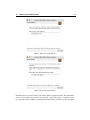
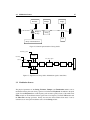
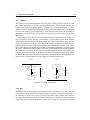
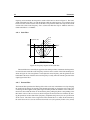
The Plectrum excitator, illustrated in Figure 18, is used to play instruments such as guitars, harpsichords or basses with a pick. The Plectrum can be viewed as
an angled object placed under the string and connected to a plate with the help of a spring. The
purpose of the plectrum is to impose an initial displacement to the string before it is set into free
vibration. As can be understood from figure 18, a vertical motion of the plate (which could be
a hand holding the plectrum) will lift the string with the plectrum but will also result in a compression of the spring and an horizontal motion of the plectrum. The string will move with the
plectrum until the protrusion Prot of the plectrum is equal to the compression of the spring and the
string is released. The motion and behavior of the plectrum is controlled by adjusting the different
geometrical and mechanical properties of the system.
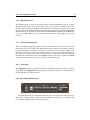
The Prot knob is used to determine the protrusion of the plectrum with respect to the string
while the stiffness and damping of the spring is controlled with the help of the Stiff and Damp
knobs. The vertical velocity of the plectrum is adjusted with the Velocity knob. Note that the Prot,
Stiff, and Velocity controls can be modulated with the pitch of the note played or the velocity signal
from the keyboard.
Prot
Stiffness
Velocity
String
Plectrum
Damping
Figure 18: Functioning of the Plectrum