1
Frequently Asked Questions
Q: What is EDO (Extended Data Output) memory?
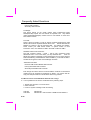
A: The EDO DRAM technology of EDO is actually very similar to FPM (Fast
Page Mode). Unlike traditional FPM that tri-states the memory output data
to start the pre-charge activity, EDO DRAM holds the memory data valid
until the next memory access cycle, that is similar to pipeline effect and
reduces one clock state.
Q: What is SDRAM (Synchronous DRAM)?
A: The SDRAM is a new generation DRAM technology that allows DRAM to use
the same clock as the CPU host bus (EDO and FPM are asynchronous and
do not have clock signal). The idea is the same as "Burst" (refer to the
previous Q & A). It requires only one clock for the 2nd, 3rd, and 4th QWord
(for example, 5-1-1-1 compares with EDO 5-2-2-2). The SDRAM comes in
64-bit 168-pin DIMM (Dual-in-line Memory Module) and operates at 3.3V.
Note that some old DIMMs are made by FPM/EDO and only operate at 5V.
Do not confuse them with SDRAM DIMM. AOpen is the first company to
support dual-SDRAM DIMMs onboard (AP5V), from Q1 1996.
Q: Can SDRAM DIMM work together with FPM/EDO SIMM?
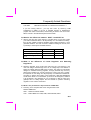
A: The FPM/EDO operate at 5V while SDRAM operates at 3.3V. The current
MB design provides different power to DIMM and SIMM but connects the
data bus together. If you combine SIMM and DIMM, the system will still
work fine; however, only temporarily. After a few months, the SDRAM 3.3V
data input will be damaged by 5V FPM/EDO data output line. Therefore, we
strongly NOT recommend DIMM and SIMM combined together. There is one
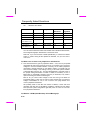
exception, if your SDRAM supports 5V tolerance (such as TI or Samsung),
which accepts 5V signal at 3.3V operating power, you can combine them.
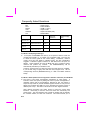
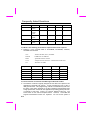
Manufacturer
Model
Samsung
NEC
Micron
TI
TI
KM416S1120AT-G12
D4516161G5-A12-7JF
MT4LC1M16E5TG-6
TMS626162DGE -15
TMS626162DGE M-67
Q: What is Bus Master IDE (DMA mode)?
B-4
Suggested CAS
Latency Time
2
2
2
2
3
5V Tolerance
Yes
No
No
Yes
Yes