1
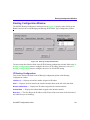
Bridging and Routing Configuration
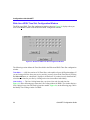
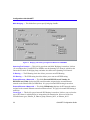
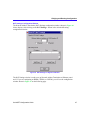
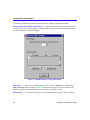
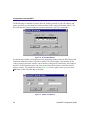
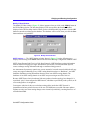
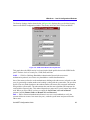
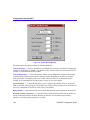
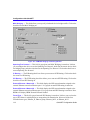
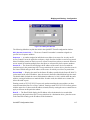
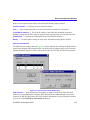
Proxy ARP — This checkbox lets you disable the Proxy ARP function.
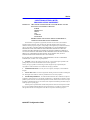
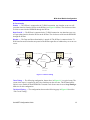
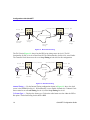
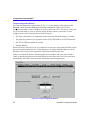
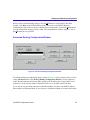
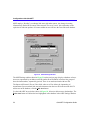
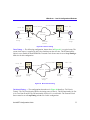
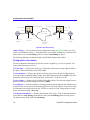
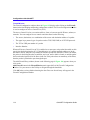
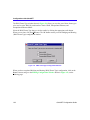
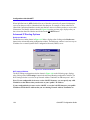
Figure 32, below shows an example of Proxy ARP (Address Resolution Protocol). In this
example, hosts A, and C need to communicate, and the only route is through host B as shown. The
IP Addresses that define the link between hosts A and B use the same subnet number as the
Ethernet LAN,(i.e., 192.168.54.0) through which hosts B and C communicate. Host C assumes
that the IP Address 192.168.53.4 has an Ethernet connection on the LAN.
192.168.54.0
192.168.54.2
Host B
Ethernet
192.168.54.3
Host C
Proxy ARP
Map Entries
192.168.53.1
PPP link
192.168.53.4
Host A
Figure 32 Proxy ARP Function
When the IP Protocol layer of host C receives a packet addressed to 192.168.53.4, host C puts an
ARP broadcast on the LAN asking the host of that address to respond with its MAC (Machine
Address and Control Layer) address. Because host A is not on the LAN, host C receives no
response, and believes it cannot communicate with that IP Address.
Proxy ARP solves this problem by putting entries into the ARP mapping table on host B that maps
the IP Address 192.168.53.4 to the MAC address of host B on the LAN.
Now when host C broadcasts a request for the MAC address of IP Address 192.168.53.4, host B
will respond with its MAC address. Host C will send packets for 192.168.53.4 to host B’s MAC
address, and host B will forward these packets to Host A.
QuickSET Configuration Guide
33