1
DEHUMIDIFIER
DehuTech 2400
Technical Manual
Valid from serial no: 690502
© 2005 DehuTech AB
EC-declaration of conformity
Fuktkontroll AB
Enhagsslingan 23
187 40 TÄBY
Sweden
declare under own responsibility that the product:
Dehumidifier DehuTech 2400 (type DA-2400 in Swedish market) from unit no 690502
which is detailed in this declaration complies to the following harmonised European standards and technical
specifications:
SS-EN 60335-1 issue 2
Electrical domestic appliances - general requirements
SS-EN 60335-2-40 issue 1
Specified requirements for electrical heat pumps,
air conditioning units and dehumidifiers.
SS-EN 60335-2-40/A51 issue 1
Specified requirements for electrical heat pumps,
air conditioning units and dehumidifiers.
amendments SS-EN 60335-1 T1, T2, T3, T4, T5
according to conditions in directive:
73/23/EEG
Low Voltage Directive
93/68/EEG
Amendment
Täby 2002-12-01
_______________________________
Ulf Rahle, Managing Director
Subject to change without notice
DehuTech 2400
3
Contents
General safety information..........................................................................................................................4
Applications..................................................................................................................................................5
Method of operation.....................................................................................................................................5
Product description......................................................................................................................................6
Casing........................................................................................................................................................................6
Rotor..........................................................................................................................................................................6
Rotor drive system................................................................................................................................................6
Rotor bearings......................................................................................................................................................6
Filters........................................................................................................................................................................6
Fans for process- and reactivation air........................................................................................................................6
Heater for reactivation air.........................................................................................................................................6
Electrical panel..........................................................................................................................................................6
Operation options......................................................................................................................................................6
Installation....................................................................................................................................................7
Installation and service access..................................................................................................................................7
Duct connection for permanent installation..............................................................................................................7
Wet air duct out from dehumidifier.......................................................................................................................7
Reactivation air into the dehumidifier..................................................................................................................7
Process and dry air with the dehumidifier installed in the dehumidified room...................................................7
Process and dry air with the dehumidifier installed outside the dehumidified room...........................................7
Electrical installation.................................................................................................................................................7
Commissioning.............................................................................................................................................8
Maintenance..................................................................................................................................................9
Filters........................................................................................................................................................................9
Rotor..........................................................................................................................................................................9
Electrical motors.......................................................................................................................................................9
Heater........................................................................................................................................................................9
Rotor drive belt.........................................................................................................................................................9
Sealings.....................................................................................................................................................................9
General summary of maintenance intervals............................................................................................................10
Transportation............................................................................................................................................10
Fault finding................................................................................................................................................11
Technical data.............................................................................................................................................12
Performance chart...................................................................................................................................................12
Dimensions..............................................................................................................................................................13
Technical data..........................................................................................................................................................13
Spare parts list............................................................................................................................................14
Component data.........................................................................................................................................15
Miscellaneous / Notes.................................................................................................................................17
Appendix 1 - Electrical wiring..................................................................................................................18
Subject to change without notice
DehuTech 2400
4
General safety information
•
Anyone operating the DehuTech 2400
should have access to this manual, and
should be aware of the safety information.
•
Only personnel with adequate knowledge of
the dehumidifier should be allowed to operate and service it.
•
Only personnel with authorisation for electrical installations are allowed to make repair
of electrical components.
•
The service panels should remain closed
except when servicing is carried out.
•
The dehumidifier can only be used for dehumidification of air at atmospheric pressure.
•
Never use the dehumidifier without the
filters as the desiccant rotor can become
contaminated and lose capacity.
•
Signs and instructions on the dehumidifier
should not be removed or altered.
•
Repair of electrical components should be
carried out by suitable qualified personnel.
•
•
The dehumidifier must not be installed in
areas where explosion proof equipment is
required.
This manual should always be accessible and
kept close to the dehumidifier.
•
All maintenance and control of the dehumidifier should be as per the specified schedule.
•
Disconnect the dehumidifier from the mains
prior to opening any service panel.
•
Use only genuine spare parts.
•
Written permission must be obtained from
DehuTech AB prior to making any alteration
or modifications.
•
Prior to servicing the dehumidifier must be
left to cool down for at least 15 minutes after
operation.
Subject to change without notice
DehuTech 2400
5
Applications
Method of operation
Dehumidifier DehuTech 2400 is of the solid desiccant wheel type designed to dry air of atmospheric pressure. The dehumidifier can be used
for drying air of up to 100 % relative humidity
(RH) with temperatures from -30 ºC to +40 ºC.
The dehumidifier operates with two air streams.
A larger air stream to be dehumidified, and a
smaller air stream to exhaust the moisture out of
the desiccant rotor.
The applications are numerous and wide spread.
Below are some examples:
•
Controlling humidity levels in production
processes.
•
Drying of temperature sensitive products.
•
Maintaining correct humidity in storage
areas.
•
Protection of equipment sensitive to corrosion.
•
Controlling humidity levels in museums and
archives.
•
Drying after water damage and drying of
buildings during construction.
•
Climatic improvements in damp areas.
Subject to change without notice
Two fans inside the dehumidifier create air
streams which travel trough the desiccant rotor
in opposite directions.
The larger air volume, the process air, passes
through the slowly rotating silica gel rotor.
Silica gel is a hygroscopic material adsorbing
water vapour direct from the air. When passing through the rotor the humidity of the air is
reduced, whilst the moisture content of the rotor
material increases. On exiting the rotor the dried
air is introduced into the area, or the process to
be dehumidified. The adsorption process works
in temperatures from -30 ºC to +40 ºC.
The smaller air volume, the reactivation air,
adsorbs the moisture from the silica gel rotor.
This reactivation air is heated by an internal
heater to a temperature of approximately +100
ºC. As the reactivation air passes through the
rotor, in an opposite direction to the dry air, it
will decrease the moisture content of the rotor
material. The reactivation air will leave the
dehumidifier as warm, moist air, which is then
exhausted out from the building.
DehuTech 2400
6
Product description
The dehumidifier is designed to meet the
requirements of IEC protective class IP 44.
Casing
The casing is fabricated from stainless steel
2333. The top of the dehumidifier has a top
panel that can be removed for service access to
the electrical components. The front panel of the
dehumidifier can be removed for service access
to all mechanical parts. All duct connections to
the dehumidifier are designed for connections to
standard size spiral ducts.
Filters
The dehumidifier has two separate filters. One
in the process air inlet and one in the reactivation air inlet.
Fans for process- and reactivation air
The fans are direct driven radial fans with three
phase standard motor class IP 54, ISO F. The
fans are accessible for service after removing the
panels.
Rotor
Heater for reactivation air
The dehumidifier has a drying rotor fabricated
from a desiccant material. The rotor has a matrix
of corrugated and flat heat resistant sheets which
houses the Silica Gel desiccant agent. This
matrix creates a large number of axial flutes
through the rotor, which together builds up an
immense surface area for moisture adsorption in
a small volume. The rotor is manufactured and
processed to be able to withstand moisture saturated air without being damaged. This means the
rotor can be used in conjunction with a pre-cooling coil. Further more the rotor will not be damaged even if the fan or the heater for reactivation
should fail during operation. The rotor is incombustible and non flammable.
The electric reactivation heater is divided into 2
heater banks. As an option the dehumidifier can
be delivered with a heater for steam, hot water
or LPG.
Electrical panel
The electrical panel is located in a separate compartment at the top of the dehumidifier. Switches
and indications for operation are mounted at the
front of the dehumidifier.
Operation options
Using the operation switch on the dehumidifier,
different running options can be selected:
Rotor drive system
0
Dehumidifier not in operation.
The slow rotation of the rotor is achieved by an
electrical gear motor and a belt drive. The belt
sits on the outer rim of the rotor and is driven
by a pulley on the drive motor. A belt tension
device keeps the belt in place and maintains
tension to prevent belt slip. Correct operation of
the drive system, and direction of rotation can be
checked by opening the front panel.
MAN
Dehumidifier in continuous
operation.
Rotor bearings
When the machine is turned off using the operation switch, the wet air fan is in operation for as
long as it takes to cool off the heater element.
Never use the main powerswitch to stop the
machine, as it could overheat!
The centre hub of the rotor is equipped with ball
bearings. The rotor shaft is made from stainless
steel.
Subject to change without notice
AUTO Automatic operation by remote
humidistat, or other external
start/stop signal.
Inside the unit, there is a switch marked S3, that
allows continuous operation of the dry air fan.
DehuTech 2400
7
Installation
Installation and service access
Reactivation air into the dehumidifier
Dehumidifier DehuTech 2400 is designed for
indoor installation, and must be installed in a
upright position, preferably bolted to the floor.
For inspection and service, a space of 800 mm
must be left free in front of the dehumidifier to
accommodate for servicing of filters, fans and
rotor.
The reactivation air duct into the dehumidifier
should be as short as possible. The intake opening of the duct should have a coarse wire net, to
stop foreign objects from entering the dehumidifier. No insulation is needed and the duct can
slope up- or downwards. In some installations,
as an alternative, the reactivation air can be
taken from the installation room, for this alternative no duct connection is needed.
Also ensure a space of 600 mm above the
dehumidifier for inspection and service of the
electrical panel, which is placed on top of the
dehumidifier.
Duct connection for permanent
installation
The dehumidifier can be installed in the room
that should be dehumidified or in a separate
room.
To obtain the best performance the outlets from
the fans should be equipped with diffusors.
Wet air duct out from dehumidifier
The wet air from the dehumidifier should be
exhausted to the outside. The duct should be as
short as possible to minimise the chance of condensation of the wet air. This duct should slope
down slightly to stop any condensed water from
flowing back into the dehumidifier.
If the wet air duct is extremely long, or must be
installed sloping upwards from the dehumidifier,
it should be insulated and have a drainage point
(2-4 mm) drilled at its lowest position.
A damper should be installed in the wet air duct
to enable correct setting of the reactivation air
volume during commissioning.
The exhaust opening should have a coarse wire
net.
Subject to change without notice
Process and dry air with the dehumidifier
installed in the dehumidified room
When the dehumidifier is installed in the dehumidified room it would normally take the process air direct from the room without any duct
system, with only a protection net for the inlet
required. The dry air outlet would normally have
a duct system designed for distribution of the
dry air in the building.
Process and dry air with the dehumidifier
installed outside the dehumidified room
When the dehumidifier is installed in a separate
room all inlet and outlet openings are usually
ducted.
The dehumidifier takes the process air as ambient air, or as pre-treated air (cooled/heated), or
alternatively as return air from the dehumidified
room. The dry air from the dehumidifier can be
connected for post treatment or ducted back to
the dehumidified room.
A damper can be installed in the process air
duct, enabling correct commissioning of the dry
air volume.
Electrical installation
See the electrical wiring diagram in appendix 1.
DehuTech 2400
8
Commissioning
On initial start up, the following steps should be
taken in this order:
1. Ensure that the external isolation switch is
isolating the unit from the mains, and that the
main switch on the dehumidifier is set in the
OFF position.
2. Open the service panels of the dehumidifier
and ensure no foreign objects are left inside
the unit or in the electrical compartment
3. Ensure that the dry and wet air dampers are
open, and that ducts are clean and free of
blockages.
9. Check to see that the lamp called STAND BY
is lighting up, but that the machine doesn’t
start.
10. Start the dehumidifier for a short moment (3-4
seconds) by turning the main switch to the
MAN position. While in operation, check that
the rotor is slowly turning in the right direction, and the green operation lamp lights up.
Stop the dehumidifier by turning the main
switch to 0, and check the direction of rotation for the fans.
11. Mount the service panels and ensure they seal
properly to the casing.
4. Check that air filters are installed and clean.
12. The dehumidifier is now ready for operation.
5. Rotate the fan impellers by hand and make
sure they can move freely.
13. Start the dehumidifier and check that the unit
is operating at the correct air volumes by
taking measurements in the ducts. Always
check the airflows on the overpressure side
of the dehumidifier (dry air duct and wet air
duct).
6. Ensure that the mains supply fuse is suitably
rated.
7. Compare set values for motor circuit breakers
with correct values in electrical wiring diagram in appendix 1.
8. Connect the dehumidifier to the main electrical supply by turning the isolation switch to
ON, and check that all three phases are live.
Terminal L1, L2, L3 in the dehumidifier.
Subject to change without notice
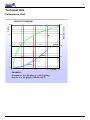
14. If requested check the dehumidification performance by measuring humidity in the dry
air outlet from the dehumidifier. Compare the
result with the performance chart on page 12.
DehuTech 2400
9
Maintenance
NOTE ! With all maintenance and service of the
dehumidifier:
• Switch off the dehumidifier approximately
15 minutes prior to opening any service
panel, allowing the heater to cool down.
• Disconnect the dehumidifier from main
electrical supply by turning the external
switch to the off position.
The maintenance intervals for the dehumidifier
depend on the surrounding environment and
installation site. Recommended maintenance
intervals could therefore differ from one installation to another. Incorrect maintenance and
service may result in reduced dehumidification
capacity.
Cleaning with water is no routine matter, please
contact DehuTech AB or local distributor prior
to this procedure.
Filters
The electrical motors are equipped with ball
bearings. The bearings are designed to last the
life of the motor and therefore no maintenance is
required.
The dehumidifier is equipped with two separate
filterbanks, one for the process air and the other
for the reactivation air. The filters are positioned
at the respective inlets and will clean the air
prior to entering the dehumidifier.
Intervals for cleaning or replacement of the
filters will be determined by the amount of dust
and particles in the air at the installation site.
We recommend that the filters are checked at
least once a month.
The unit can be equipped with differential pressure measurement for checking the pressure
drop over the filters.
Check the rotor bearing and the rotor surface
once a year.
Electrical motors
Check the motors once a year for any abnormal
sound.
Heater
The reactivation electric heater does not need
maintenance, but should be checked twice a year
for any mechanical damage to the heating rods.
Rotor drive belt
Never operate the dehumidifier without the filters, as the rotor can be damaged by dust.
Check the belt tensioning at regular intervals.
The tensioning is maintained constantly by the
belt tension device, and should not need to be
adjusted during normal operation.
Rotor
Sealings
The rotor is maintenance free. However should
it be necessary to clean the rotor careful use of
compressed air should be the first choice. With
severe contamination the rotor can be washed
with water.
Check the sealings at regular intervals for leakage, damage and dust.
Subject to change without notice
DehuTech 2400
10
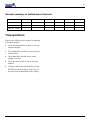
General summary of maintenance intervals
Filter
On demand
Rotor Bearing
Motors
Rotor drive
Heater
√
√
Every 6th month
Every 12th month
Sealings
√
√
√
√
Transportation
Observe the following for transport or handling
of the dehumidifier:
•
Check the dehumidifier on delivery for any
transport damage.
•
The dehumidifier should be protected from
rain and snow.
•
The dehumidifier should always stand
upright on its feet.
•
Never put other goods on top of the dehumidifier.
•
Transport and lift the dehumidifier by forklift. Ensure that the forks go all the way to
the back of the dehumidifier before lifting.
Subject to change without notice
DehuTech 2400
11
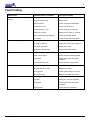
Fault finding
Malfunction
Possible cause of trouble
Corrective action
None, or reduced dehumidification
capacity
Filter clogged
Clean or replace filters
Electrical heater faulty
Check fuses
Airflow reduced
Check openings and dampers
No rotation of rotor
Check belt tensioning
Internal leakage in unit
Check sealings and springs
Altered air volumes
Measure and check air volumes
Altered reactivation temperature
Check reactivation heater
Air leakage
Check panels and check seals
Fan faulty
Check fans and motors
Too large air volume
Check air volumes and dampers
Rotor does not rotate
Check drive motor
Reactivation heater faulty
Check reactivation heater
No control circuit
Check control fuses
Faulty control signal
Check external start/stop signal
Phase fault
Check main fuses and phase
sequence
Fuse for controls faulty
Check electrical components
Drive belt is slipping
Check belt tensioning
Drive belt broken or worn
Replace drive belt
Rotor jammed
Check centre shaft, rim of rotor
Drive motor faulty
Replace complete gear motor
Filter clogged
Clean or replace filters
Fan faulty
Check fan, motor and impeller
Phase fault
Check main fuses and phase
sequence
Ducts blocked
Check dampers and ducts
Main fuse faulty
Dehumidifier does not start
Rotor does not rotate
No dry- or wet air volume
Subject to change without notice
DehuTech 2400
12
Technical data
Performance chart
CAPACITY DIAGRAM
20
15
20
tp=30°C
10
15
tp=20°C
5
Temperature rise (oC)
XT (g/kg)
25
10
tp�10°C
0
5
0
5
10
15
XP (g/kg)
20
EXAMPLE:
Process air: xp = 9,0 g/kg, tp = +20°C giving
Dry air: xT = 3,3 g/kg, tT = 20+20 = 40°C
Subject to change without notice
DehuTech 2400
13
Dimensions
The image above is a right-hand unit.
Technical data
Dehumidification capacity
16,4 kg/h
(at +20 ºC and 60 % RH.
See performance chart for other data)
Dry air flow
(at 250 Pa available pressure)
2 400 m3/h
Wet air flow
(at 410 Pa available pressure)
800 m3/h
Power supply
(3 x 400 V, 50 Hz)
25 kW
Current (A / phase)
(connection fuse: 50 A / phase)
37,5 A
Weight
190 kg
Max noise level
75 dB(A)
Note: Valid only for standard units, with standard air-flows.
Subject to change without notice
DehuTech 2400
14
Spare parts list
Part
Technical specification
Drive motor
No installed
No of recommended spare
parts
Gearmotor 230-240 V 50 Hz, low
temp grease
1
1
Capacitor
0,5 µF 700 V
1
Belt pulley
18 H 075
1
Drive belt
850 H 075
1
Belt tensioner
Comment
1
Process air fan
MB 22/9 T2M 2,2 kW
1
Wet air fan
MB 20/8 T2K 1,1 kW
1
Heater
Electrical
1
Rotor
PPS 2400
1
Process air filter
Corrugated paper filter
715 x 494 x 45 mm
1
2
Reactivation air filter
Metal frame filter
300 x 300 x 25 mm
1
2
Subject to change without notice
DehuTech 2400
15
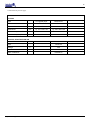
Component data
Unit part:
Process air side
Reactivation air side
(Dry air side)
(Wet air side)
AirVac
AirVac
MB 22/9 T2M
MB 20/8 T2K
2 850
2 750
RD
RD
m3/h
2 400
800
Head pressure
Pa
1 000
1 000
External pressure available
Pa
250
410
Marin & Maskin AB
IEC
Rotek
1 AT 90 L-2
80 T2 1.1
SM 65 30-4
Components:
Rotor
FANS
Manufacturer
Fan type
Speed
rpm
Model
Air flow
MOTORS
Manufacturer
Model
Speed
rpm
2 850
2 750
1,5
Power
kW
2,2
1,1
14,5 VA
Voltage
V
400
400
230
Frequency
Hz
50
50
50
A
4,7
2,55
cos ϕ
0,84
0,84
Protection class
IP
54
54
Insulation class
ISO
F
F
Amps
Power factor
Specialties
ROTOR
Type
Rotor speed
PPS 2400
rph
11
Continued on next page.
Subject to change without notice
DehuTech 2400
16
Continued from previous page.
FILTERS
Corrugated paper
Metal frame
Filter class
EU-5
EU-3
Filter media
Glass fibre
Metal
Type
Dimensions
mm
1p. 715 x 494 x 45
1p. 300 x 300 x 25
Pressure drop, clean filter
Pa
40
60
Pressure drop, dirty filter
Pa
140
140
HEATER, REACTIVATION AIR
Power
kW
Electrical
Type
Voltage
21,5
V
400
Number of elements
Type of elements
Subject to change without notice
Resistance
DehuTech 2400
17
Miscellaneous / Notes
DehuTech AB
Enhagsslingan 23
S-187 40 TÄBY
Sweden
Tel:
Fax:
E-mail:
Website:
+46 8 792 04 08
+46 8 792 55 59
[email protected]
www.dehutech.com
Subject to change without notice
DehuTech 2400
Appendix 1 - Electrical wiring
Subject to change without notice
DehuTech 2400