1
System Planning
Ascom VoWiFi System
2
TD 92408EN
General
2.1
Introduction to Wireless Planning
2.1.1
Adding Voice to a Wireless LAN
Data and voice traffic has different characteristics and thus put different requirements on
the design of the WLAN network.
Data clients, like a laptop set up to use its wireless card for browsing the Internet, tries to
use the max packet size that is allowed to transport the relative high amount of data that
modern web pages contain. It also uses TCP as its transport protocol and therefore the
connection to the web server can withstand delays and loss of packets since the protocol is
defined to overcome any glitches in the transfer of data.
Voice clients, on the other hand, use a relative small packet size, but instead require regular
access to the radio channels because packets are generated in a steady stream. Since the
voice data packet is small, it is important that the overhead created by the protocols is as
small as possible. Using UDP instead of TCP reduces the overhead. The acknowledgements
that are used in the TCP protocol for every packet sent are also eliminated in the UDP
protocol. Since UDP also lacks other features that TCP has, an additional protocol is used, so
packets can be sorted in the right order and the voice recorded will be played back at the
correct time. This protocol is RTP.
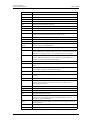
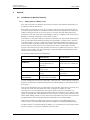
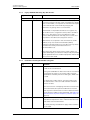
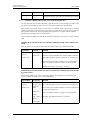
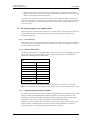
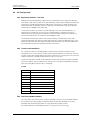
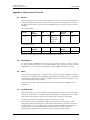
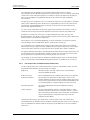
The following table illustrates the differences:
Data transport
Voice transport
Protocol:
FTP, HTTP over TCP.
RTP over UDP.
Packet size:
Varies from small to large up to Small
All the same size < 300 Bytes.
max size depending on
application.
Sensible to lost packets: No. Uses built in recovery
process in TCP.
Yes. Will result in bad voice
quality.
Sensible for delays:
No. Can stand delays of several Yes. Requires steady access to
minutes.
the channel.
Sensible for
disconnection:
Not always. Session may be
restored where interrupted.
Call will be dropped.
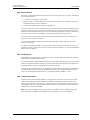
In short, the behaviour of the two traffic types - data and voice - make it difficult to design a
WLAN for mixed traffic. The demand they put on the WLANs design is nearly diametrical on
every point.
Many current WLAN networks are used for data only and seem to be working just fine. Most
users do not notice that the WLAN may suffer of congestion, packet loss, and
retransmissions etc. The applications are tolerant against such errors and there is no
information visible on a laptop about the performance of the network. Slow loading of web
pages are accepted and is blamed either on the software or on the Internet and not on the
WLAN. When adding VoWiFi to such a network those problems will raise to the surface and
be experienced as bad voice quality and will be blamed on the VoWiFi Handset.
Furthermore, the design problems gets even more complex if Wi-Fi RFID tagging and
location traffic is also using the WLAN, because it requires a completely different design.
The best solution to avoid these design problems is to use separation of traffic types, either
physical or logical, so they do not interfere with each other.
9 December 2011 / Ver. G
4