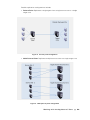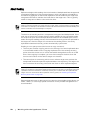
1
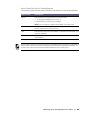
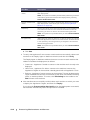
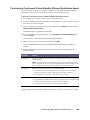
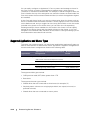
Performance Considerations for Replicated Data Transfer If the bandwidth between the source core and the target core cannot accommodate the transfer of stored recovery points, replication begins with seeding the target core with base images and recovery points from the selected servers protected on the source core. The seeding process only has to be performed once, as it serves as the foundation that is required for regularly scheduled replication. When preparing for replication, you should consider the following factors: Change Rate. The change rate is the rate at which the amount of protected data is accumulated. The rate depends on the amount of data that changes on protected volumes and the protection interval of the volumes. If a set of blocks change on the volume, reducing the protection interval reduces the change rate. Bandwidth. The bandwidth is the available transfer speed between the source core and the target core. It is crucial that the bandwidth be greater than the change rate for replication to keep up with the recovery points created by the snapshots. Due to the amount of data transmitted from core to core, multiple parallel streams may be required to perform at wire speeds up to the speed of a 1GB Ethernet connection. NOTE: Bandwidth specified by the ISP is the total available bandwidth. The outgoing bandwidth is shared by all devices on the network. Make sure that there is enough free bandwidth for replication to accommodate the change rate. Number of Agents. It is important to consider the number of agents protected per source core and how many you plan to replicate to the target. AppAssure 5 lets you perform replication on a per-protected server basis, so you can choose to replicate certain servers. If all protected servers must be replicated, this drastically affects the change rate, particularly if the bandwidth between the source and target cores is insufficient for the amount and size of the recovery points being replicated. Depending on your network configuration, replication can be a time-consuming process. The Maximum Change Rate for WAN Connection Types is shown in the table below with examples of the necessary bandwidth per gigabyte for a reasonable change rate. Broadband Bandwidth Max Change Rate DSL 768 Kbps and up 330 MB per hour Cable 1 Mbps and up 429 MB per hour T1 1.5 Mbps and up 644 MB per hour Fiber 20 Mbps and up 8.38 GB per hour For optimum results, you should adhere to the recommendations listed in the table above. 52 | Wo r k i ng w i t h t h e A p p A s s u r e 5 C o r e