1
Wireless operation
Chapter 1 Product description
Radar avoidance
Radar avoidance requires that equipment used in the region:
•
Detects interference from other systems and avoids co-channel operation with
these systems, notably radar systems.
•
Provides a uniform loading of the spectrum across all devices, that is, fixed
frequency operation is not allowed.
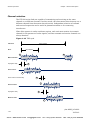
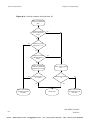
To address the primary aims, the spectrum management algorithm implements a
radar detection function which looks for impulsive interference on the operating
channel only. If impulsive interference is detected, spectrum management will mark
the current operating channel as having detected radar (unavailable channel) and
initiate a channel hop to an available channel. The previous operating channel will
remain in the unavailable state for thirty minutes after the last impulsive interference
pulse was detected. After the thirty minutes have expired the channel will be returned
to the usable channel pool.
The equipment can only transmit on available channels, of which there are none at
initial power up. The radar detection algorithm will always scan a usable channel for
60 seconds for radar interference before making the channel an available channel.
This compulsory channel scan will mean that there is at least 60 seconds service
outage every time radar is detected and that the installation time is extended by at
least 60 seconds even if there is found to be no radar on the channel.
NOTE
On system installation or start-up, this extends the initial scan time of the
Master unit by 60 seconds. To address the requirement to provide aggregate
uniform loading of the spectrum across all devices, the channel selection
algorithm will choose a channel at random from a list of useable channels.
The channel selection algorithm is initiated at link initialization and when
radar interference is detected.
phn-0896_012v000
1-30
Jul 2010
4Gon www.4Gon.co.uk [email protected] Tel: +44 (0)1245 808195 Fax: +44 (0)1245 808299