1
In such a case, an easy way to determine the best phase relationship is to listen to a low-frequency source while standing in front of the system and have
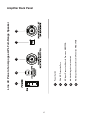
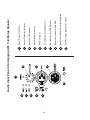
someone swap the phase relationship of the subwoofer from Normal to
Reverse while you listen. In one setting you should hear a distinct increase in
mid-bass, and in the other setting you should hear a distinct reduction in midbass. It’s important to listen to the speaker system from the front, otherwise
you may be fooled into making an incorrect choice.
If you do not hear a change in the bass response, it’s probably because the
full-range and subwoofer systems are displaced by a distance of around 1/4
wavelength of the frequency region where they both provide the most output. In such a case, neither polarity position will result in addition or cancellation, hence the lack of change in response.
The solution is to either change the physical relationship of the two speaker
systems, or delay one of the two systems (whichever one is positioned closer to the listeners) with a digital delay unit. A high-quality measurement system that can read and depict phase response and/or impulse response would
be very useful in this situation. However, without such a system, you can
determine an effective delay time by trial and error. Simply increment the
delay time in small steps (1 ms) until the action of changing the Phase
Reverse Switch produces the maximum cancellation in one setting, and the
maximum addition in the opposite setting. With the switch set for maximum
acoustic addition, the two systems should be in time and in phase with one
another. You will have preserved optimum impulse and phase response and
can now filter out any objectionable mid-bass overlap with an equalizer.
(4) Absolute Phase
Quite a bit has been written about absolute phase, particularly in regard to
studio recording and hi-fi sound reproduction. The subject is, however, often
ignored in the field of sound reinforcement.
Essentially, absolute phase refers to configuring the system so that the electro-acoustic drivers move toward the listener and produce a positive wavefront upon the first cycle of excitation by source material. This means that at
the instant of impact, when the head of the kick drum moves outward
towards the microphone, the speaker cones also move outward.
Obviously, the phase integrity of the entire signal processing chain must be
maintained for this to occur. Is absolute phase audible? Should you be concerned? Yes, it is audible and although subtle, it makes a big enough difference
to warrant taking the time needed to insure that the signal chain is phasepositive throughout. You’ll hear an improvement in sonic impact, especially in
the lower frequencies. We recommend that absolute phase be kept positive
in all low-frequency devices whenever possible. This can be checked with a
small handheld type phase response test unit, available from numerous manufacturers. Although it’s simple and easy to use the Phase Reverse Switch on
27