1
Installation & Maintenance Manual
How The SD 2000 Works
The SD 2000 humidifier is what is called an “electrode” humidifier. This means that instead of heating elements, metal
electrodes are immersed in water contained in a plastic cylinder. When steam is required for humidification, electric
current flows through the water between the electrodes. The minerals in the water provide both the conductance and
resistance for electric flow, thus producing steam. This technology is VERY advanced over electric element type
humidifiers and has the following advantages:
•
•
•
•
Efficiency: Operates at 94% energy efficiency over 95% of the life of the cylinder as compared to 90%
reducing linearly to less than 60% over the life of an element type humidifier.
Reduced maintenance: Instead of scraping out a metal pan and electric element, the plastic cylinder is
simply replaced with a completely fresh one.
Response time: is sometimes twice as fast as element type humidifiers.
Failsafe: If the unit runs dry, power flow is automatically stopped where in element type units, the elements
burn out.
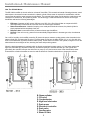
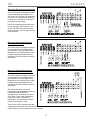
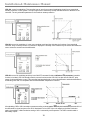
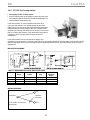
On a call for humidity, the humidifier controller (R) closes the power contactor, putting power to the electrodes in the
steam cylinder (B), and opens the fill valve (C) to allow water to flow into the water fill tank (V). In, or in line with, this
tank is a conductimeter (D) which reads the water quality. As the water level rises in the cylinder, it begins to cover the
electrodes and current begins to flow, warming the water and producing steam.
When the desired amperage is reached (which is directly proportional to steam output), or if the water reaches the
high level electrodes (E), the water fill will stop. As water is boiled off, minerals will build up in the cylinder and
periodically the controller will open the drain valve or pump (S or P) and remove some of the mineral laden water.
Eventually the cylinder electrodes are used up and the electronic controller signals time to change the cylinder.
B. Steam cylinder
C. Fill valve
D. Conductimeter
E. High level electrodes
P. Drain pump
R. Electronic controller
S. Drain valve
T. Overflow pipe
V. Water fill tank
2