1
LTC3375
Operation
RST MASK REGISTER
VCC
EXTERNAL PULL-UP RESISTOR
AND1
REGULATOR
92.5% OF PROGRAMMED VOUT
–
+
RST
OTHER UNMASKED
PGOOD OUTPUTS
VOUT
PGOOD
COMPARATOR
AND2
UNMASKED
PGOOD OUTPUTS
VCC
EXTERNAL PULL-UP RESISTOR
UNMASKED
ERROR
OTHER UNMASKED
ERRORS
IRQ
SET
CLRINT
CLR
IRQ STATUS REGISTER
IRQ MASK REGISTER
3375 F04
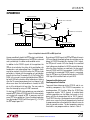
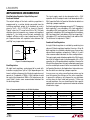
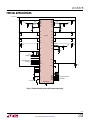
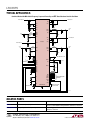
Figure 4. Simplified Schematic RST and IRQ Signal Path
An error condition that pulls the RST pin low is not latched.
When the error condition goes away, the RST pin is released
and is pulled high if no other error condition exists.
In addition to the PGOOD signals of the regulators the
IRQ pin also indicates the status of the pushbutton, die
temperature, and undervoltage flags. Pushbutton faults
cannot be masked. A fault that causes the IRQ pin to be
pulled low is latched with the exception of a pushbutton
press that is less than 10 seconds (CT = 0.01µF) while ON is
HIGH. In the case of a transient pushbutton press IRQ will
be held LOW for the duration of the button press latching
after the 10 second power-down time has elapsed. In all
other cases when the fault condition is cleared, the IRQ
pin is still maintained in its low state. The user needs to
clear the interrupt by using a CLRINT command.
On start-up, all PGOOD status outputs are unmasked with
respect to RST. While all PGOOD and UVLO status outputs
are masked with respect to IRQ. A power-on reset will
cause RST to be pulled low. Once all enabled regulators
have their output PGOOD for 230ms typical (CT = 0.01µF)
the RST output goes Hi-Z.
By masking a PGOOD signal, the RST or IRQ pin will remain
Hi-Z even though the output voltage of a regulator may be
below its PGOOD threshold. By masking a UVLO signal,
the IRQ pin will remain Hi-Z even though its associated
input voltage may be below its UVLO threshold. However,
when the status registers are read back, the true conditions of PGOOD and UVLO are reported. If a UVLO IRQ is
masked but the associated PGOOD signal is unmasked,
then the IRQ pin may still be pulled low due to a PGOOD
LOW signal that resulted from an input UVLO.
Temperature Monitoring and
Overtemperature Protection
To prevent thermal damage to the LTC3375 and its surrounding components, the LTC3375 incorporates an
overtemperature (OT) function. When the LTC3375 die
temperature reaches 165°C (typical) all enabled buck
switching regulators are shut down and remain in shutdown until the die temperature falls to 155°C (typical).
The LTC3375 also has a die temperature warning function
which warns a user that the die temperature has reached
its programmed alarm threshold which allows the user to
take any corrective action. The die temperature warning
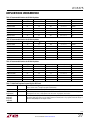
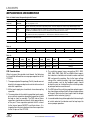
threshold is user programmable as shown in Table 2.
3375fc
For more information www.linear.com/3375
23